In modern industrial automation, proximity sensors play a critical role in detecting the presence or absence of objects without physical contact. Among various performance metrics, positioning accuracy stands out as a key parameter that directly impacts system reliability, efficiency, and safety. This article delves into the factors influencing proximity sensor accuracy, measurement techniques, and best practices for optimization in real-world applications.
Positioning accuracy refers to the sensor's ability to consistently detect an object at a specified distance with minimal deviation. Unlike simple on/off detection, high-accuracy applications—such as robotic arm positioning, conveyor belt synchronization, or precision assembly—demand repeatable measurements within micrometer or sub-millimeter tolerances. Several factors contribute to achievable accuracy levels.
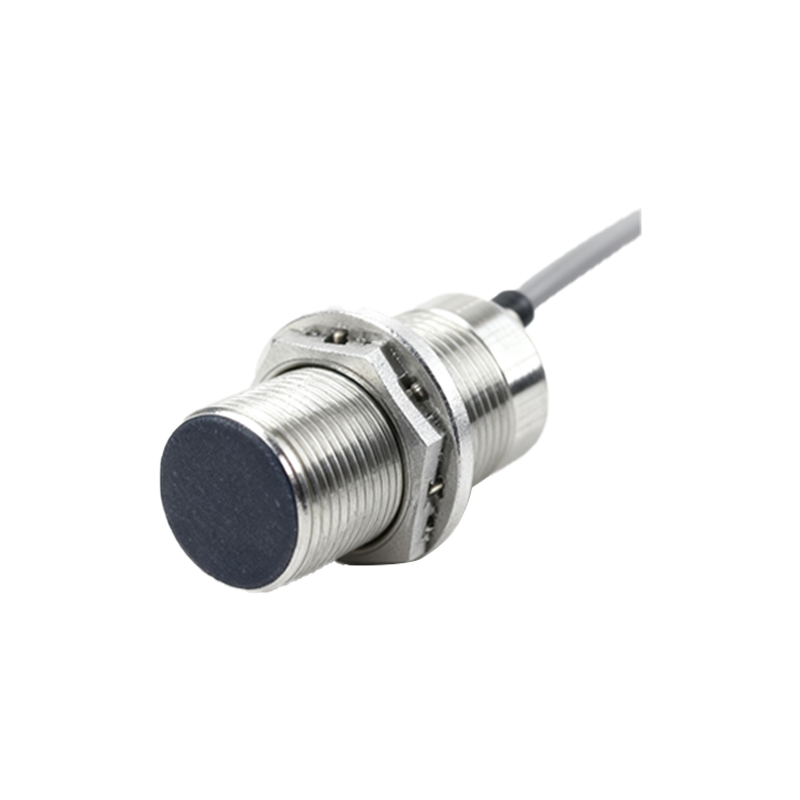
First, sensor technology type significantly affects performance. Inductive sensors excel with metallic targets but show reduced accuracy for non-ferrous materials. Capacitive sensors detect a wider range of materials but are more susceptible to environmental interference like humidity. Ultrasonic and photoelectric sensors offer longer ranges but may face challenges with surface reflectivity or acoustic noise. Each technology has inherent limitations in resolution and repeatability.
Second, environmental conditions introduce variables that can degrade accuracy. Temperature fluctuations cause thermal expansion in both sensor and target, altering detection distances. Electromagnetic interference (EMI) in industrial settings can disrupt sensor signals, while contaminants like oil, dust, or vibration may affect sensing surfaces. Proper shielding, housing ratings (e.g., IP67), and temperature compensation circuits help mitigate these issues.
Third, target characteristics must be considered. Size, shape, material composition, and surface finish influence the sensor's effective sensing range. For instance, a small or uneven target may not trigger detection consistently at the same position. Standardized test targets, as defined by IEC 60947-5-2, ensure comparable accuracy ratings across manufacturers.
Calibration and installation practices are equally crucial. Mounting alignment, mechanical stability, and perpendicular orientation to the target path minimize angular errors. Regular calibration against master references compensates for drift over time. Advanced sensors with teach-in functions or analog outputs (4-20 mA, 0-10 V) enable fine-tuning for specific applications.
To quantify accuracy, engineers rely on metrics like repeatability (consistency under unchanged conditions), hysteresis (difference between switch-on and switch-off points), and linearity (deviation from ideal response). High-end sensors specify these values in datasheets, often with statistical confidence intervals. For example, a precision inductive sensor might offer ±0.1 mm repeatability at a nominal 5 mm sensing range.
In practice, achieving optimal accuracy involves system-level design. Redundant sensor arrays, combined with signal filtering algorithms in PLCs or controllers, can average out random errors. Real-time monitoring via industrial networks (IO-Link, PROFINET) allows predictive maintenance by tracking accuracy trends. Case studies show that in automotive welding lines, improved sensor accuracy reduces misalignment defects by up to 30%.
Emerging trends include smart sensors with embedded diagnostics and self-calibration features. Multi-axis sensing technologies, such as 2D/3D time-of-flight sensors, provide positional data beyond simple proximity. However, these innovations require careful integration to maintain accuracy across varying operating conditions.
Ultimately, selecting the right proximity sensor involves balancing accuracy requirements with cost, durability, and environmental constraints. By understanding the interplay of technology, calibration, and application specifics, engineers can design robust systems that maintain precision throughout their operational lifecycle. Regular validation against industry standards ensures long-term performance, minimizing downtime and enhancing overall productivity.