In the realm of industrial automation and control, metal proximity sensors are indispensable components. They provide non-contact detection of metallic objects, enabling precise, reliable, and maintenance-free operation in harsh environments. Unlike photoelectric or capacitive sensors, these devices specifically respond to ferrous and/or non-ferrous metals, making them ideal for positioning, counting, and safety applications. Their operation is fundamentally based on electromagnetic principles. This article delves into five primary types of metal proximity sensors, explaining their working principles, key characteristics, and typical use cases to guide selection for specific engineering needs.
The first and most common type is the Inductive Proximity Sensor. This sensor generates an oscillating electromagnetic field via a coil and ferrite core. When a metallic object enters this field, eddy currents are induced within the object, causing a change in the oscillation amplitude. The sensor's internal circuit detects this change and triggers a solid-state switch. Inductive sensors are predominantly sensitive to ferrous metals like steel and iron, though some versions can detect non-ferrous metals at reduced sensing ranges. They are renowned for their robustness, high switching frequency, and immunity to environmental factors like dust, oil, and moisture. Typical applications include detecting pistons in cylinders, monitoring gear teeth, and part presence verification on conveyor lines.

The second type is the High-Frequency Oscillation (HF) or All-Metal Sensor. A specialized subset of inductive sensors, these utilize a much higher oscillation frequency. This allows them to detect all metals—including aluminum, copper, and brass—with nearly equal sensitivity and often at a standard sensing range. The key advantage is consistency; the sensing distance does not vary significantly with the target metal type, simplifying system design and calibration. They are particularly valuable in mixed-material production lines, such as in automotive assembly where both steel brackets and aluminum components must be detected reliably without adjusting sensor position or sensitivity.
Third, we have the Magnetic Proximity Sensor or Reed Switch-based Sensor. This type operates on a purely magnetic principle. It contains a sealed glass tube (reed switch) with ferromagnetic contacts that close or open in the presence of a magnetic field. To detect a metal object, a permanent magnet must be attached to the target. Alternatively, these sensors directly detect the magnetic field of permanent magnets embedded in machinery, like in cylinder position sensing. Their primary benefits are very low power consumption, simplicity, and the ability to operate in explosive atmospheres where sparking is a concern. However, they require a magnetic trigger and have a relatively short sensing range compared to inductive types.
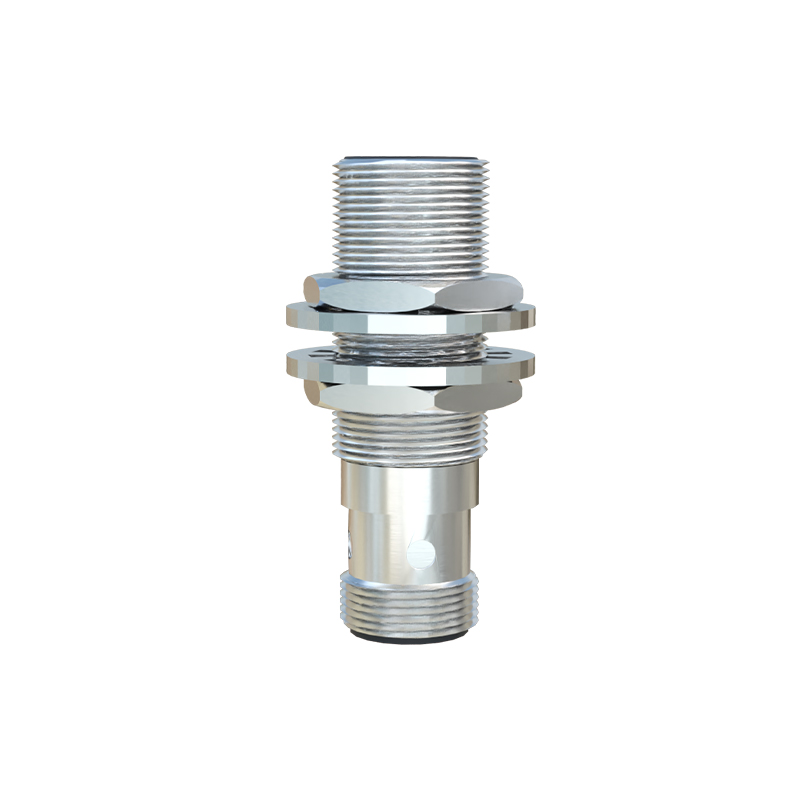
Fourth is the Weld-Field Immune Inductive Sensor. Designed for extreme environments, these sensors are specifically engineered to function correctly in the presence of strong magnetic fields generated by resistance welding equipment. Standard inductive sensors can malfunction or provide false triggers when exposed to such intense electromagnetic interference. Weld-field immune models incorporate special shielding and filtering circuits that reject this external noise, ensuring stable detection of metal parts on welding robots, spot welders, and welding gun assemblies. Their housing is also typically more resistant to spatter and physical impact.
The fifth crucial type is the Analog or Measuring Inductive Sensor. Unlike standard on/off sensors, these provide a continuous output signal (current or voltage) proportional to the distance between the sensor and the metal target. This output is linear within a specified range. They are used for precise displacement and position measurement, gap monitoring, and vibration analysis. For instance, they can monitor the runout of a rotating shaft or the precise thickness of a metal sheet by measuring the distance to a reference surface. Their resolution and accuracy are key parameters, making them essential for advanced control and quality inspection systems.
Selecting the appropriate metal proximity sensor requires careful consideration of several factors beyond just the metal type. The nominal sensing range, often specified for mild steel, must be derated for other materials. Environmental conditions like temperature extremes, chemical exposure, and mechanical stress dictate the required housing material (e.g., stainless steel, PBT plastic) and protection rating (IP67, IP69K). The output configuration (PNP/NPN, NO/NC) must match the control system's input card. Furthermore, mounting considerations—flush, non-flush, or in a slot—affect the effective sensing distance.
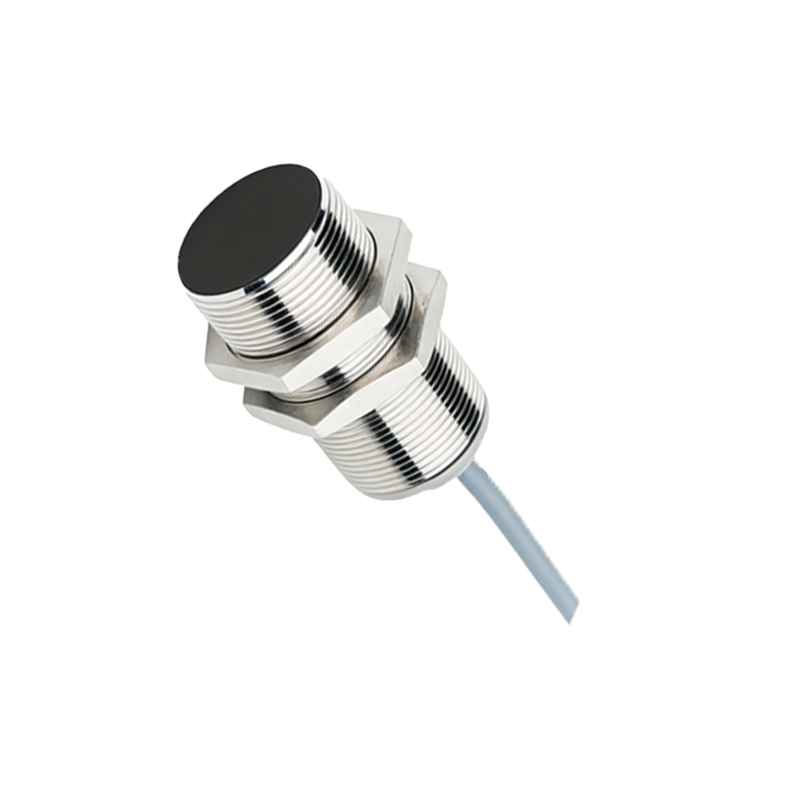
In conclusion, from the ubiquitous inductive sensor to specialized weld-immune and analog measuring variants, the family of metal proximity sensors offers tailored solutions for diverse industrial challenges. Understanding the distinct operational principles of these five types—Inductive, All-Metal (HF), Magnetic, Weld-Field Immune, and Analog—empowers engineers and technicians to optimize machine design, enhance process reliability, and implement sophisticated automation strategies. Their continued evolution, including miniaturization and IO-Link communication capabilities, ensures they remain at the forefront of smart manufacturing and Industry 4.0 initiatives.