In the rapidly evolving landscape of industrial automation and smart technology, infrared proximity sensors have emerged as indispensable components, driving efficiency, safety, and precision across diverse sectors. These sensors operate on a simple yet powerful principle: they emit infrared light and detect its reflection from nearby objects, allowing for non-contact detection of presence, distance, or motion. Unlike mechanical switches or ultrasonic sensors, infrared variants offer distinct advantages in terms of speed, reliability, and adaptability to various environmental conditions.
The core functionality of an infrared proximity sensor hinges on an infrared LED and a photodetector. The LED emits infrared radiation, which, upon striking an object within its range, reflects back to the photodetector. By analyzing the intensity or time delay of the reflected signal, the sensor can accurately determine the object's proximity. This non-invasive detection method is particularly valuable in applications where physical contact is impractical or could cause damage, such as in delicate assembly lines or cleanroom environments.
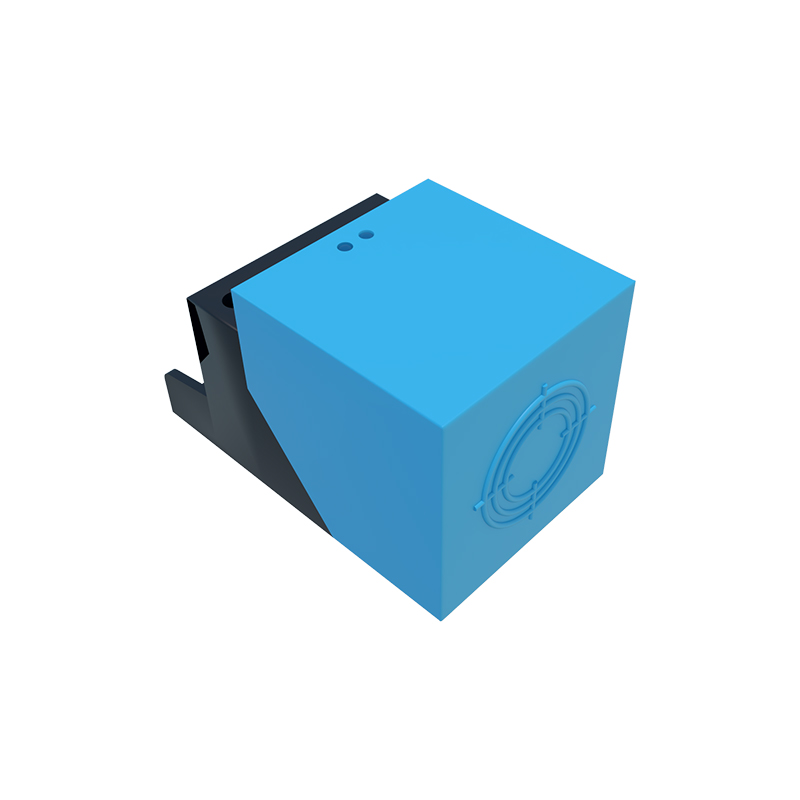
One of the primary roles of infrared proximity sensors is enhancing operational safety. In manufacturing plants, they are routinely integrated into machinery guards and safety curtains to prevent accidents. For instance, when a sensor detects an operator's hand approaching a hazardous zone, it can trigger an immediate shutdown of equipment, thereby mitigating injury risks. Similarly, in automotive systems, these sensors contribute to advanced driver-assistance features like parking aids and blind-spot monitoring, alerting drivers to obstacles that may not be visible in mirrors.
Beyond safety, infrared proximity sensors are pivotal in optimizing process efficiency. On automated production lines, they facilitate precise object counting, positioning, and sorting. Consider a bottling facility: sensors can verify bottle presence on conveyors, ensuring proper filling and capping sequences without slowdowns. Their rapid response time—often in milliseconds—minimizes downtime and boosts throughput. Moreover, in robotics, these sensors enable accurate navigation and object manipulation, allowing robotic arms to adjust their grip based on detected distances, which is crucial for tasks like pick-and-place operations.
The adaptability of infrared proximity sensors extends to challenging environments. Many models are designed with robust housings that resist dust, moisture, and temperature fluctuations, making them suitable for outdoor use or harsh industrial settings. For example, in agricultural automation, sensors monitor crop levels in silos, while in logistics, they assist in warehouse inventory management by detecting pallet positions. Their immunity to ambient noise—a common issue with ultrasonic sensors—further ensures consistent performance in noisy factories.
Energy efficiency is another notable benefit. Infrared sensors typically consume low power, especially in pulsed operation modes, aligning with sustainability goals in industries aiming to reduce carbon footprints. In smart building systems, they are employed for occupancy sensing, automatically controlling lighting and HVAC systems based on human presence, which cuts energy waste significantly.
Despite their advantages, selecting the right infrared proximity sensor requires careful consideration of factors like range, response time, and environmental interference. For long-range detection, sensors with higher output power may be necessary, whereas short-range applications might prioritize compact size. Regular maintenance, such as lens cleaning to prevent false triggers from dirt buildup, is also essential for sustained accuracy.
Looking ahead, advancements in sensor technology are expanding their capabilities. The integration of infrared sensors with IoT platforms allows for real-time data analytics, predictive maintenance, and enhanced system interoperability. As industries continue to embrace Industry 4.0, these sensors will play a critical role in creating interconnected, intelligent ecosystems that drive innovation.
In summary, infrared proximity sensors are versatile tools that underpin modern industrial operations. From safeguarding workers to streamlining automation, their ability to provide reliable, non-contact detection makes them a cornerstone of technological progress. As engineers and designers push boundaries, these sensors will undoubtedly evolve, offering even greater precision and integration possibilities for the future.