In the realm of industrial automation and electrical engineering, proximity sensors are indispensable components for non-contact detection, object positioning, and process control. Selecting the correct model and understanding its parameters is critical for system reliability, efficiency, and safety. This guide delves into the common types, key specifications, and selection criteria for proximity sensors, providing a technical foundation for engineering applications.
Proximity sensors operate by emitting an electromagnetic field or a beam of electromagnetic radiation and detecting changes in the field or return signal. The primary categories include Inductive, Capacitive, Ultrasonic, and Photoelectric sensors.
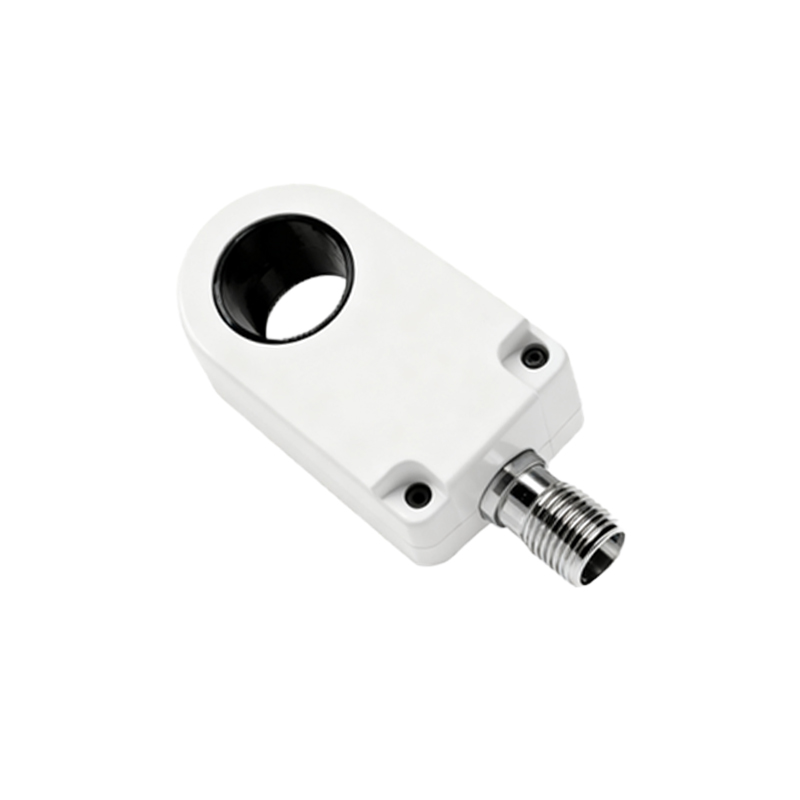
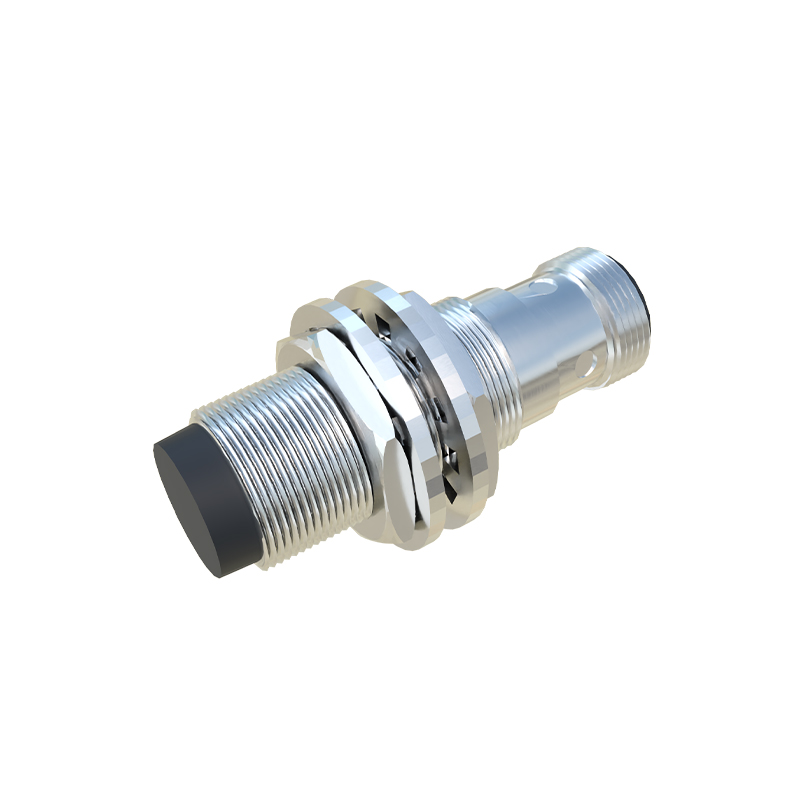
Inductive Proximity Sensors are the workhorses for detecting metallic objects. They generate an oscillating electromagnetic field. When a ferrous or non-ferrous metal enters this field, it induces eddy currents, causing a change in oscillation amplitude that triggers the sensor's output. Key models include cylindrical (e.g., M8, M12, M18, M30 threaded barrels) and rectangular housing types. They are renowned for their robustness, high switching frequency, and resistance to environmental contaminants like dust and oil. Common output configurations are NPN (sinking) and PNP (sourcing), with 2-wire, 3-wire, or 4-wire designs.
Capacitive Proximity Sensors can detect both metallic and non-metallic materials such as liquids, plastics, wood, and granules. They function by measuring changes in capacitance between the sensor's active face and the target object. Models often resemble inductive sensors in form factor but are distinguished by their material detection capability. They are ideal for level detection of liquids or bulk solids, though they can be sensitive to environmental factors like humidity.
Ultrasonic Proximity Sensors utilize sound waves beyond human hearing. They measure the time taken for an emitted sound pulse to reflect off a target and return. This principle allows for precise distance measurement and detection of objects regardless of color, transparency, or material (except sound-absorbing surfaces). Models are available as analog-output for continuous distance measurement or discrete-output for simple presence detection. They are effective in challenging environments with dust, mist, or varying light conditions.
Photoelectric Sensors employ a light source (LED, laser) and a receiver. They detect objects by interpreting the interruption or reflection of the light beam. Sub-types include Through-beam (separate emitter and receiver), Retro-reflective (uses a reflector), and Diffuse (reflective) models. Diffuse models, with background suppression technology, are particularly useful for detecting objects at a precise distance, ignoring more distant backgrounds. They excel in long-range detection and can sense a vast array of materials.
Critical Parameters for Selection:
1. Sensing Distance (Sn): The nominal operating distance at which the sensor reliably detects a standard target. Inductive sensors have a reduced factor for non-ferrous metals.
2. Hysteresis: The difference between the switch-on and switch-off points, preventing output chatter when a target is at the sensing edge.
3. Output Type: Discrete (Digital): NPN/PNP transistor, NO/NC (Normally Open/Normally Closed). Analog: Current (4-20mA) or Voltage (0-10V) output proportional to distance.
4. Switching Frequency: The maximum number of on/off cycles per second, crucial for high-speed applications.
5. Environmental Ratings: Ingress Protection (IP) rating (e.g., IP67 for dust and temporary immersion) and temperature range define operational limits.
6. Mounting and Housing: Consider flush-mountable vs. non-flush inductive sensors, material (stainless steel, nickel-plated brass, PBT plastic), and form factor for installation constraints.
7. Electrical Specifications: Operating voltage range (commonly 10-30V DC), current consumption, and short-circuit/overload protection.
Application-Driven Model Selection:
For metal part detection on a high-speed conveyor, a cylindrical M18 inductive sensor with a 8mm sensing distance, PNP output, and IP67 rating would be typical. For monitoring plastic bottle fill level, a capacitive sensor or a diffuse photoelectric with background suppression is appropriate. In a dusty warehouse for pallet detection, an ultrasonic sensor provides reliable performance where photoelectrics might fail.
Understanding the interplay between sensor technology, model specifications, and application requirements is paramount. Always consult the manufacturer's datasheet for precise characteristics, including target material, size, and environmental compensation. Proper selection ensures optimal performance, minimizes downtime, and enhances the overall intelligence of automated systems. The evolution towards IO-Link capable sensors further adds a layer of digital parameterization and diagnostics, representing the next step in smart sensor integration.