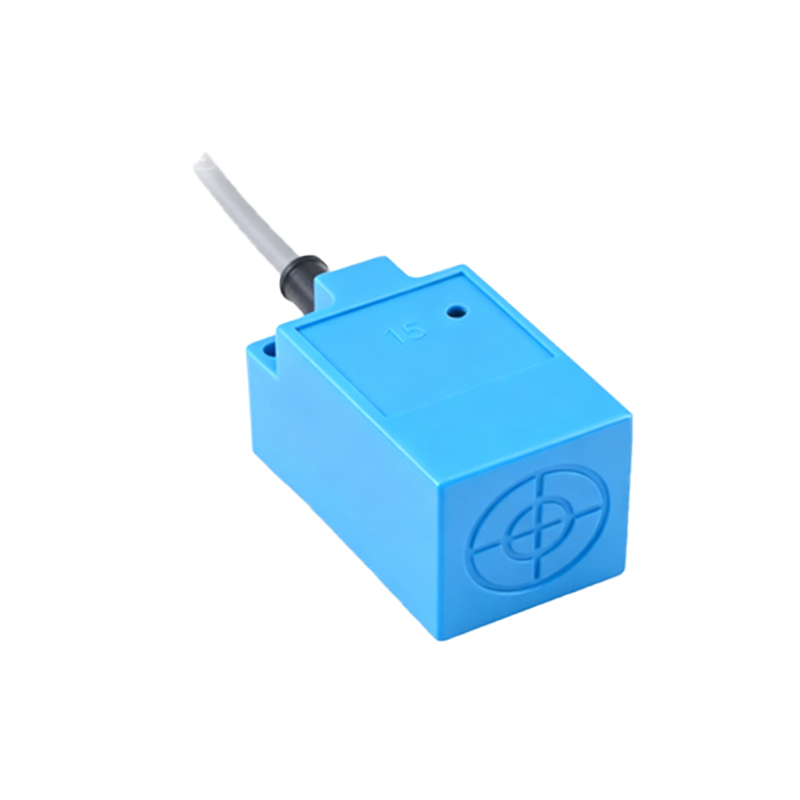
Proximity sensors are essential components in modern industrial automation, enabling non-contact detection of objects within a specified range. Their classification is critical for selecting the right sensor for specific applications, ensuring optimal performance, reliability, and cost-effectiveness. This article outlines the primary classification methods for proximity sensors, based on operating principles, output types, sensing ranges, and environmental adaptability.
Firstly, proximity sensors are categorized by their operating principles. Inductive sensors detect metallic objects by generating an electromagnetic field. When a metal target enters this field, it induces eddy currents, causing a change in the sensor's oscillation amplitude, which triggers an output signal. These sensors are ideal for detecting ferrous and non-ferrous metals but are ineffective with non-metallic materials. Capacitive sensors, on the other hand, operate by measuring changes in capacitance. They can detect both metallic and non-metallic objects, including liquids, plastics, and wood, making them versatile for various industrial settings. Ultrasonic sensors use sound waves to measure distance to an object. They emit high-frequency ultrasonic pulses and calculate the time taken for the echo to return, allowing for precise detection regardless of the object's material. Optical sensors, including infrared and laser types, rely on light beams to detect presence or absence. They are highly accurate and suitable for clean environments but may be affected by dust, smoke, or ambient light. Magnetic sensors, such as Hall effect sensors, detect magnetic fields and are commonly used for position sensing in motors or cylinders.
Secondly, classification by output type is crucial for integration with control systems. Digital output sensors provide a simple on/off signal, typically in the form of a transistor switch (e.g., PNP or NPN). They are widely used in binary detection tasks, such as counting or limit switching. Analog output sensors offer a continuous signal, such as voltage (0-10V) or current (4-20mA), proportional to the distance or presence of an object. This allows for precise measurement and monitoring, useful in applications like thickness gauging or level sensing. Some advanced sensors feature IO-Link or other communication protocols, enabling digital data exchange for diagnostics and parameter adjustments.
Thirdly, sensing range and form factor play a significant role in classification. Standard-range sensors are designed for general-purpose detection, typically up to a few centimeters, while long-range sensors can detect objects several meters away, often used in large-scale automation. Miniature sensors are compact and suitable for space-constrained installations, such as in robotics or electronic assemblies. Cylindrical and rectangular housings are common, with choices based on mounting requirements and environmental protection ratings (e.g., IP67 for dust and water resistance).
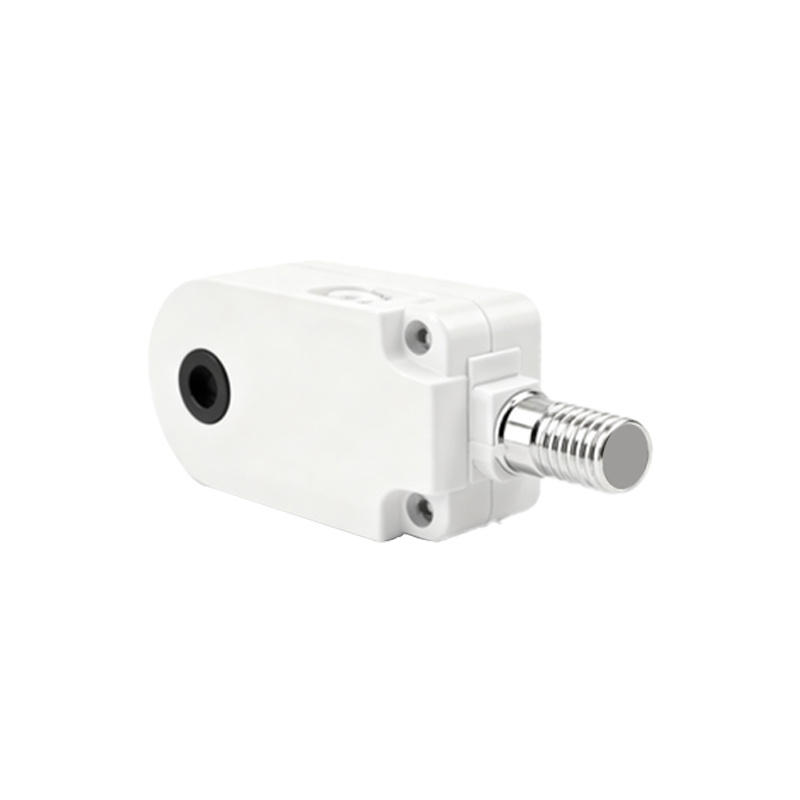
Lastly, environmental adaptability is a key classification criterion. Sensors are rated for specific operating conditions, including temperature ranges, vibration resistance, and immunity to electromagnetic interference. For harsh environments, such as those with high temperatures or corrosive substances, specialized sensors with robust enclosures and enhanced materials are employed. Intrinsically safe sensors are used in explosive atmospheres, complying with standards like ATEX or IECEx.
In summary, understanding the classification methods for proximity sensors—by operating principle, output type, sensing range, and environmental features—helps engineers make informed decisions. This ensures efficient automation processes, reduces downtime, and enhances safety in industrial applications. As technology advances, smart sensors with integrated diagnostics and connectivity are becoming more prevalent, offering greater flexibility and control.