Metal proximity sensors are indispensable components in modern industrial automation, serving as the eyes of machinery by detecting the presence or absence of metallic objects without physical contact. These sensors operate based on electromagnetic principles, primarily utilizing inductive technology to sense ferrous and non-ferrous metals. Understanding the various types of metal proximity sensors is crucial for selecting the right device for specific applications, ensuring efficiency, reliability, and safety in automated systems.
The most common type is the inductive proximity sensor, which generates an electromagnetic field. When a metal object enters this field, it induces eddy currents that alter the sensor's oscillation amplitude, triggering a detection signal. Inductive sensors are further categorized into shielded (flush-mountable) and unshielded (non-flush) versions. Shielded sensors can be embedded in metal without interference, making them ideal for tight spaces, while unshielded types offer longer sensing ranges but require clearance from surrounding metals. They are widely used in conveyor systems, robotic arms, and machine tools for position sensing and object counting.
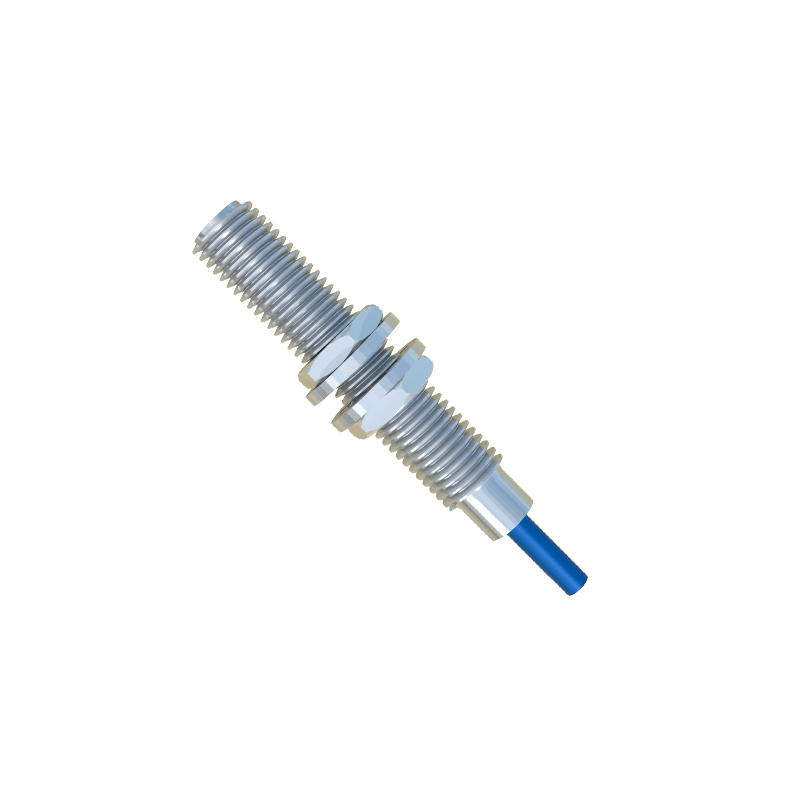
Another significant category is the capacitive proximity sensor, which can detect both metallic and non-metallic materials by measuring changes in capacitance. While not exclusively for metals, they are effective for thin or coated metal sheets where inductive sensors may falter. These sensors adjust sensitivity based on the dielectric constant of the target, making them versatile for applications like liquid level detection in metal tanks or material handling in packaging industries.
For high-precision requirements, magnetic proximity sensors, such as reed switches or Hall effect sensors, are employed. These detect magnetic fields generated by permanent magnets attached to metal objects, offering reliable operation in harsh environments with dust, oil, or vibrations. They are commonly found in automotive assembly lines and safety systems, where exact positioning of metal components is critical.
Ultrasonic proximity sensors use sound waves to detect metal objects, measuring the time delay of reflected signals. Although they can sense various materials, their ability to work with metals in challenging conditions—like transparent or glossy surfaces—makes them valuable in industries such as metallurgy and warehousing. They excel in distance measurement and bulk detection, even in noisy settings.
Each type has distinct advantages: inductive sensors are cost-effective and robust for general metal detection; capacitive sensors handle diverse materials; magnetic sensors ensure precision in dirty conditions; and ultrasonic sensors provide versatility for complex layouts. Selection depends on factors like sensing range, target material, environmental resilience, and output requirements (e.g., analog or digital signals).
In practice, integrating these sensors into industrial systems enhances automation by enabling real-time monitoring and control. For instance, in automotive manufacturing, inductive sensors verify part placement, while magnetic sensors track engine components. Regular maintenance, such as cleaning sensing faces and checking wiring, prolongs sensor life and prevents downtime.
As Industry 4.0 advances, smart metal proximity sensors with IO-Link connectivity are gaining traction, offering diagnostic data and remote configuration. This evolution supports predictive maintenance and adaptive manufacturing, driving efficiency in sectors from aerospace to food processing. By choosing the appropriate sensor type, engineers can optimize performance, reduce costs, and foster innovation in industrial automation.