In the world of industrial automation, robotics, consumer electronics, and countless other applications, proximity sensors are the silent sentinels that enable machines to "sense" the presence or absence of nearby objects without any physical contact. This non-contact detection is fundamental to automation, safety, and efficiency. The term "proximity sensor" encompasses a diverse family of devices, each operating on a distinct physical principle and suited to specific environments and materials. Understanding the different types is crucial for selecting the right sensor for the job.
One of the most common and versatile types is the Inductive Proximity Sensor. These sensors generate an electromagnetic field. When a metallic object (typically ferrous metals like iron or steel, though some can detect non-ferrous metals) enters this field, it induces eddy currents within the object. The sensor detects this change in the field and triggers a switch. Key advantages include high switching frequency, robustness against dirt, dust, and moisture, and exceptional reliability. They are the workhorses of manufacturing lines, used for tasks like counting metal parts, detecting piston position in cylinders, or ensuring machine tool safety.
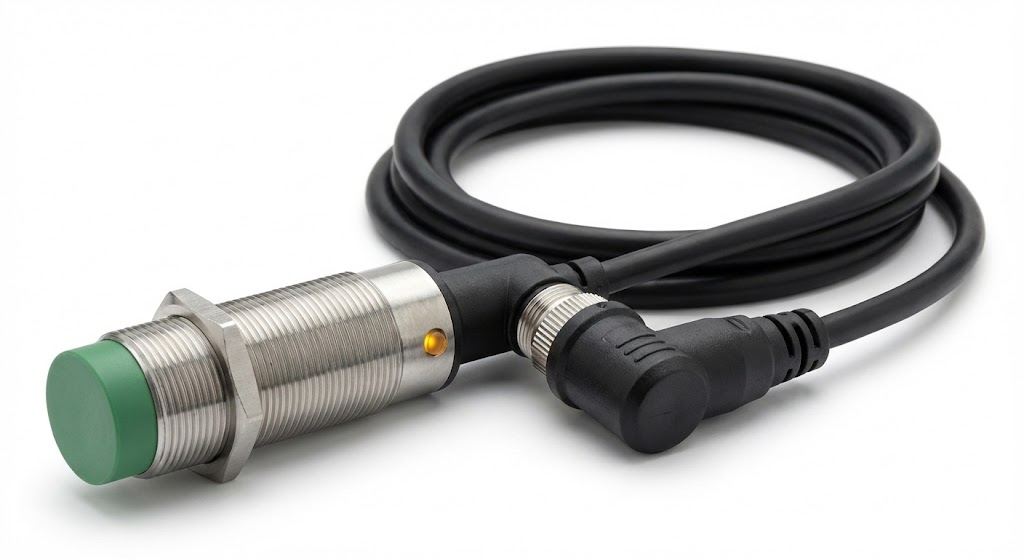
For detecting non-metallic objects, Capacitive Proximity Sensors are the go-to choice. They function similarly to inductive sensors but generate an electrostatic field instead. Any object that enters this field—be it plastic, wood, liquid, powder, or even a human hand—alters the sensor's capacitance, triggering detection. This makes them incredibly versatile for level detection in tanks (liquids or granules), detecting filled packages on a conveyor belt, or touch-sensitive controls. They can often sense through certain non-metallic container walls, adding to their flexibility.
Ultrasonic Proximity Sensors operate on a principle akin to sonar. They emit high-frequency sound waves (inaudible to humans) and measure the time it takes for the echo to return after bouncing off a target object. This time-of-flight measurement allows them not only to detect presence but also to provide precise distance information. They are excellent for detecting objects of virtually any material, shape, or color, and perform well in challenging environments with dust, smoke, or light interference. Common applications include pallet detection in logistics, liquid level sensing, and collision avoidance in automated guided vehicles (AGVs).
Photoelectric Sensors, or photo-eyes, use light to detect objects. They consist of a light emitter (usually an LED) and a receiver. There are three main configurations. The through-beam type has separate emitter and receiver units; an object is detected when it breaks the light beam, offering the longest sensing range and high reliability. The retro-reflective type uses a single unit and a reflector; detection occurs when the object interrupts the beam reflected back. The diffuse (or proximity) type has the emitter and receiver in one housing and detects light reflected directly off the target object. Photoelectric sensors are superb for long-range detection, sensing small objects, and differentiating colors or contrasts.
A specialized and highly precise category is the Magnetic Proximity Sensor (often paired with a reed switch or Hall-effect sensor). These detect the presence of a permanent magnet. When the magnet approaches, it either closes a reed switch (a pair of ferromagnetic contacts sealed in glass) or triggers a Hall-effect IC that responds to magnetic field changes. They are famous for their simplicity, low cost, and ability to operate in extreme environments, including submerged in fluids or in explosive atmospheres, as the sensing can be completely sealed. Typical uses are in detecting the position of cylinder pistons (with an embedded magnet) or in security systems for door/window contacts.
Finally, emerging technologies are broadening the scope. Radar (Microwave) Sensors use radio waves for very long-range detection and are used in traffic monitoring or large-scale level measurement. Laser Rangefinders offer extreme precision for positioning and measurement tasks.
Selecting the correct proximity sensor depends on a careful analysis of several factors: the target material (metal, plastic, liquid), the required sensing range, the operating environment (temperature, contaminants), the needed output type (digital on/off, analog distance signal), and installation constraints. By matching the core principle of each sensor type to the application's specific demands, engineers can build systems that are more reliable, efficient, and intelligent. From the factory floor to the smartphone in your pocket, these unseen detectors continue to be pivotal in bridging the gap between the physical and digital worlds.