In the evolving landscape of industrial automation and consumer electronics, the quest for reliable, cost-effective, and versatile sensing solutions is perpetual. Proximity optical sensors have long been a staple in applications ranging from object detection to touchless interfaces. However, their performance can be compromised by environmental factors such as ambient light interference, dust, or the color and transparency of target objects. This has spurred significant interest in ultrasonic technology as a robust alternative. Ultrasonic sensors, which operate by emitting high-frequency sound waves and measuring their reflection, offer a compelling replacement for traditional optical proximity sensors in many scenarios.
The fundamental principle behind ultrasonic sensing is echolocation. A transducer emits a burst of ultrasonic sound waves, typically above 20 kHz, which are inaudible to humans. These waves travel through the air until they encounter an object. Upon striking the object, the sound waves reflect back toward the sensor. A receiver component then detects this echo. By precisely measuring the time interval between the emission of the pulse and the reception of its echo, the sensor can calculate the distance to the object with high accuracy. This time-of-flight (ToF) measurement is immune to the visual characteristics that often plague optical sensors.
One of the most significant advantages of ultrasonic sensors over optical counterparts is their insensitivity to environmental lighting conditions. An optical proximity sensor, which may rely on infrared (IR) LEDs and photodetectors, can be rendered unreliable by direct sunlight, strong artificial light, or complete darkness if not properly calibrated. Ultrasonic waves, being sound, are unaffected by light. This makes ultrasonic sensors ideal for outdoor applications, such as in automotive parking assistance systems, or in industrial settings with variable lighting.
Furthermore, ultrasonic sensors excel in detecting objects regardless of their optical properties. An optical sensor might struggle with transparent materials like glass or clear plastic, or with very dark, non-reflective surfaces that absorb infrared light. Since ultrasonic waves rely on physical reflection from a surface, they can reliably detect objects made of almost any material, provided the material is dense enough to reflect sound waves. This includes liquids, transparent solids, and matte-finished objects, broadening the range of viable applications.
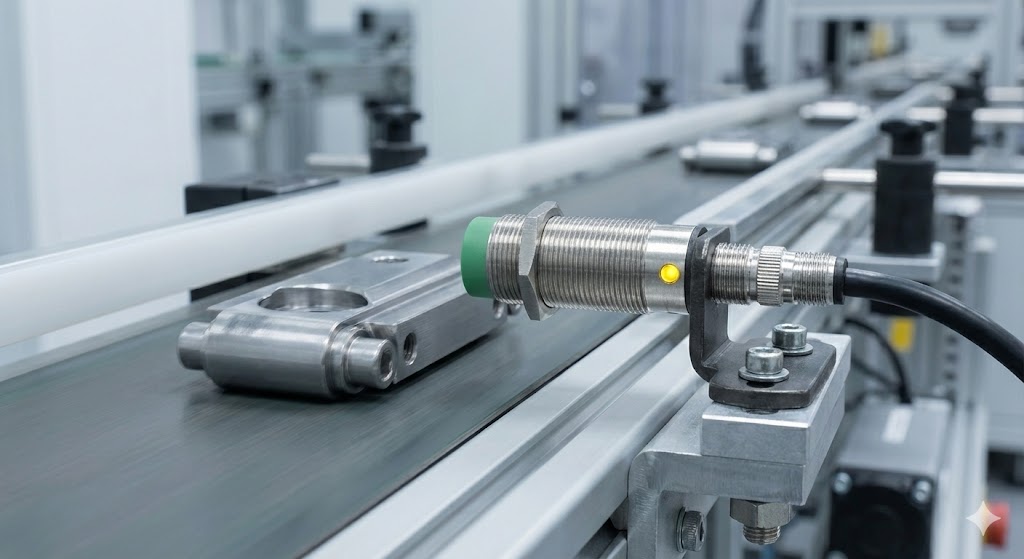
Another critical area of superiority is performance in challenging environments. Dust, smoke, fog, and steam can scatter or block infrared light, causing false readings or failures in optical systems. Ultrasonic waves can penetrate many such particulates, although their performance can be attenuated in very dense fog or heavy dust. For most industrial atmospheres, however, ultrasonic sensors provide more consistent and dependable operation. This robustness is invaluable in manufacturing, material handling, and agricultural automation.
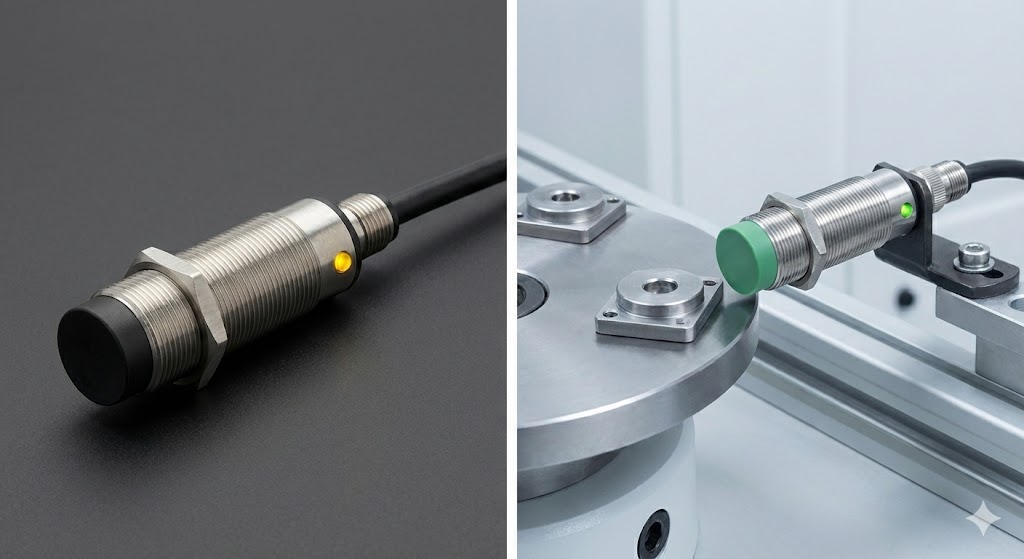
The implementation of ultrasonic sensors also addresses certain design and cost considerations. While high-precision optical sensors, especially those using laser ToF, can be expensive, ultrasonic sensors often present a lower-cost solution for medium-range distance measurement and presence detection. Their design can be simpler, with fewer concerns about lens cleanliness or precise optical alignment. However, it is important to note their limitations. Ultrasonic sensors have a slower response time compared to high-speed optical sensors, as the speed of sound is much slower than the speed of light. This makes them less suitable for applications requiring ultra-fast detection, such as in high-speed sorting lines.
Range and resolution are also factors to weigh. Typical ultrasonic sensors for proximity detection offer ranges from a few centimeters to several meters, which is sufficient for many replacement scenarios like liquid level sensing, robot obstacle avoidance, or automatic doors. The beam angle of an ultrasonic sensor is generally wider than that of a focused optical beam, which can be an advantage for detecting large objects or a disadvantage if precise spot detection is needed. Modern ultrasonic modules often include temperature compensation, as the speed of sound varies with air temperature, enhancing accuracy over a wide operational range.
In consumer electronics, the shift is evident. Smartphones that once used IR proximity sensors to turn off the screen during calls are now exploring ultrasonic alternatives for better performance under bright sunlight and with various screen protectors. In automotive applications, ultrasonic sensors are the standard for low-speed parking assist, reliably detecting curbs and obstacles that might be missed by optical systems at close range.
The integration process is generally straightforward. Many ultrasonic sensor modules provide digital or analog outputs compatible with standard microcontrollers, making them a drop-in replacement in existing electronic architectures. Designers must account for the physical mounting, ensuring the transducer face is unobstructed and considering potential acoustic interference from multiple sensors or noisy environments.
In conclusion, while optical proximity sensors remain excellent for specific high-speed or color-discrimination tasks, ultrasonic technology presents a superior alternative in applications demanding reliability across variable environmental conditions, material-agnostic detection, and cost-effectiveness. The transition from optical to ultrasonic represents a pragmatic evolution in sensing strategy, driven by the need for robustness and versatility in an increasingly automated world. As ultrasonic sensor technology continues to advance, offering smaller form factors, lower power consumption, and enhanced signal processing