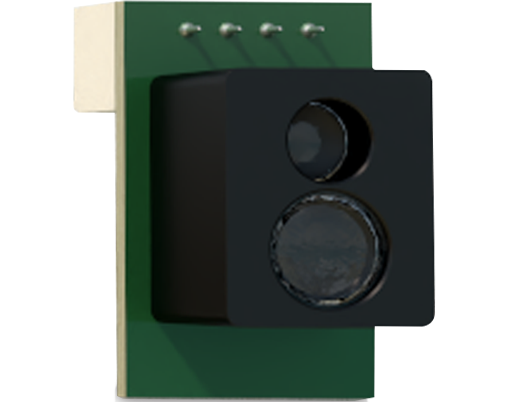
Laser sensors are pivotal components in modern industrial automation, offering high precision and reliability for various measurement and detection tasks. The fundamental principle of laser sensor experimentation revolves around the emission, reflection, and reception of laser beams to determine object properties such as distance, position, or presence. Typically, a laser diode generates a coherent, monochromatic light beam, which is directed toward a target. Upon striking the surface, the beam reflects back to a photodetector within the sensor. The time-of-flight (ToF) method is commonly employed, where the sensor calculates the distance based on the time taken for the laser pulse to travel to the target and return. Alternatively, triangulation techniques are used for precise displacement measurements, leveraging geometric relationships between the emitter, target, and receiver.
In experimental setups, environmental factors like ambient light, surface reflectivity, and temperature must be controlled to ensure accuracy. For instance, highly reflective surfaces may cause signal saturation, while dark materials can absorb too much light, reducing signal strength. Engineers often calibrate sensors using standardized targets and adjust parameters such as laser intensity or sampling rate. Data acquisition systems interface with the sensor to record measurements, enabling analysis of repeatability and linearity. Applications range from quality control in manufacturing—where sensors verify part dimensions—to robotics for obstacle avoidance. Advanced experiments may involve integrating multiple sensors into networked systems for real-time monitoring, enhancing process efficiency and safety.
The experimentation process also addresses challenges like interference from other optical sources or mechanical vibrations. Shielding and filtering techniques are applied to minimize noise, ensuring robust performance in harsh industrial environments. By understanding these principles, engineers can optimize sensor selection and deployment, driving innovation in automation and smart factory solutions. Future trends include the development of miniaturized laser sensors with enhanced resolution and the integration of artificial intelligence for predictive maintenance, further expanding their utility across industries.
Overall, laser sensor experimentation combines physics, electronics, and data analysis to achieve precise measurements. Mastery of these principles is essential for advancing industrial automation, improving product quality, and reducing operational costs through reliable sensing technologies.