In the realm of industrial automation, laser sensors have become indispensable tools for precision measurement, detection, and quality control. Their hardware capabilities are well-documented, but the true potential of these devices is unlocked through sophisticated software. This article delves into the critical aspects of laser sensor software, exploring its architecture, key functionalities, and best practices for optimization to ensure peak performance in demanding industrial environments.
At its core, laser sensor software serves as the intelligent intermediary between the raw optical data captured by the sensor and the actionable commands required by a control system. Modern software suites typically feature a multi-layered architecture. The firmware, embedded directly into the sensor, handles low-level tasks such as laser diode modulation, signal acquisition from the photodetector, and initial noise filtering. This layer operates in real-time, requiring highly efficient, deterministic code. Above this, the configuration and communication software provides the user interface—often accessible via USB, Ethernet/IP, PROFINET, or EtherCAT. This layer allows engineers to set parameters like measurement range, response time, output logic, and filtering algorithms. Increasingly, this software is web-based or utilizes intuitive desktop applications, enabling remote monitoring and adjustment.

Key functionalities define the software's utility. First is precise measurement and calculation. Software algorithms convert time-of-flight or triangulation data into accurate distance or dimension readings. Advanced algorithms can compensate for environmental variables like ambient light or temperature fluctuations. Second is programmability and logic. High-end laser sensors offer internal logic functions (IF/THEN statements, counters, timers) allowing for basic decision-making at the edge, reducing the load on the central PLC. For instance, a sensor can be programmed to output a different signal if a measured part is within tolerance, above, or below spec. Third is data processing and filtering. Software implements digital filters (e.g., moving average, median filter) to smooth out signal noise from vibrating machinery or particulate matter, ensuring stable readings. Fourth is diagnostics and health monitoring. Proactive software features monitor laser output power, internal temperature, and lens contamination, providing early warnings for maintenance before a failure causes downtime.

Optimization of laser sensor software is paramount for reliability. One best practice involves meticulous parameter tuning during commissioning. Setting an appropriate response time is crucial; too fast may introduce noise, while too slow can miss rapid events. Filter settings must balance stability with responsiveness. Utilizing the software's teach-in functions for setting thresholds based on actual targets, rather than manual entry, improves accuracy. Furthermore, leveraging communication protocols efficiently is key. For high-speed applications, using deterministic industrial Ethernet protocols ensures minimal latency and jitter in data transmission.
Another critical area is integration with higher-level systems. Software development kits (SDKs) and application programming interfaces (APIs) allow for seamless integration with SCADA, MES, or custom software platforms. This enables centralized data logging, trend analysis, and predictive maintenance routines. Security features within the software, such as password protection, user role management, and encrypted communication, are also becoming standard to protect industrial networks from cyber threats.
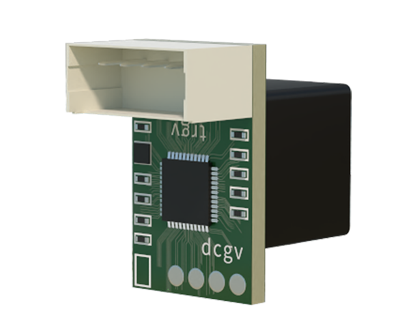
The future of laser sensor software lies in increased intelligence and connectivity. We are seeing the integration of machine learning algorithms directly into sensor firmware, enabling adaptive behavior where the sensor can learn to distinguish between complex patterns or defect types without explicit programming. The Industrial Internet of Things (IIoT) paradigm is pushing software to include MQTT brokers or direct cloud connectivity for data streaming and analytics. This transforms the laser sensor from a simple data point into a node in a vast, intelligent network.
In conclusion, while the laser and optics form the eyes of a laser sensor, the software is its brain. A deep understanding of its capabilities—from real-time firmware to user-friendly configuration tools and advanced data processing—is essential for system integrators and engineers. By strategically selecting, configuring, and integrating laser sensor software, industries can achieve unprecedented levels of precision, efficiency, and intelligence in their automated processes, driving productivity and quality to new heights.