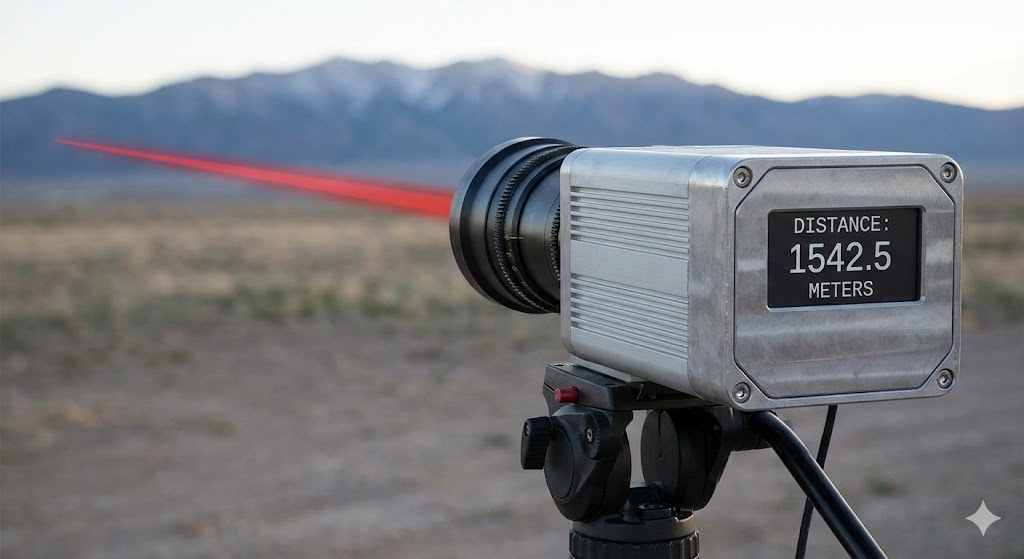
In the rapidly evolving landscape of industrial automation and precision measurement, laser sensors have emerged as a cornerstone technology, driving innovation across diverse sectors. These devices, which utilize laser beams to detect, measure, or profile objects with exceptional accuracy, are continuously expanding their capabilities and applications. The core principle involves emitting a focused laser light toward a target and analyzing the reflected signal—whether through triangulation, time-of-flight, or interferometry methods—to derive precise data such as distance, displacement, thickness, or surface characteristics. This foundational technology has matured significantly, yet its horizons are being pushed further by ongoing advancements in optics, electronics, and data processing.
One of the most notable trends in laser sensor expansion is the integration of smart features and connectivity. Modern laser sensors are increasingly equipped with embedded processors and IoT (Internet of Things) capabilities, enabling real-time data analytics, predictive maintenance, and seamless integration into Industry 4.0 ecosystems. For instance, in automotive manufacturing, laser sensors not only perform high-speed dimensional checks on components but also communicate directly with robotic systems to adjust assembly lines dynamically, reducing downtime and enhancing quality control. Similarly, in logistics and warehousing, laser-based LiDAR sensors are pivotal for autonomous guided vehicles (AGVs), providing 360-degree environmental mapping and obstacle detection to optimize inventory management and material flow.
The expansion is also evident in the enhancement of performance parameters. Today's laser sensors offer improved resolution, often down to the micrometer or even nanometer scale, alongside extended measurement ranges and higher sampling rates. This is particularly crucial in semiconductor fabrication and electronics assembly, where miniaturization demands extreme precision. For example, confocal chromatic sensors can measure layer thicknesses on wafers with sub-micron accuracy, while laser displacement sensors monitor the flatness of circuit boards during production. Furthermore, advancements in laser source technology, such as the development of blue lasers and ultrafast pulsed lasers, have opened new possibilities. Blue lasers, with their shorter wavelengths, provide better resolution on reflective or transparent surfaces—like glass or polished metals—that traditionally challenge infrared sensors. Ultrafast lasers enable precise time-of-flight measurements in challenging environments, such as long-range outdoor scanning for construction or mining.
Application diversity is another key driver of expansion. Beyond traditional manufacturing, laser sensors are penetrating fields like agriculture, healthcare, and environmental monitoring. In agriculture, laser-based systems are used for crop health assessment, soil analysis, and automated harvesting equipment, leveraging spectral analysis to detect plant stress or nutrient deficiencies. In healthcare, laser sensors contribute to non-invasive diagnostic tools, such as optical coherence tomography for retinal imaging or laser Doppler vibrometry for detecting subtle physiological movements. Environmental applications include monitoring air quality through LIDAR-based atmospheric sensing or tracking structural deformations in bridges and buildings with laser scanning techniques, aiding in disaster prevention and infrastructure maintenance.

However, this expansion is not without challenges. Issues such as ambient light interference, material-dependent reflectivity, and safety concerns regarding laser classification require continuous attention. Manufacturers are addressing these through innovative designs—like incorporating adaptive algorithms to filter noise, using polarized light to reduce glare, and ensuring compliance with international safety standards (e.g., IEC 60825). Additionally, the push for miniaturization and cost reduction is making laser sensors more accessible to small and medium-sized enterprises, further broadening their market reach.
Looking ahead, the fusion of laser sensing with artificial intelligence and machine learning promises to unlock even greater potential. AI-enhanced sensors can learn from data patterns to improve accuracy, predict failures, or adapt to varying conditions autonomously. For instance, in quality inspection, AI-driven laser systems can identify defects that are imperceptible to human operators, revolutionizing production lines. As research continues in areas like quantum sensing and photonic integration, the future may see laser sensors becoming even more compact, energy-efficient, and multifunctional.
In conclusion, the expansion of laser sensors is a testament to their versatility and critical role in modern industry. By embracing technological innovations and adapting to emerging needs, these devices are set to redefine precision measurement and automation, offering solutions that enhance efficiency, safety, and sustainability across global applications. Engineers and industry stakeholders must stay abreast of these developments to leverage the full potential of laser sensing in driving progress.