In modern industrial environments, safety and operational efficiency are paramount. Laser entry sensors have emerged as a critical technology, offering unparalleled precision and reliability for monitoring access points, safeguarding personnel, and optimizing automated processes. Unlike traditional mechanical switches or basic photoelectric sensors, these advanced devices utilize focused laser beams to detect the presence or absence of objects with exceptional accuracy.
The core principle of a laser entry sensor involves emitting a coherent, narrow beam of light towards a receiver or a reflective target. Any interruption in this beam—caused by a person, vehicle, or object crossing the detection zone—triggers an immediate output signal. This signal can be integrated into a safety interlock system to halt machinery, activate alarms, or log entry events. The laser's inherent properties, such as minimal beam divergence and high intensity, allow for long-range detection and the ability to define very precise, narrow sensing fields. This is particularly advantageous in applications where space is constrained or where pinpoint accuracy is required to differentiate between, for example, a small part and a human limb.
Key advantages of implementing laser entry sensors include their superior range and resolution. They can reliably detect objects over distances exceeding hundreds of meters, far surpassing the capabilities of standard infrared or ultrasonic sensors. Their high resolution enables the detection of very small objects, making them ideal for intricate assembly lines or security portals. Furthermore, they exhibit remarkable stability and are less susceptible to ambient light interference, temperature fluctuations, or airborne dust compared to other optical methods, ensuring consistent performance in harsh industrial settings like welding shops, foundries, or outdoor loading bays.
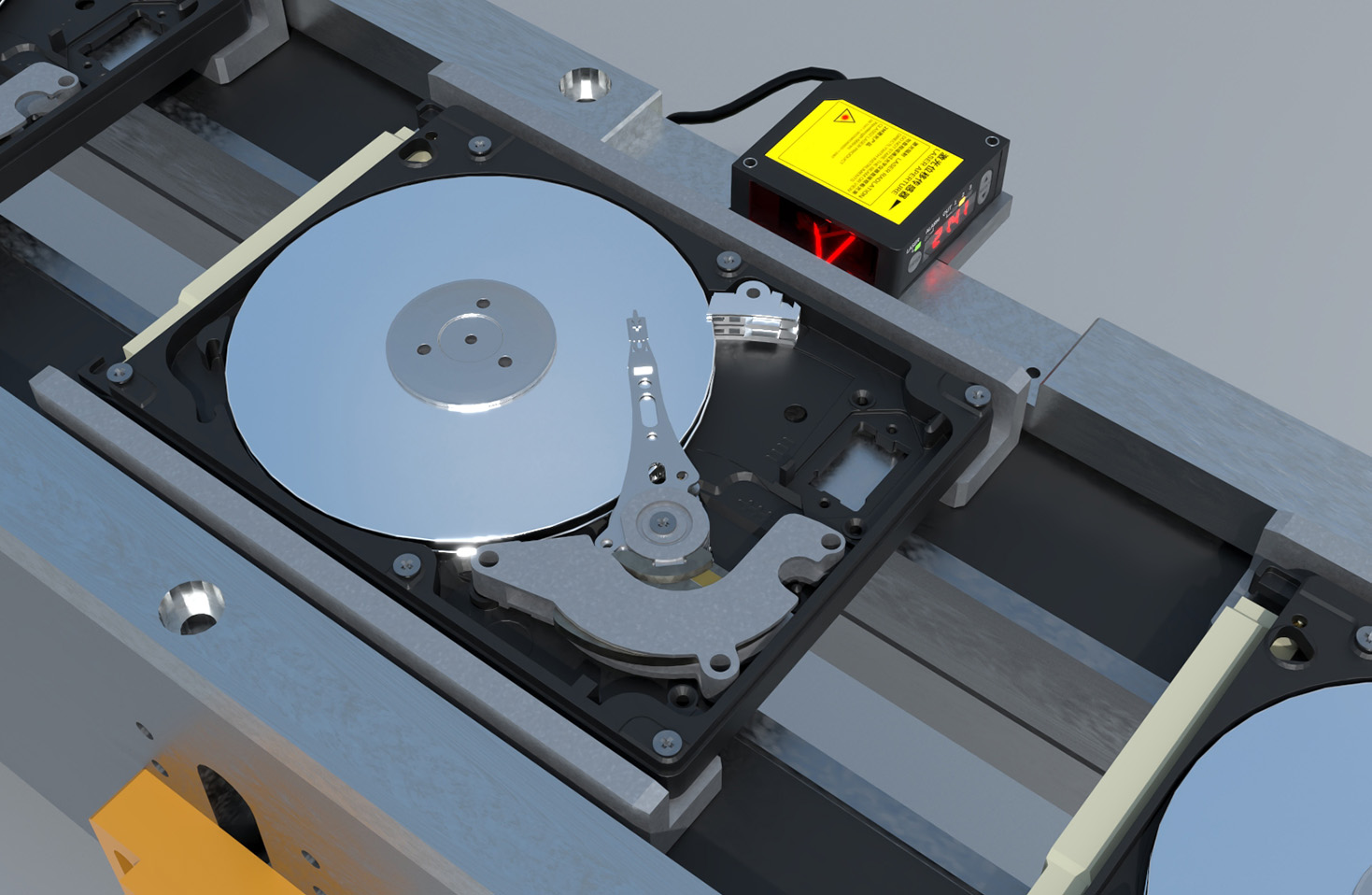
Integration into Industrial Control Systems is seamless. Modern laser entry sensors feature programmable logic, adjustable sensitivity, and various output options (e.g., NPN/PNP, relay, analog, or IO-Link). This programmability allows engineers to tailor the sensor's response for specific applications, such as speed monitoring, object counting, or precise positioning. When used as part of a safety light curtain or perimeter guarding system, these sensors contribute directly to achieving compliance with international safety standards like ISO 13849 and IEC 61496, which govern the performance of safety-related parts of control systems.
A primary application is in robotic work cells. Laser entry sensors create an invisible protective barrier around hazardous robotic arms. Any unauthorized entry into this zone prompts an immediate emergency stop, preventing accidents. Similarly, in automated guided vehicle (AGV) systems, they serve as non-contact safety bumpers, detecting obstacles with high precision to avoid collisions. In warehouse management, they monitor dock doors and conveyor entry points, ensuring only authorized passages and enabling efficient inventory flow tracking.
Maintenance is straightforward. With no moving parts subject to wear and tear, laser sensors boast long service lives. Routine maintenance typically involves only periodic lens cleaning to ensure optical clarity and verification of alignment. Most models are built with robust, IP67-rated housings that protect against water and dust ingress.
Looking ahead, the convergence of laser sensing with Industrial Internet of Things (IIoT) platforms is the next frontier. Sensors equipped with networking capabilities can transmit real-time status data, predictive maintenance alerts, and operational metrics to central dashboards. This facilitates proactive system management, reduces downtime, and provides valuable analytics for process optimization. Innovations in beam shaping and multi-point detection are also expanding their applicability in complex 3D monitoring scenarios.
In conclusion, laser entry sensors represent a sophisticated and indispensable component of contemporary industrial automation and safety architecture. Their precision, reliability, and adaptability address the dual imperatives of protecting human workers and enhancing the efficiency of automated processes. As technology advances, their role is set to become even more integral, driving smarter and safer industrial operations worldwide.