In the realm of industrial automation, consumer electronics, and IoT devices, the ability to detect the presence, absence, or position of an object without physical contact is paramount. Among the various non-contact sensing technologies, capacitive sensing has emerged as a highly versatile and reliable solution. At the heart of modern capacitive sensing systems lies the Capacitive Proximity Sensor Integrated Circuit (IC), a sophisticated component that translates minute changes in capacitance into actionable digital signals. This article delves into the operational principles, key architectural features, diverse applications, and critical selection criteria for these essential chips.
The fundamental principle behind a capacitive proximity sensor IC is the detection of changes in capacitance formed between a sensor electrode and its environment. All objects possess a dielectric constant; when a target object enters the electric field generated by the sensor electrode, it alters the local dielectric properties, thereby changing the capacitance of the system. Modern capacitive sensor ICs do not measure capacitance directly in absolute terms. Instead, they employ sophisticated methods to detect these subtle variations. The most common technique involves configuring the IC in a relaxation oscillator circuit. The sensor electrode forms part of the oscillator's RC timing network. A change in capacitance (ΔC) causes a proportional change in the oscillation frequency (ΔF). The IC's internal circuitry measures this frequency shift, processes it, and converts it into a digital output, such as a switch signal, PWM, or I2C/SPI data.
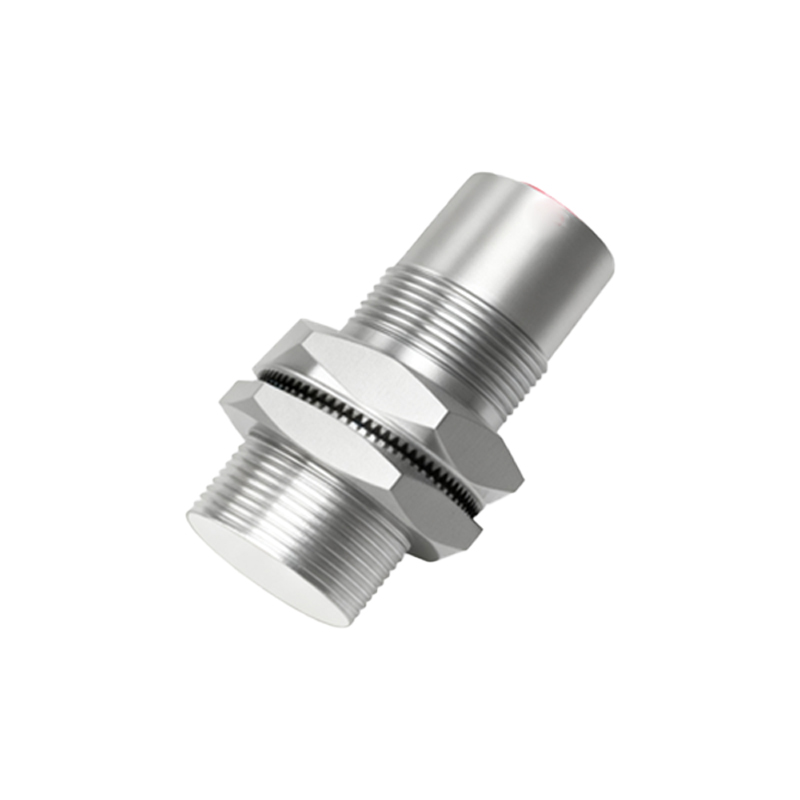
Key architectural blocks of a typical capacitive sensor IC include a sensing front-end, a signal processing unit, and a digital interface. The sensing front-end, often comprising a precision oscillator and charge measurement circuits, is responsible for the initial signal acquisition. Advanced ICs integrate sophisticated shielding drivers and guard electrodes to minimize parasitic capacitances and enhance immunity to environmental noise like moisture or contaminants. The signal processing unit is where the intelligence resides. It employs algorithms for baseline tracking, which allows the sensor to adapt to slow environmental drifts (like temperature changes), and digital filtering to distinguish a genuine touch or proximity event from electrical noise. Finally, the digital interface provides the communication link to a host microcontroller, offering configurable parameters such as sensitivity thresholds, response time, and output format.
The applications for capacitive proximity sensor ICs are vast and growing. In industrial settings, they are used for liquid level detection in non-metallic tanks, part presence verification on conveyor belts, and end-of-travel detection in machinery where traditional mechanical limit switches would wear out. The consumer electronics market heavily relies on these ICs for touch-sensitive buttons, sliders, and wheels, providing sleek, waterproof user interfaces. In the automotive sector, they enable innovative features like touch-based interior lighting controls, proximity sensing for keyless entry systems, and occupant detection for advanced airbag systems. The IoT and smart home domain utilizes them for touchless faucets, proximity-activated lighting, and tamper detection.
Selecting the right capacitive sensor IC for a project requires careful consideration of several parameters. Sensitivity and Range: Determine the required detection distance and the type of target material (metal, plastic, liquid, human body). ICs offer adjustable sensitivity to cater to different applications. Noise Immunity: For operation in electrically noisy environments (e.g., near motors), choose ICs with robust filtering, high SNR, and features like spread-spectrum sensing. Power Consumption: Battery-powered devices demand ICs with ultra-low power modes, such as wake-on-proximity functionality. Number of Channels: ICs are available with single or multiple sensing channels, allowing for the creation of sliders, matrices, or monitoring several points independently. Interface and Programmability: Consider whether a simple toggle output suffices or if a digital bus (I2C/SPI) is needed for configuration and data reporting. Package and Form Factor: The physical size and package type (e.g., QFN, SSOP) must fit the PCB layout constraints.
Designing with these ICs also presents specific challenges. Proper PCB layout is critical. The sensor electrode area, shape, and routing to the IC must be optimized to maximize signal strength and minimize stray capacitance. A ground plane surrounding the sensor trace (with a defined gap) is often used to shape the electric field. The choice of overlay material (plastic, glass) and its thickness directly affects sensitivity; thicker overlays require higher IC sensitivity. Environmental factors like humidity or condensation can be mitigated through firmware algorithms and hardware design, such as using driven shields.
In conclusion, capacitive proximity sensor ICs are powerful enablers of intuitive and reliable human-machine interaction and automated sensing. Their ability to sense through non-conductive materials, their solid-state reliability, and their ever-increasing intelligence and integration make them a cornerstone of modern electronic design. By understanding their operating principles and carefully evaluating specifications against application needs, engineers can effectively harness this technology to create innovative