Laser sensor guidance represents a critical technology in modern industrial automation, enabling precise navigation, positioning, and object detection without physical contact. At its core, this technology relies on the emission of laser beams—typically from diode lasers—that interact with target surfaces. The fundamental principle involves measuring the time-of-flight (ToF), phase shift, or triangulation of reflected light to determine distance, shape, or orientation. In ToF systems, a laser pulse is emitted, and the time taken for its reflection to return is measured; since the speed of light is constant, distance can be calculated with high accuracy, often within millimeter ranges. Phase-shift methods, on the other hand, modulate the laser beam's intensity and compare the phase difference between emitted and reflected signals, offering finer resolution for shorter distances. Triangulation-based sensors project a laser spot onto a target, and a receiver (like a CCD or CMOS array) captures the spot's position from an angle; geometric calculations then derive distance based on the known baseline between emitter and receiver.
These principles are applied across various guidance scenarios. For instance, in automated guided vehicles (AGVs), laser sensors scan the environment to create real-time maps using lidar (light detection and ranging) technology. By emitting multiple laser beams in a 360-degree pattern and analyzing reflections, AGVs can navigate complex factory floors, avoid obstacles, and follow predefined paths with minimal human intervention. Similarly, in robotic arms, laser guidance ensures accurate pick-and-place operations by detecting object edges or contours, even in low-light or high-vibration environments. The sensors' ability to operate at high speeds—often processing thousands of measurements per second—makes them ideal for dynamic applications like conveyor belt sorting or quality inspection.
Key advantages of laser sensor guidance include its non-contact nature, which reduces wear and tear, and its immunity to electromagnetic interference, a common issue in industrial settings. However, challenges persist, such as sensitivity to ambient light, reflective surfaces, or dust, which can scatter laser beams and cause measurement errors. To mitigate this, advanced sensors incorporate filtering algorithms, multiple wavelengths, or adaptive power controls. For example, some systems use infrared lasers to minimize interference from visible light, while others employ pulsed lasers to distinguish between true reflections and noise.
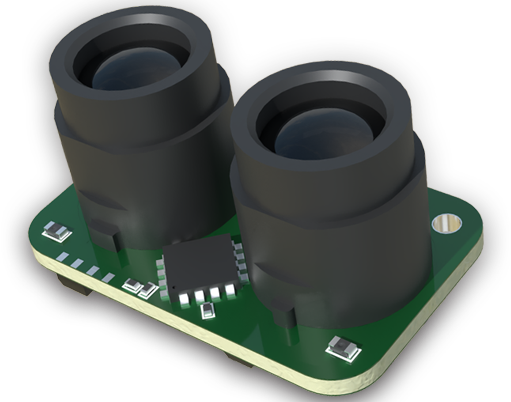
The integration of laser guidance with IoT and AI has further expanded its capabilities. Sensors can now feed data into cloud-based platforms for predictive maintenance or real-time optimization, enhancing overall system efficiency. In summary, laser sensor guidance operates on well-established optical principles, but its true value lies in adaptability and precision, driving innovations in smart manufacturing and autonomous systems. As industries evolve toward greater automation, the role of laser sensors will only grow, supported by ongoing advancements in miniaturization, cost reduction, and data processing.