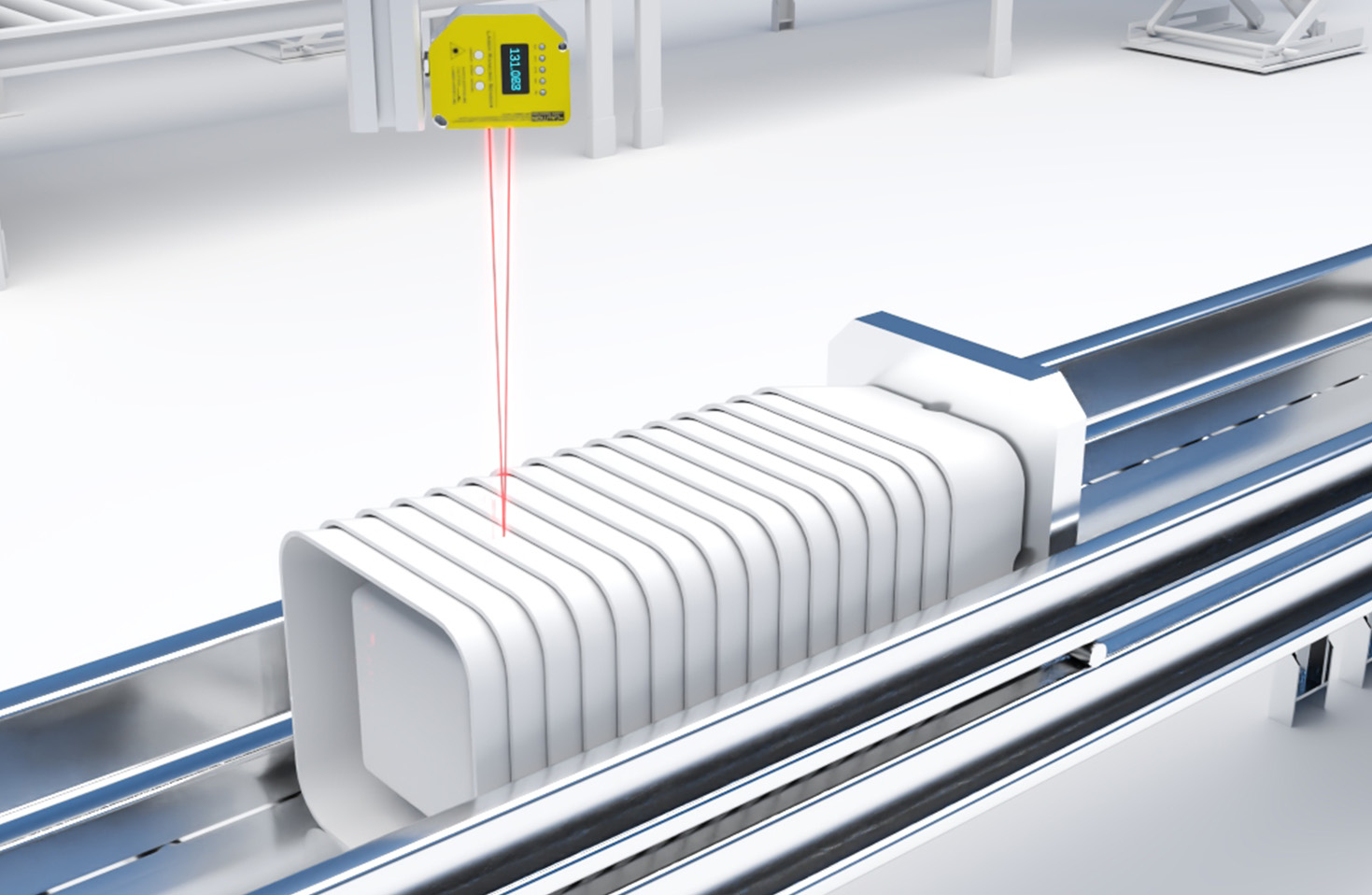
In the realm of industrial automation and precision measurement, groove laser distance sensors have emerged as a critical component for countless applications. These specialized sensors, often referred to as "U-shaped" or "fork" sensors, utilize a laser beam transmitted from one arm of the groove to a receiver in the opposite arm. The fundamental principle is based on time-of-flight (ToF) or phase-shift measurement. When an object passes through the groove, it interrupts the laser beam. The sensor precisely measures the time delay or phase change of the reflected or interrupted signal to calculate the object's distance, presence, or dimensions with exceptional accuracy.
The core advantages of groove-type laser sensors lie in their inherent design. The fixed, parallel alignment of the transmitter and receiver within the U-shaped bracket eliminates alignment issues common with through-beam sensors that require separate mounting. This makes installation remarkably straightforward and ensures long-term stability, even in environments with vibration. Furthermore, the groove design provides a clearly defined detection zone. Objects are only detected when they physically pass through the aperture, making these sensors highly immune to ambient light interference, background objects, or dust accumulation on the lenses, provided the optical windows are kept reasonably clean.
Typical specifications for these sensors highlight their performance capabilities. Measurement ranges can vary from compact models with a groove width of a few millimeters for detecting tiny components, to large-aperture sensors exceeding 500mm for monitoring boxes or panels on a conveyor. Resolution can reach micron levels, while repeatability is often in the sub-micron range. Response times are extremely fast, frequently in the microsecond range, enabling reliable detection of high-speed objects. Many modern models feature integrated digital interfaces like IO-Link, which simplifies parameter setting, provides diagnostic data, and enables seamless integration into Industry 4.0 and smart factory networks.
The application spectrum for groove laser distance sensors is vast. In the electronics industry, they are indispensable for verifying the presence and precise height of surface-mount device (SMD) components on printed circuit boards (PCBs). In automotive assembly, they measure the flushness of door panels, windows, or trim parts. Packaging lines utilize them to check fill levels in bottles, count items, or control the precise positioning of labels. They also play a vital role in robotics for part positioning and in woodworking or metal fabrication for thickness monitoring and sorting.
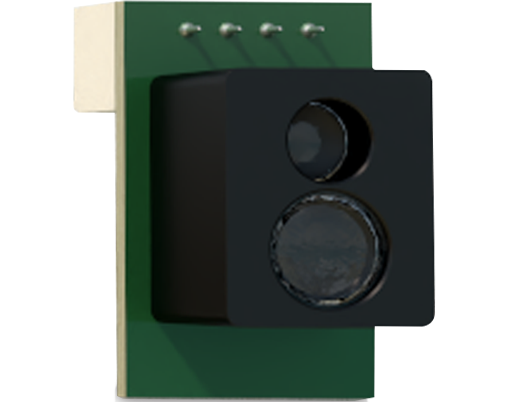
Selecting the right groove laser sensor requires careful consideration of several parameters. The most fundamental is the groove size (width, height, and depth), which must accommodate the maximum expected size of the target object. The required measurement range and resolution dictate the sensor's class. Environmental factors are crucial; industrial-grade sensors with high IP ratings (e.g., IP67) are necessary for dusty, humid, or washdown environments. The material and surface properties of the target object also affect performance. Highly reflective or transparent materials may require sensors with specialized laser types or algorithms. Finally, the output type (analog voltage/current, discrete switching signals, or serial data) must be compatible with the host controller.
Installation and maintenance are generally simple but require attention to detail. The sensor should be mounted securely to minimize stress on the housing. Ensuring the target object passes consistently through the center of the groove optimizes accuracy. While the enclosed design protects the optics, periodic cleaning of the glass windows with appropriate materials is recommended to maintain optimal performance. Leveraging built-in diagnostics via digital interfaces can facilitate predictive maintenance, reducing downtime.
In conclusion, groove laser distance sensors offer a robust, precise, and reliable solution for non-contact measurement and detection tasks where defined boundaries and high environmental immunity are needed. Their design eliminates complex alignment, providing a plug-and-play precision tool. As technology advances, we see trends towards miniaturization, even higher speeds and resolutions, and enhanced connectivity features. For engineers and system integrators, understanding the principles, capabilities, and selection criteria of these sensors is key to implementing efficient, accurate, and future-proof automation systems. They are not just sensors; they are enablers of quality control and process optimization in modern manufacturing.