In the realm of industrial automation and machinery safety, proximity sensors play an indispensable role. Among the diverse types, the rear cover proximity sensor is a specific and crucial component designed for precision and reliability in demanding environments. This article delves into the fundamentals, working principles, applications, and key considerations of rear cover proximity sensors.
A rear cover proximity sensor is a non-contact sensing device typically mounted on or integrated into the rear housing or cover of a machine, enclosure, or moving part. Its primary function is to detect the presence, absence, or position of a target object—often the machine's own components, such as a door, guard, panel, or another moving element—without any physical contact. The "rear cover" designation generally refers to its physical mounting location, which is often chosen for protection, space optimization, or specific functional requirements related to safeguarding or positional feedback.
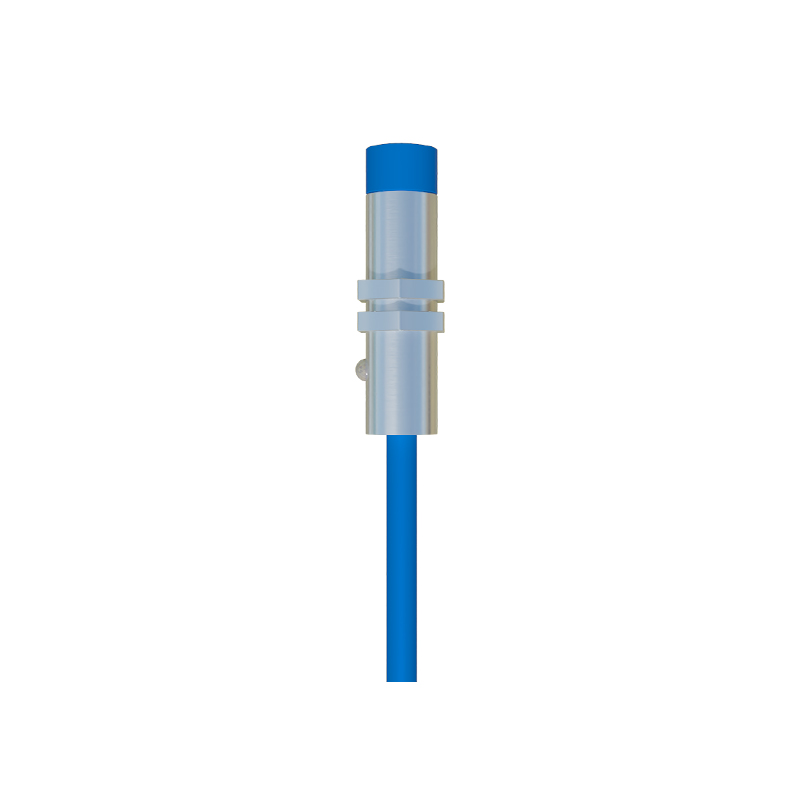
The core technology behind these sensors varies, with inductive and capacitive types being most common in industrial settings. Inductive proximity sensors are the workhorses for detecting metallic targets. They generate an electromagnetic field from a coil in the sensor's face. When a metallic object enters this field, it induces eddy currents within the target, causing a change in the oscillation amplitude within the sensor. This change is detected by the internal circuitry, which then switches the sensor's output state (e.g., from OFF to ON). These sensors are ideal for detecting the position of metal covers, machine tool slides, or robotic arm components.
Capacitive proximity sensors, on the other hand, can detect both metallic and non-metallic materials (plastics, liquids, wood, etc.). They function by generating an electrostatic field. Any object that enters this field alters the sensor's capacitance, triggering a change in output. This makes them suitable for applications where the rear cover itself might be made of plastic or composite materials, or for detecting the presence of materials behind a cover.
The operation is straightforward yet highly reliable. The sensor is securely installed on the stationary rear cover or frame. The target object is positioned so that it moves into the sensor's effective sensing range during the machine's normal operation. When the target is within this predefined distance, the sensor activates its output signal. This signal is transmitted to a control system like a Programmable Logic Controller (PLC), which then initiates a pre-programmed action. This action could be halting a process if a safety guard is open, confirming a panel is locked in place before startup, or providing positional feedback for a linear actuator.
Applications for rear cover proximity sensors are vast across manufacturing, packaging, automotive, and material handling industries. A quintessential application is in safety interlocking systems for machine guards and access doors. A sensor mounted on the frame can detect if a rear access panel or guard is properly closed. If the panel is open, the sensor sends a signal to immediately stop the machine, preventing operator injury. They are also extensively used for position verification. For instance, in a printing machine, a sensor on the rear frame can confirm the precise home position of the print carriage. In automated assembly lines, they verify the correct seating of components or tools on a rotating carousel. Furthermore, they facilitate counting and sequencing operations by detecting the passage of objects on a conveyor that passes near a rear-mounted sensor.
Selecting the right rear cover proximity sensor requires careful evaluation of several parameters. The sensing range, the maximum distance at which the sensor can reliably detect the target, is paramount and must suit the mechanical clearances. The housing material and ingress protection (IP) rating are critical for durability; sensors in harsh environments may require stainless steel housings and high IP ratings (e.g., IP67) to resist dust, coolants, and washdowns. The output type (e.g., NPN, PNP, analog, or IO-Link) must be compatible with the control system. Other factors include the switching frequency (for high-speed applications), temperature tolerance, and whether a shielded or unshielded sensor model is needed based on the installation environment to prevent electromagnetic interference.
Installation and maintenance are relatively simple but vital for optimal performance. Proper alignment between the sensor and its target is essential to ensure consistent detection. Environmental factors like excessive vibration, extreme temperatures, or accumulation of metallic debris near inductive sensors can affect performance. Regular checks for physical damage, loose connections, and signal integrity are part of a good preventive maintenance routine.
In conclusion, the rear cover proximity sensor is a fundamental pillar of modern industrial automation, offering a robust, non-contact solution for detection, positioning, and safety. Its integration into machine rear covers and frames provides a seamless and protected means of gathering critical operational data. By understanding their operating principles and application-specific requirements, engineers and technicians can effectively deploy these sensors to enhance machine safety, improve process reliability, and boost overall operational efficiency. As machinery becomes more sophisticated, the role of such precise and dependable