While laser distance sensors are widely celebrated for their high precision, non-contact measurement capabilities, and rapid response times in industrial automation, a nuanced examination reveals several significant drawbacks that engineers and system integrators must carefully consider. These limitations often emerge in real-world operational environments, impacting reliability, cost-effectiveness, and long-term performance.
One of the most prominent disadvantages is their sensitivity to environmental conditions. Laser sensors, particularly those using visible red lasers or standard infrared wavelengths, can suffer from severe performance degradation in the presence of airborne contaminants such as dust, smoke, steam, or oil mist. These particles scatter or absorb the laser beam, leading to signal loss, measurement errors, or complete failure to register a target. In harsh manufacturing settings like foundries, welding shops, or food processing plants, this necessitates expensive protective enclosures or frequent maintenance, negating some of the convenience of a non-contact solution.
Furthermore, the performance is highly dependent on the target surface properties. Specular or highly reflective surfaces can deflect the laser beam away from the sensor's receiver, causing a dropout. Conversely, dark, matte, or absorptive surfaces can weaken the return signal significantly. Transparent materials, like glass or clear plastics, pose another challenge as the laser may pass through or reflect from multiple internal surfaces, yielding ambiguous and inaccurate readings. This often forces a costly and time-consuming process of sensor selection, testing, and calibration for each specific material, limiting flexibility.
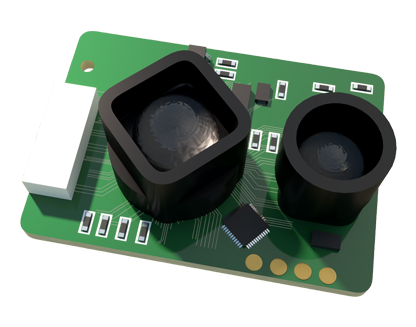
Interference from ambient light is a persistent issue. Although modern sensors employ modulation techniques to filter out constant background light, strong direct sunlight or light from other coherent sources (like adjacent laser sensors) can saturate the receiver or create noise, compromising accuracy. This restricts their use in outdoor applications or requires additional shielding.

From a financial perspective, the initial procurement cost of a high-accuracy laser distance sensor remains substantially higher than that of ultrasonic or inductive proximity alternatives. While the price has decreased over time, a robust industrial-grade laser sensor with necessary certifications (e.g., IP67, CE) still represents a significant capital investment. The total cost of ownership is further inflated by their relative fragility; the precise optical and electronic components are vulnerable to mechanical shock, vibration, and misalignment, leading to potentially costly repairs or replacements.
Operational limitations also exist. Most laser sensors have a defined "dead zone" very close to the lens where measurements are impossible. The effective measuring range, while often advertised as extensive, is typically valid only for ideal, high-reflectivity targets under perfect conditions. For challenging surfaces, the usable range can be drastically reduced. Additionally, the small, focused laser spot, while excellent for precision, becomes a liability when trying to detect uneven or porous surfaces, as it may measure a single peak or valley rather than an average distance.
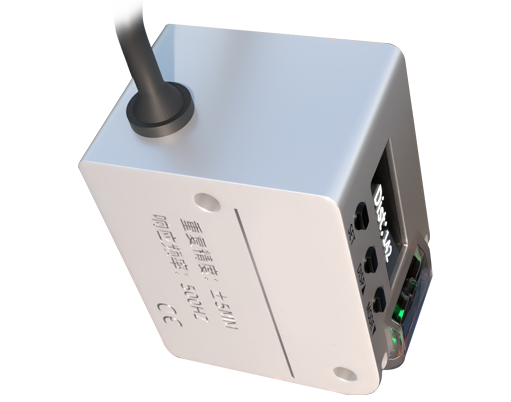
Safety is a non-trivial concern, especially with Class 2 or higher lasers. They require careful handling and installation to prevent accidental exposure to human eyes, mandating safety training, interlocks, and warning labels, which adds to procedural overhead. In industries with stringent safety protocols, this introduces another layer of compliance.
Finally, the complexity of integration is often underestimated. Achieving stated accuracy requires meticulous installation, stable mounting, and precise alignment. Thermal drift can affect calibration over time, necessitating periodic re-validation. The output signals and communication protocols (e.g., analog, IO-Link, Ethernet/IP) must be seamlessly integrated into the broader control system, sometimes requiring specialized knowledge.
In conclusion, laser distance sensors are powerful tools but are not a universal solution. Their drawbacks—environmental sensitivity, target material dependence, cost, fragility, and integration complexity—demand a thorough application analysis. Engineers must weigh these factors against the benefits, often finding that for many demanding industrial environments, a combination of sensor technologies or alternative solutions like confocal or chromatic sensors for difficult surfaces may provide more robust and economical performance in the long run. Acknowledging and planning for these limitations is crucial for designing reliable, efficient, and cost-effective automated systems.