Direct reflection laser sensors, also known as diffuse reflection sensors, represent a cornerstone technology in modern industrial automation and precision measurement. Unlike through-beam sensors that require separate emitter and receiver units, or retro-reflective sensors that rely on a reflector, the direct reflection type integrates both the laser emitter and the photoelectric receiver within a single, compact housing. The fundamental operating principle is elegantly straightforward: the sensor emits a focused beam of laser light toward a target object. Upon striking the surface, the light is diffusely reflected in many directions. A portion of this scattered light returns to the sensor's receiver. The internal electronics then evaluate the intensity or the time-of-flight of this returned signal to determine the presence, distance, or even certain characteristics of the object.
The advantages of this integrated design are profound for system integrators and plant engineers. First and foremost is the simplified installation process. With only one device to mount and wire, alignment challenges are drastically reduced compared to through-beam setups, leading to faster commissioning and lower labor costs. This single-unit design also minimizes the required mounting space, making these sensors ideal for applications with stringent spatial constraints on machinery or conveyor lines. Furthermore, direct reflection laser sensors excel in detecting a vast array of materials, including non-metallic surfaces like plastic, wood, cardboard, and even transparent glass or films, though specific models with background suppression technology may be required for challenging surfaces.
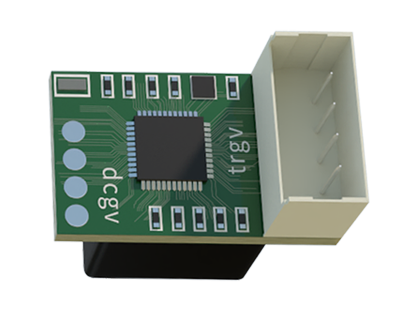
Key performance parameters define the selection criteria for these devices. Sensing range is paramount, with standard models covering from a few centimeters up to several meters. High-precision models used for distance measurement offer remarkable resolutions down to the micrometer level. Response time, often in the microsecond range, ensures reliable detection of fast-moving objects on high-speed production lines. The choice of laser class (typically Class 1 or Class 2, which are eye-safe under normal operating conditions) and output type (digital PNP/NPN, analog current/voltage, or IO-Link for smart sensor communication) is dictated by the specific application requirements and the control system architecture.
In practical industrial settings, the applications are diverse and critical. They are ubiquitously deployed for object detection on assembly lines, verifying the presence of components, bottles, or packages. In packaging machinery, they precisely count items or control fill levels. For robotics, they provide essential proximity sensing for collision avoidance and precise positioning guidance. In dimensional verification tasks, they can measure height, width, or check for part presence in a fixture. A specialized variant, the background suppression (BGS) sensor, uses triangulation to detect objects only within a defined window, effectively ignoring surfaces beyond the set distance. This is invaluable for detecting objects on a conveyor regardless of the conveyor color or detecting transparent objects against a background.
When implementing direct reflection laser sensors, several environmental and operational factors must be considered to ensure long-term reliability. Ambient light from factory lighting or sunlight can interfere with the receiver; thus, models with robust ambient light immunity are essential for harsh environments. The color, reflectivity, and surface texture of the target significantly influence the sensing range and stability—a highly reflective white surface will return a much stronger signal than a matte black one. Dust, steam, or oil mist in the atmosphere can attenuate the laser beam. In such conditions, sensors with higher output power or protective enclosures (often rated IP67 or IP69K) are necessary. Regular maintenance, primarily keeping the lens clean from contamination, is a simple but crucial practice.
The evolution of Industry 4.0 and smart manufacturing is further elevating the role of these sensors. The integration of IO-Link communication transforms a basic binary sensor into an intelligent data point on the network. It enables remote configuration, real-time monitoring of signal strength or internal temperature, and predictive maintenance alerts, providing invaluable data for optimizing overall equipment effectiveness (OEE). Looking forward, advancements in laser diode technology and signal processing algorithms promise even smaller form factors, longer ranges, higher precision, and greater resistance to environmental interference.
In conclusion, direct reflection laser sensors offer an unparalleled combination of versatility, precision, and ease of use for object detection and distance measurement. Their ability to provide reliable, non-contact sensing across countless materials and challenging conditions makes them an indispensable tool for engineers designing efficient, robust, and intelligent automated systems. A thorough understanding of their operating principles, key specifications, and application nuances is essential for selecting the optimal sensor to solve a given industrial challenge, thereby enhancing productivity, quality, and operational safety.