Line laser sensors have become indispensable tools across various industrial sectors, offering high-precision, non-contact measurement for tasks like profile inspection, displacement sensing, and 3D scanning. When evaluating their price, it's crucial to look beyond the initial purchase cost and consider the total value proposition. The price spectrum for these sensors is broad, typically ranging from a few hundred to several thousand US dollars per unit. This variation is primarily driven by several key technical and commercial factors.
Firstly, performance specifications are the primary price determinants. Key parameters include measurement range, resolution, accuracy, and scanning speed. A sensor with a measurement range of 100mm and an accuracy of ±5µm will command a significantly higher price than one with a 30mm range and ±50µm accuracy. Similarly, sensors designed for high-speed production lines, requiring scan rates exceeding 10 kHz, incorporate faster processors and more sophisticated optics, increasing manufacturing costs. The laser class (typically Class 2 or safe Class 1) and wavelength (common are 650nm red or 808nm infrared) also influence the component cost.
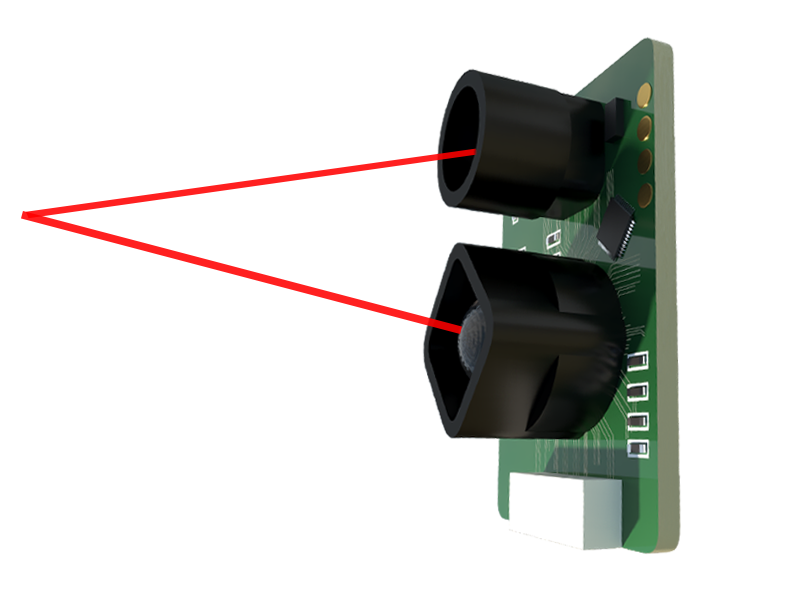
Secondly, the underlying technology and build quality dictate a substantial portion of the cost. Sensors utilizing high-grade optics, such as precision aspherical lenses for minimal distortion, and robust housing materials (e.g., stainless steel or hardened aluminum) for protection against dust, coolant, and mechanical shock (often rated IP67 or higher), are more expensive. The core component, the CMOS or CCD linear image sensor, varies in price based on its pixel count and quality. Advanced models integrate onboard processors for real-time edge computing, filtering, and data output, which adds to the complexity and cost but reduces the load on external systems.
Thirdly, brand reputation, software, and support services are critical value-adds reflected in the price. Established manufacturers like Keyence, Cognex, or Micro-Epsilon invest heavily in R&D, rigorous calibration, and long-term reliability testing. Their sensors often come bundled with powerful, user-friendly software for configuration, data visualization, and analysis. While their upfront cost is higher, the reduced risk of downtime, comprehensive technical support, and longer warranty periods provide a lower total cost of ownership. In contrast, more affordable options from generic or emerging brands may offer comparable specs on paper but might lack in long-term stability, software polish, or accessible customer service.
Furthermore, the required interface and integration complexity affect the final price. Standard digital outputs (like Ethernet/IP, PROFINET, or EtherCAT) and analog voltage/current outputs are common. Sensors requiring specialized protocols or custom communication interfaces for integration into legacy systems may involve additional engineering costs. The need for complementary accessories—such as mounting brackets, protective enclosures, external cooling systems for high-temperature environments, or calibration targets—also adds to the overall investment.
Market dynamics and purchase volume play a role as well. Prices can fluctuate based on raw material costs for semiconductors and optical glass. Purchasing directly from the manufacturer or authorized distributors for single units is typically the most expensive route. Volume procurement for OEM integration or large-scale deployment often unlocks significant discounts. It's also worth exploring the refurbished market for well-maintained, calibrated sensors from previous generations, which can offer reliable performance at a fraction of the cost for non-mission-critical applications.
In conclusion, the price of a line laser sensor is a direct reflection of its performance capabilities, durability, and the ecosystem surrounding it. A thorough needs analysis is the first step: define the required accuracy, environmental conditions, data output needs, and integration framework. The most economical choice is rarely the cheapest unit available; it is the sensor that delivers the required precision reliably over its intended lifespan, minimizing maintenance, recalibration, and replacement expenses. Investing in the right sensor translates directly into improved product quality, reduced waste, and enhanced production efficiency, justifying the capital expenditure for forward-thinking industrial operations.