In the world of automation, electronics, and smart devices, there is a silent workhorse that operates without a sound or a touch. This component is the proximity sensor. At its core, a proximity sensor is a device that can detect the presence or absence of a nearby object without any physical contact. It does this by emitting an electromagnetic field or a beam of radiation, such as infrared light, and then looking for changes in the field or the return signal. The object being sensed is often referred to as the sensor's target.
The fundamental principle behind most proximity sensors is straightforward. They convert information about the presence or distance of a target into an electrical signal. This signal is then processed by a connected system, such as a programmable logic controller (PLC) or a microcontroller, to trigger a specific action. For instance, when you bring your face close to your smartphone during a call, the screen turns off. This is a common application of a proximity sensor, preventing accidental screen touches with your ear.
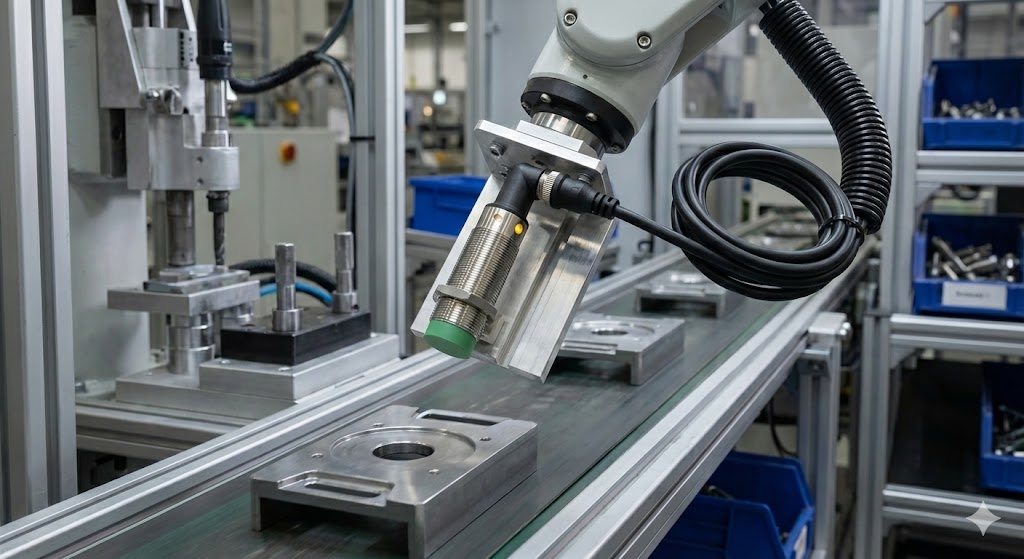
There are several main types of proximity sensors, each utilizing different technologies to suit various applications and environments. The most prevalent types include inductive, capacitive, ultrasonic, and photoelectric sensors.
Inductive proximity sensors are widely used in industrial settings. They can only detect metallic targets. The sensor generates an oscillating electromagnetic field. When a metal object enters this field, it induces eddy currents on the metal's surface, which causes a change in the oscillation amplitude. The sensor detects this change and signals the presence of the object. They are robust, reliable, and excellent for detecting metal parts on assembly lines or in machine tools.
Capacitive proximity sensors, on the other hand, can detect both metallic and non-metallic materials, including liquids, powders, and plastics. They work by generating an electrostatic field. Any object that enters this field alters the capacitance of the sensor's circuit. This change is measured, and the sensor triggers an output. You often find them in applications like liquid level detection, material handling, or touch-sensitive buttons.
Ultrasonic proximity sensors use sound waves beyond the range of human hearing. They emit high-frequency ultrasonic pulses and measure the time it takes for the echo to return after bouncing off a target. By calculating this time-of-flight, the sensor can determine the distance to the object. These sensors are effective for detecting objects of various materials and are used in applications like parking assist systems, tank level monitoring, and robotics for obstacle avoidance.
Photoelectric sensors operate using a light beam, typically infrared or laser. There are three main configurations: through-beam, retro-reflective, and diffuse. In a diffuse (or proximity) mode, the sensor emits light and detects the portion reflected directly back from the target. They are versatile and can detect small objects over long distances, commonly found in packaging, printing, and automated doors.
The advantages of using proximity sensors are numerous. Their non-contact nature means there is no mechanical wear and tear, leading to a long operational life and high reliability. They can operate at high speeds, making them ideal for fast-paced production lines. Furthermore, they are largely unaffected by surface conditions like dirt, oil, or moisture (depending on the type and housing), allowing them to function in harsh industrial environments where other sensors might fail.
Applications for proximity sensors are vast and touch many aspects of daily life and industry. In consumer electronics, they manage display states in phones and tablets. In automotive systems, they are crucial for parking sensors, blind-spot detection, and automatic braking systems. In manufacturing, they are indispensable for object counting, position verification, limit switching, and ensuring machine safety by detecting the presence of an operator. They also play key roles in robotics, aerospace, and building automation.
When selecting a proximity sensor for a specific task, several factors must be considered. These include the nature of the target material, the required sensing distance or range, the operating environment (temperature, potential contaminants), the required response speed, and the electrical output type needed (e.g., digital ON/OFF, analog voltage). Proper selection ensures optimal performance and system integration.
In summary, a proximity sensor is a fundamental enabling technology for automation and interactive systems. By providing a reliable, contactless means of detection, it forms the essential link between the physical presence of an object and the digital control system that acts upon that information. From the factory floor to the smartphone in your pocket, proximity sensors work quietly in the background, making our machines smarter and our interactions with technology more seamless and intuitive.