Proximity sensors are indispensable components in the realm of industrial automation and control systems. These non-contact sensing devices detect the presence or absence of an object within a specified range without any physical contact. Their primary function is to convert information about the presence or motion of an object into an electrical signal. This capability forms the backbone of countless automated processes, ensuring precision, reliability, and safety.
The core functionality hinges on the emission of an electromagnetic field or a beam of electromagnetic radiation. When a target object enters this field, it causes a change in the signal. The sensor's circuitry detects this change and triggers a switch output. This fundamental operation eliminates issues associated with mechanical wear and tear, offering a significant advantage over traditional mechanical limit switches. The absence of physical contact means no moving parts to fail, leading to exceptionally long service life and minimal maintenance requirements.
Several key technologies define the major types of proximity sensors, each suited to specific applications. Inductive proximity sensors are the most common in industrial settings. They generate an oscillating electromagnetic field and detect the eddy current losses caused when a metallic object enters this field. They are ideal for detecting metals like steel, aluminum, and copper, and are widely used in machine tools, robotic arms, and conveyor systems for position sensing and part counting.
Capacitive proximity sensors, on the other hand, can detect both metallic and non-metallic materials, including liquids, powders, plastics, and wood. They function by measuring changes in capacitance between the sensor and the target object. This makes them perfect for applications like liquid level detection, material handling of non-metals, and presence detection of packaged goods.
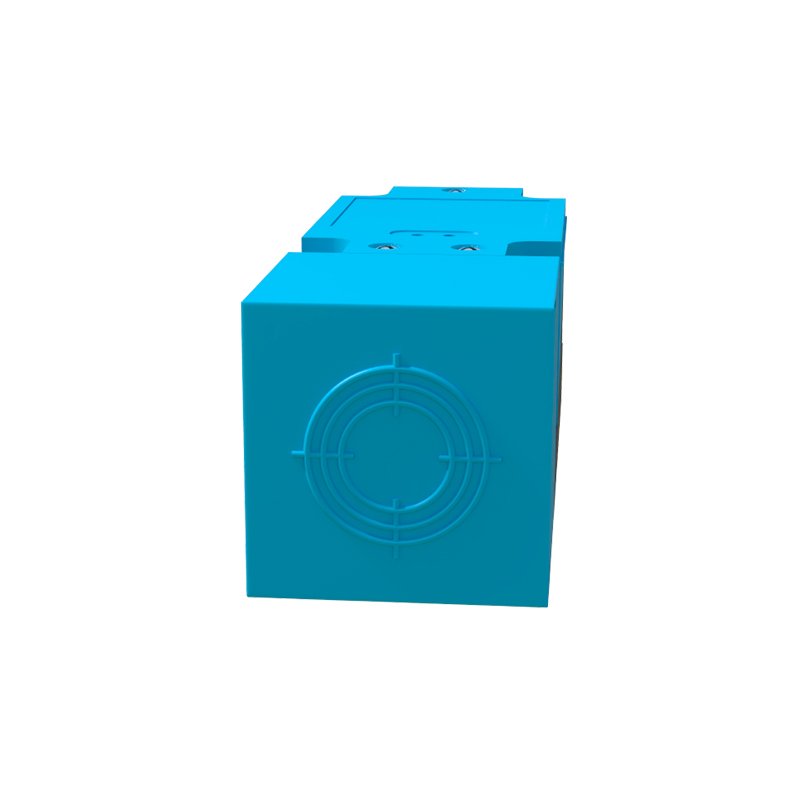
For longer-range detection and applications requiring sensing of any material, photoelectric sensors are employed. These use a light transmitter (often infrared LED) and a receiver. The presence of an object interrupts or reflects the light beam, triggering the output. They are versatile and used in packaging, material handling, and safety systems like light curtains.
Ultrasonic proximity sensors measure the time taken for a sound wave to reflect back from an object. They are excellent for detecting objects regardless of color, transparency, or material, and are often used in challenging environments with dust, moisture, or varying light conditions, such as in tank level monitoring or distance measurement.
The output from these sensors is typically a discrete ON/OFF signal, though analog versions providing distance-proportional signals are also available. Common output configurations include NPN (sinking), PNP (sourcing), and relay outputs, allowing for seamless integration with Programmable Logic Controllers (PLCs), motor drives, and other control hardware.
The applications are vast and critical. In automotive manufacturing, they ensure precise positioning of parts on assembly lines. In food and beverage processing, capacitive sensors monitor fill levels without contamination. Inductive sensors provide accurate speed and position feedback for motors and conveyors. They are fundamental to automated warehousing, robotic pick-and-place systems, and as safety devices to prevent machine operation when guards are open.
Selecting the right proximity sensor involves careful consideration of several factors: the material of the target object, the required sensing distance (rated operating distance), the environmental conditions (temperature, presence of chemicals or washdown requirements), the output type needed, and the electrical specifications like supply voltage. Mounting style, such as flush-mounted or non-flush, also affects the sensing characteristics and must be chosen correctly for the installation.
In summary, proximity sensors are the silent sentinels of modern industry. Their ability to provide reliable, non-contact detection drives efficiency, enhances safety, and enables the high-speed, precise automation that defines contemporary manufacturing and processing. As industries evolve towards smarter, more connected systems (Industry 4.0), the role of these robust and versatile sensors will only become more central, with advancements leading to sensors with integrated IO-Link communication for diagnostics and parameter setting, further embedding intelligence at the very edge of the control system.