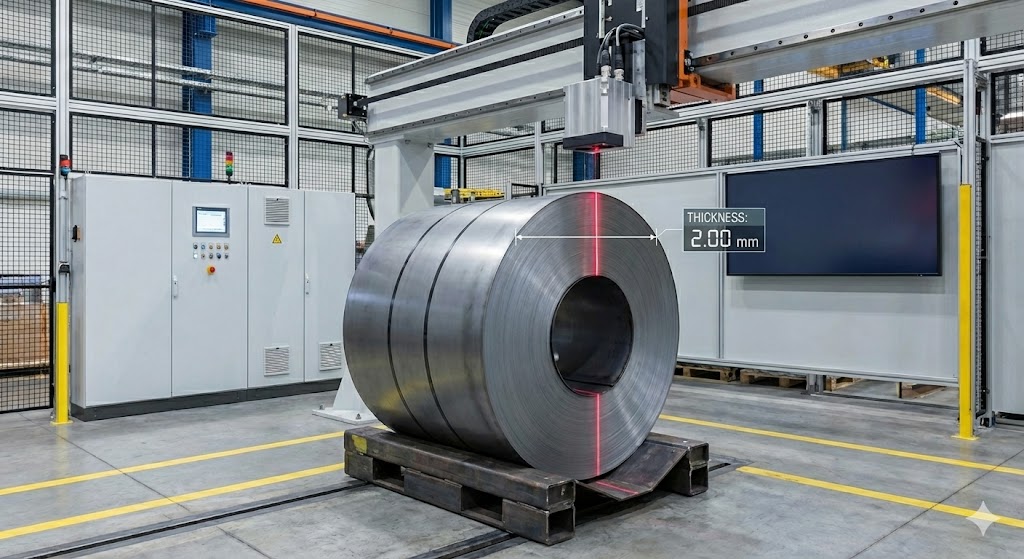
Laser reference sensors represent a critical advancement in industrial automation, offering unparalleled precision in measurement and alignment tasks. These devices utilize laser technology to project a stable, highly visible reference line or point onto a target surface, enabling accurate positioning, leveling, and guidance in various manufacturing and construction processes. Unlike traditional mechanical methods, laser sensors provide non-contact measurement, eliminating wear and tear and reducing setup time significantly.
The core technology behind these sensors involves the emission of a coherent light beam, typically from a laser diode. This beam is then shaped through optical components—such as lenses or prisms—into a precise line, cross-line, or dot pattern. The key to their high accuracy lies in the laser's low divergence, meaning the beam remains tightly focused over long distances. This characteristic is essential for applications requiring consistent reference over several meters, such as in large-scale assembly lines, conveyor system alignment, or structural framing in construction.
In industrial settings, laser reference sensors are indispensable for tasks like machine calibration, where even micron-level deviations can compromise product quality. For instance, in semiconductor manufacturing, these sensors ensure that lithography equipment is perfectly aligned. Similarly, in automotive assembly, they guide the precise placement of components, enhancing both efficiency and safety. The sensors often integrate with programmable logic controllers (PLCs) and vision systems, allowing for real-time feedback and automated adjustments. This integration minimizes human error and boosts throughput.
Modern laser sensors come with enhanced features to address environmental challenges. Many models are equipped with robust housings rated for IP67 or higher, protecting against dust, moisture, and vibrations common in harsh industrial environments. Advanced versions include self-leveling mechanisms using pendulum or electronic systems to maintain accuracy even on uneven surfaces. Additionally, some sensors offer adjustable output power and visible wavelengths (e.g., red or green lasers), with green lasers being more visible to the human eye in bright conditions, thus improving usability in well-lit facilities.
When selecting a laser reference sensor, engineers must consider several parameters: accuracy (often specified in angular or linear deviation), working range, beam pattern, and environmental durability. For example, a sensor used in outdoor construction might prioritize high visibility and weather resistance, while one in a cleanroom would focus on ultra-fine accuracy and contamination control. Regular maintenance, such as lens cleaning and calibration checks, is also crucial to sustain long-term performance.
Looking ahead, the evolution of laser reference sensors is closely tied to Industry 4.0 trends. The incorporation of IoT connectivity enables predictive maintenance and data logging, while improvements in laser efficiency and battery technology support cordless operation for greater flexibility. As automation becomes more pervasive, these sensors will continue to play a vital role in enhancing precision, reducing waste, and driving innovation across sectors from aerospace to consumer electronics. Their ability to deliver reliable, non-contact reference solutions makes them a cornerstone of modern industrial engineering.