In the realm of industrial automation and control systems, proximity sensors are indispensable components for non-contact detection of objects. Among the various types, inductive proximity sensors are particularly prevalent for detecting metallic targets. At the heart of their sensing coil lies a critical, yet often under-discussed, component: the magnetic core. This article delves into the function, materials, and design considerations of magnetic cores, elucidating their pivotal role in sensor performance.
The primary function of the magnetic core is to concentrate and guide the magnetic flux generated by the sensor's oscillator coil. An inductive proximity sensor operates by generating a high-frequency electromagnetic field from its coil. When a metallic object enters this field, eddy currents are induced on the object's surface, which in turn dampens the oscillation amplitude of the sensor's LC tank circuit. This damping is detected and triggers the sensor's output. The magnetic core, typically positioned within or around the coil, shapes the electromagnetic field. It effectively increases the magnetic flux density in the desired sensing direction while minimizing stray fields in other directions. This focusing action significantly enhances the sensor's sensitivity and its effective sensing range (Sn). Without a properly designed core, the magnetic field would be diffuse, leading to reduced range, instability, and potential false triggers from objects outside the intended detection zone.
Material selection for magnetic cores in proximity sensors is a precise science, balancing permeability, frequency response, saturation flux density, and temperature stability. The most common materials are soft magnetic ferrites, such as manganese-zinc (MnZn) and nickel-zinc (NiZn) compounds. Ferrites offer high electrical resistivity, which is crucial for high-frequency operation (typically 100 kHz to 1 MHz in sensors) as it minimizes eddy current losses within the core itself. NiZn ferrites are often preferred for very high-frequency applications due to their higher resistivity. For sensors requiring very high initial permeability to achieve extreme sensitivity or miniaturization, powdered iron cores or specialized amorphous alloys might be considered, though cost and manufacturability are key constraints. The core material must maintain stable magnetic properties across the sensor's operational temperature range, which can be from -25°C to 70°C or beyond in industrial environments. Thermal aging and core loss characteristics are therefore critical parameters evaluated during material selection.
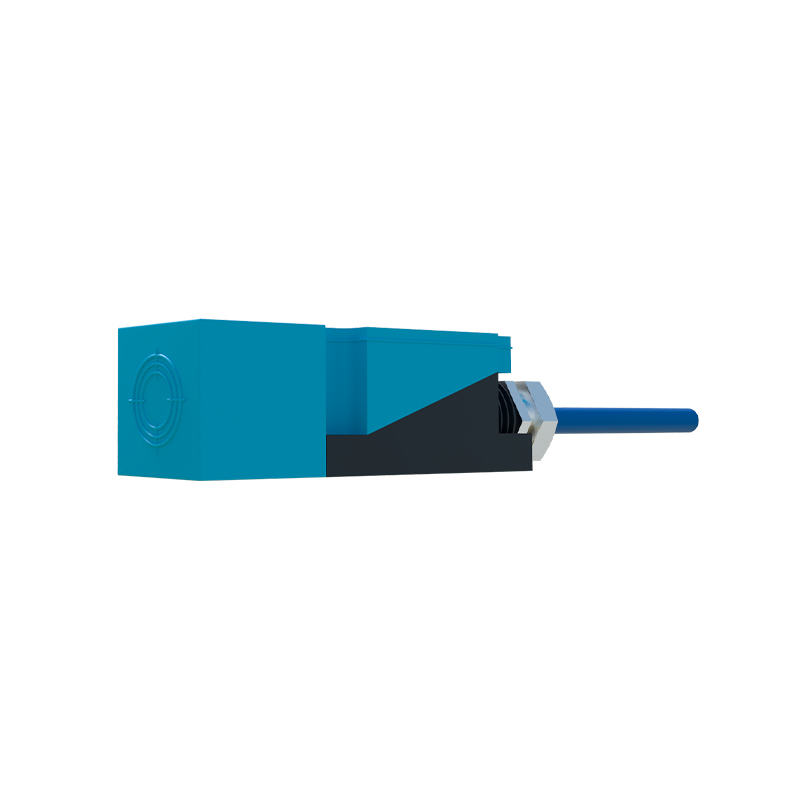
The geometric design of the magnetic core is equally vital. Common shapes include pot cores, E-cores, rod cores, and toroidal cores, each offering different flux-guiding characteristics. A pot core, for instance, excellently shields the coil and provides a highly directional, concentrated field, ideal for precise, shielded-face sensors. A rod or cylindrical core is simpler and often used in unshielded (non-flush mountable) sensor designs, offering a wider but less concentrated field pattern. The core's dimensions—its length, cross-sectional area, and the presence of an air gap—directly influence the inductance of the coil and the Q-factor of the resonant circuit. Design engineers meticulously model these parameters using electromagnetic simulation software to optimize the field shape for the target material (e.g., steel, aluminum, brass) and the required switching distance. The goal is to achieve a sharp, repeatable switching characteristic with minimal hysteresis.
Furthermore, the integration of the core affects the sensor's robustness against electromagnetic interference (EMI) and its ability to reject side-approach or background metals. A well-shielded core assembly can prevent the sensor from being actuated by large metallic structures in its vicinity, a feature essential for reliable operation in dense machinery. The mechanical assembly of the core—whether it is a single molded piece, a set of stacked laminations, or a bonded powder part—also impacts performance and cost. Molding ferrite around the coil is a common technique that ensures precise positioning and mechanical integrity.
In conclusion, the magnetic core is far from a passive element in an inductive proximity sensor. It is a key enabler of performance, defining the sensor's range, sensitivity, target specificity, and environmental resilience. Advancements in core materials, such as low-loss ferrites and novel nanocomposites, continue to push the boundaries, allowing for smaller sensors with longer ranges and better temperature performance. For system designers and maintenance engineers, a fundamental understanding of the magnetic core's role provides deeper insight into sensor selection, application troubleshooting, and appreciating the sophisticated engineering embedded in these ubiquitous devices. As automation demands grow more precise, the evolution of magnetic core technology will remain integral to the next generation of smart sensing solutions.