Laser confocal sensors represent a significant advancement in non-contact, high-precision measurement technology. Operating on the principle of confocal microscopy, these sensors utilize a focused laser beam and a spatial pinhole to eliminate out-of-focus light. This fundamental design allows for exceptional axial resolution, enabling precise measurement of surface profiles, thickness, and displacement with sub-micron accuracy. The core mechanism involves scanning the laser spot across the target surface. Light reflected from the exact focal point passes efficiently through the pinhole to a high-sensitivity detector, while light from areas above or below the focal plane is largely blocked. This optical sectioning capability is key to generating highly accurate, point-by-point topographic data.
In industrial settings, the applications of laser confocal sensors are vast and critical. They are indispensable for dimensional inspection and quality control in semiconductor manufacturing, where they measure wafer thickness, warpage, and etch depths with nanometer-level repeatability. The automotive and aerospace industries rely on them for profiling critical components like fuel injector nozzles, turbine blades, and precision bearings. Furthermore, these sensors excel in measuring transparent or multi-layered materials, such as glass substrates and polymer films, where traditional triangulation sensors struggle due to internal reflections. Their ability to perform regardless of surface color, reflectivity, or material composition makes them exceptionally versatile.
The advantages over conventional measurement methods are substantial. Unlike tactile probes, laser confocal sensors provide non-contact measurement, eliminating the risk of surface damage or probe wear. Compared to standard laser triangulation sensors, they offer superior resolution and are virtually immune to errors caused by varying surface angles or speckle noise. Modern confocal sensors integrate chromatic aberration principles, where a white light source is dispersed into a spectrum. Each wavelength focuses at a different height, and the analysis of the reflected spectrum's peak wavelength directly correlates to distance. This chromatic confocal technique allows for static, single-point measurement without mechanical scanning, enabling high-speed inspection.
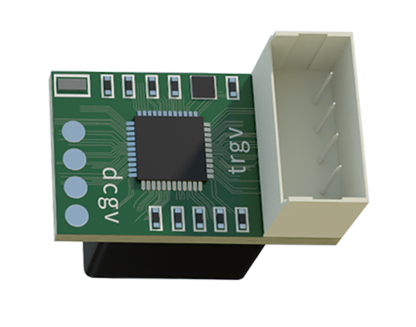
Integration into automated systems is straightforward, facilitated by digital interfaces like Ethernet/IP or PROFINET. Users can deploy them in challenging environments, including cleanrooms or on high-speed production lines, for real-time, in-process monitoring. When selecting a laser confocal sensor, engineers must consider key parameters: measurement range, which typically spans from hundreds of microns to several millimeters; spot size, which dictates lateral resolution; sampling speed, crucial for dynamic measurements; and stand-off distance. Proper installation, avoiding vibration and environmental interference, is essential for achieving specified performance.
Looking ahead, the evolution of laser confocal sensing technology points toward even smaller form factors, faster measurement rates, and enhanced data fusion capabilities with 3D vision systems. As Industry 4.0 drives demand for smarter, more connected metrology, these sensors will play a pivotal role in closed-loop manufacturing processes, ensuring unparalleled precision and quality assurance across advanced engineering sectors. Their unique blend of accuracy, robustness, and flexibility solidifies their position as a cornerstone technology in modern precision engineering and industrial automation.