In the rapidly evolving landscape of industrial automation and precision measurement, CMOS laser sensors have emerged as a cornerstone technology. These sophisticated devices, which integrate a laser light source with a Complementary Metal-Oxide-Semiconductor (CMOS) imaging sensor, are redefining the boundaries of accuracy, speed, and reliability. Unlike traditional photoelectric sensors or older CCD-based systems, CMOS laser sensors leverage the inherent advantages of CMOS technology—lower power consumption, higher integration, and faster readout speeds—to deliver unparalleled performance in demanding applications.
The fundamental operating principle is elegantly precise. A laser diode projects a focused, coherent beam of light onto a target object. The light reflected or scattered from the object is then captured by a high-resolution CMOS linear or area image sensor. Advanced onboard processing algorithms analyze the captured image data in real-time. For distance measurement, this often involves triangulation; the position of the laser spot on the sensor shifts proportionally to the target's distance. This data is processed to output an exact measurement with micron-level resolution. For profile scanning, the sensor captures a precise line of height data across an object, building detailed 2D or 3D profiles.
The advantages of CMOS laser sensors are manifold. Their exceptional resolution allows for the detection of minute surface defects, precise dimensional gauging, and ultra-fine alignment tasks. The high-speed response, enabled by the fast CMOS readout, is critical for in-line inspection on high-speed production lines, such as in electronics manufacturing or automotive assembly. Furthermore, CMOS technology's robustness against blooming (smearing from bright light sources) and its wider dynamic range ensure stable performance even under varying surface reflectivities, from shiny metals to dark, absorbent materials.
Typical applications span a vast array of industries. In semiconductor manufacturing, they are indispensable for wafer alignment, bump height inspection, and lead frame coplanarity checks. In automotive, they measure critical component gaps and flushness, inspect weld seams, and guide robots. The logistics sector utilizes them for parcel dimensioning and volume measurement, while in pharmaceuticals, they verify fill levels in vials and inspect blister packs. Their non-contact nature prevents damage to delicate products and allows measurement of hot, soft, or otherwise inaccessible objects.
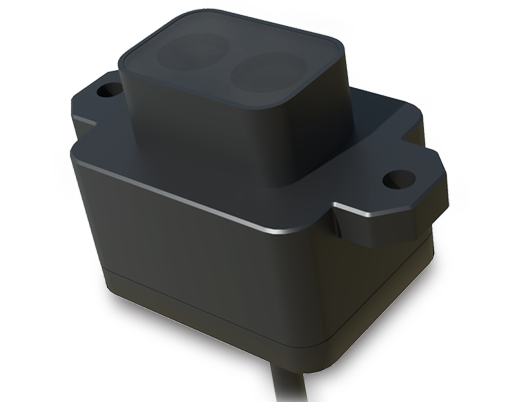
When selecting a CMOS laser sensor, engineers must consider several key parameters. The measuring range defines the minimum and maximum distances over which the sensor can operate accurately. The spot size determines the minimum feature that can be resolved. Sampling speed, or measurement rate, must match the production line's throughput. Environmental factors like ambient light immunity, operating temperature range, and ingress protection (IP) ratings are crucial for harsh industrial environments. Communication interfaces, such as Ethernet/IP, PROFINET, or analog outputs, must integrate seamlessly with existing control systems.

Looking ahead, the integration of CMOS laser sensors with Artificial Intelligence and Machine Learning is a powerful trend. Smart sensors can now not only capture precise data but also classify objects, identify complex defects, and make autonomous decisions, pushing towards predictive maintenance and zero-defect manufacturing. Miniaturization continues, enabling their deployment in increasingly compact machinery. Furthermore, the development of multi-spectral or hyperspectral laser sensing, though in nascent stages, promises to combine dimensional measurement with material composition analysis.
In conclusion, CMOS laser sensors represent a critical fusion of optical engineering and semiconductor technology. They provide the "eyes" for modern automated systems, delivering the precise, reliable, and high-speed data necessary for quality control, process optimization, and robotic guidance. As industries continue their march towards greater automation and smarter factories, the role of the CMOS laser sensor will only become more central, driving efficiency, innovation, and precision to new heights.
