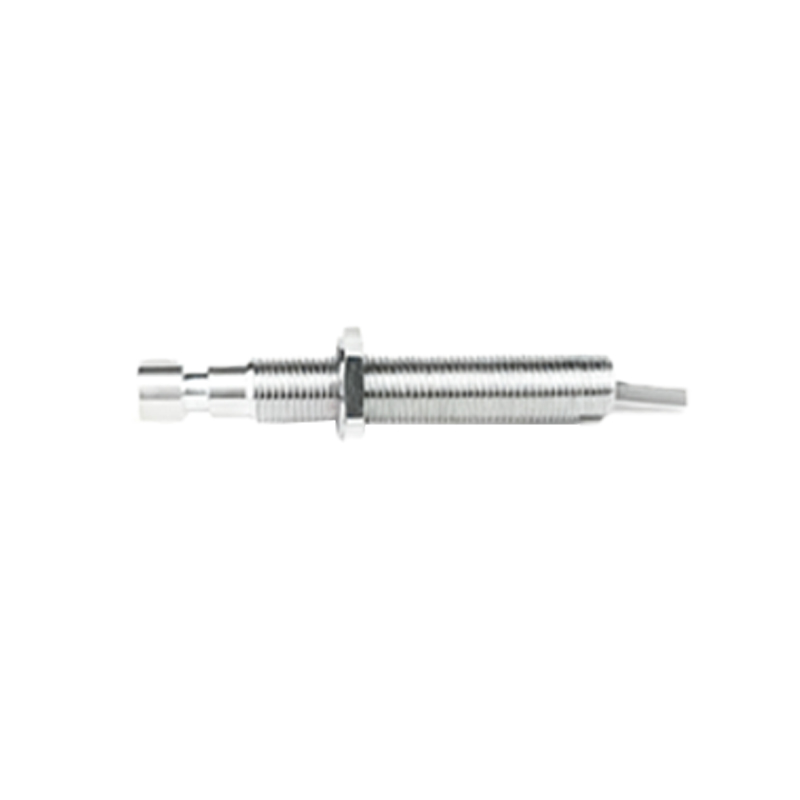
Inductive proximity sensors are non-contact electronic devices designed to detect the presence of metallic objects without physical contact. Operating on the principle of electromagnetic induction, these sensors generate an oscillating electromagnetic field from a coil housed within their sensing face. When a conductive metal target enters this field, eddy currents are induced on the target's surface. This causes a change in the oscillation amplitude or frequency within the sensor's internal LC tank circuit. The sensor's integrated electronics, typically an ASIC (Application-Specific Integrated Circuit), monitor this change and trigger a solid-state output signal, switching the state of an NPN or PNP transistor to indicate detection. This fundamental operating principle makes them exceptionally reliable for harsh industrial environments where dust, oil, and vibration are prevalent.
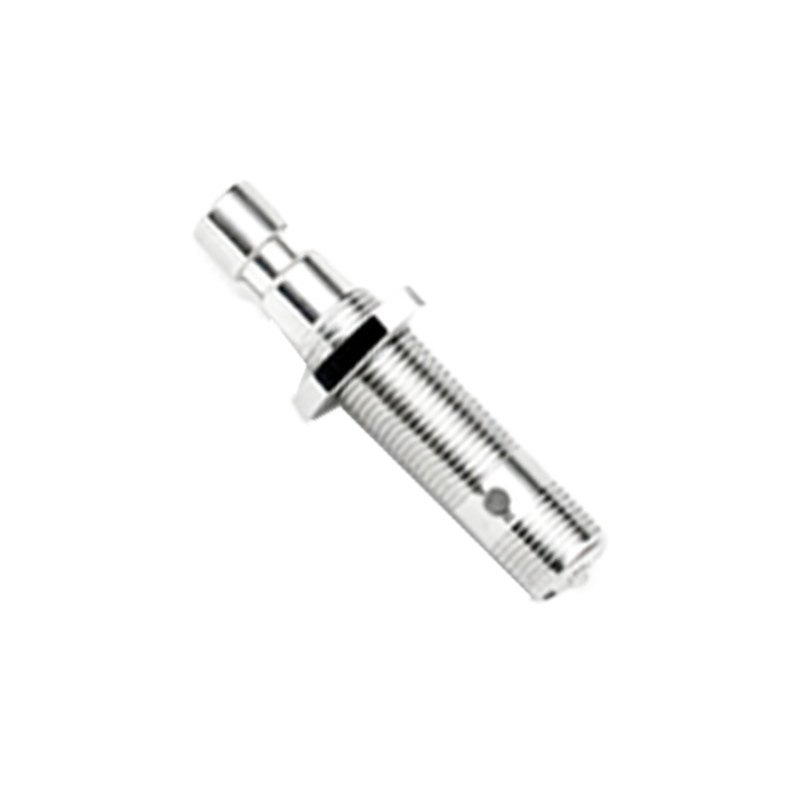
The core components of a standard inductive sensor include the ferrite core with the oscillator coil, the oscillator circuit, the trigger circuit, and the output amplifier. Modern designs often incorporate robust housing materials like nickel-plated brass, stainless steel, or PBT plastic, providing high degrees of ingress protection (e.g., IP67, IP69K). A key specification is the rated operating distance (Sn), which defines the nominal sensing range for a standard target, typically a square of mild steel (Fe360) with a thickness equal to the sensor's diameter. It is crucial to note that the actual sensing distance can vary significantly with different metals. A correction factor is applied: for stainless steel, sensing distance reduces to approximately 0.7-0.9 times Sn; for aluminum, to about 0.3-0.5 times Sn; and for copper or brass, to as low as 0.2-0.4 times Sn. This is due to the material's electrical conductivity and magnetic permeability.
Selecting the right inductive sensor requires careful consideration of several parameters beyond just sensing distance. The mounting style is paramount: flush-mountable sensors can be installed embedded in a metal bracket without loss of function, whereas non-flush sensors offer longer ranges but require a clear lateral area. Output configuration is another critical choice, with 3-wire DC (PNP or NPN sourcing/sinking), 2-wire AC/DC, and analog (4-20 mA, 0-10V) outputs being common. The switching frequency defines how quickly the sensor can detect objects passing by, a vital factor for high-speed counting or positioning tasks. Environmental ratings for temperature, shock, and vibration resistance must align with the application's demands. For welding environments, weld-field immune models with special shielding are essential to prevent damage from spurious currents.
Applications for inductive proximity sensors are vast and form the backbone of factory automation. They are indispensable for simple object detection on conveyor lines, verifying the presence of metal parts before a machining operation. In robotics, they provide precise end-of-arm tooling confirmation and part positioning. They serve as limit switches for cylinder position feedback in pneumatic systems. In metalworking, they count products, control sorting gates, and monitor rotational speed by detecting gear teeth or bolt heads. Advanced versions with extended ranges or factor-1 characteristics (same Sn for all metals) are used in automotive assembly for detecting diverse components. Their inherent robustness makes them ideal for dirty environments where optical sensors would fail, such as in foundries, stamping plants, and heavy machinery.
Installation and maintenance best practices ensure long-term reliability. Proper electrical wiring according to the datasheet, including correct polarity and load connection, is fundamental. Adequate shielding and separation from high-current cables prevent electromagnetic interference. Mechanical mounting must be secure to avoid vibration-induced failure, and a small safety margin should be applied to the nominal sensing distance to account for mechanical tolerances and temperature drift. Regular checks should include verifying the sensor's output with the target present and absent, cleaning the sensing face of any metallic debris buildup, and inspecting the housing for physical damage. Understanding these principles and specifications allows engineers to deploy these versatile sensors effectively, creating more reliable, efficient, and safe automated systems across countless industries.