In the rapidly evolving landscape of electrical engineering and industrial automation, the laser sensor plotter stands as a pivotal technology, driving precision and efficiency to unprecedented levels. This sophisticated device integrates high-resolution laser sensing with advanced plotting mechanisms to capture, map, and reproduce complex physical contours and spatial data with micron-level accuracy. Unlike traditional contact-based measurement tools, laser sensor plotters operate on non-contact principles, utilizing focused laser beams to scan surfaces. The reflected light is captured by sensitive photodetectors, and the time-of-flight or phase-shift data is processed by embedded digital signal processors (DSPs) to generate precise three-dimensional point clouds. These data sets are then translated into detailed vector graphics or CAD-compatible files by specialized software, enabling seamless integration into design, quality control, and reverse engineering workflows.
The core of a modern laser sensor plotter lies in its optoelectronic components. A high-stability laser diode, typically in the visible red or near-infrared spectrum, emits a coherent light beam. This beam is directed through a series of galvanometer-driven mirrors or a precision linear motion system, allowing it to raster-scan the target area at high speeds. The choice of laser—often a Class 2 or Class 3R device for safety—depends on the required resolution and material properties of the objects being scanned. For instance, blue lasers offer better resolution for shiny surfaces, while infrared lasers are preferred for organic materials. The sensor array, comprising avalanche photodiodes (APDs) or charge-coupled devices (CCDs), must have exceptionally low noise and high dynamic range to distinguish signal from ambient light interference, a challenge often mitigated by optical filters and modulated laser signals.
From an electrical engineering perspective, the system's performance is heavily dependent on its control circuitry and power management. Stable, low-ripple power supplies are critical for both the laser source and the sensitive analog front-end of the sensor. Any voltage fluctuation can introduce noise, degrading measurement accuracy. The motion control system, whether using stepper motors or servo motors with encoder feedback, requires robust driver circuits and real-time controllers—often programmable logic controllers (PLCs) or industrial PCs running deterministic operating systems. These controllers execute complex scanning patterns while synchronizing data acquisition from the sensor, a task managed through high-speed digital interfaces like Ethernet/IP, EtherCAT, or proprietary fieldbus protocols. Signal integrity is paramount; therefore, careful PCB layout with proper grounding, shielding, and the use of differential signaling for data lines are standard practices to minimize electromagnetic interference (EMI) in industrial environments.
The software architecture is equally complex. The firmware embedded in the plotter's microcontroller handles low-level tasks such as laser modulation, motor control loops, and analog-to-digital conversion. On a higher level, application software running on a connected workstation performs point cloud registration, noise filtering, and surface reconstruction algorithms. Advanced packages incorporate machine learning modules to automatically identify and compensate for common anomalies like specular reflections or occlusions. The final output is not merely an image but a dimensionally accurate digital twin, which can be used for comparative analysis against CAD models, calculating tolerances, or generating toolpaths for CNC machinery.
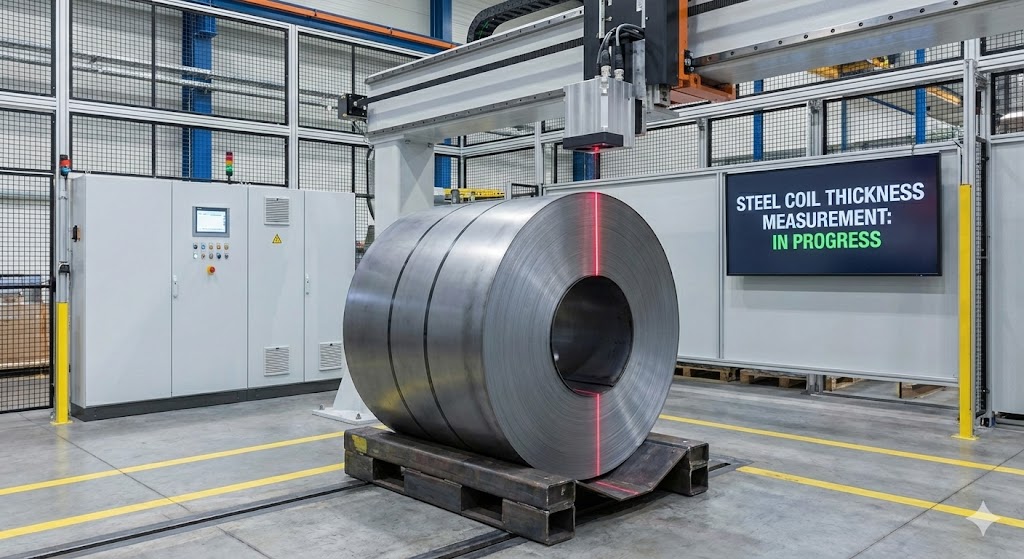
In practical applications, laser sensor plotters have revolutionized quality assurance in manufacturing. On production lines for automotive parts, aerospace components, or consumer electronics, these systems perform 100% inline inspection, detecting sub-millimeter defects in weld seams, surface finishes, or assembly alignments far quicker than human inspectors or tactile probes. In reverse engineering, they enable the rapid digitization of legacy parts for which no digital design exists, facilitating reproduction or redesign. Furthermore, in research and development, they are indispensable for prototyping and material analysis, providing precise topographic data.

However, deploying laser sensor plotters is not without challenges. Environmental factors such as ambient vibration, temperature variations, and airborne particulates can affect accuracy, necessitating installation on stabilized platforms and within controlled enclosures. The initial capital investment and the need for specialized personnel for operation and maintenance are significant considerations. Future trends point toward miniaturization, the integration of multi-sensor heads (combining laser triangulation with chromatic confocal sensors), and enhanced connectivity for Industry 4.0 ecosystems, allowing plotters to feed data directly into cloud-based analytics platforms for predictive maintenance and process optimization.
In conclusion, the laser sensor plotter is a quintessential example of interdisciplinary engineering, merging optics, electronics, software, and mechanical design. Its ability to deliver non-contact, high-speed, and high-precision spatial data makes it an invaluable tool for modern electrical engineering projects focused on automation, quality, and innovation. As sensor technology and computational power continue to advance, the capabilities and applications of these systems will only expand, further solidifying their role in the smart factories of the future.
