In the realm of industrial automation, passive proximity sensors stand as a cornerstone technology, enabling non-contact detection of metallic objects without an external power source. These sensors operate on the principle of electromagnetic induction, where an oscillating circuit generates a high-frequency electromagnetic field. When a metallic target enters this field, eddy currents are induced in the object, causing a change in the sensor's oscillation amplitude or frequency. This alteration is detected and converted into a switching signal, triggering an output for control systems. The design process for these sensors is meticulous, balancing performance, reliability, and environmental adaptability.
The core of a passive proximity sensor is its coil, typically wound around a ferrite core to concentrate the magnetic field. The coil's design—including wire gauge, number of turns, and geometry—directly influences the sensing range, sensitivity, and frequency response. Engineers must calculate inductance and quality factor (Q-factor) precisely to optimize energy efficiency and detection stability. A higher Q-factor indicates lower energy loss, which is crucial for achieving a longer operational range, but it may also reduce bandwidth. Therefore, a trade-off is often necessary based on the application's speed and distance requirements.
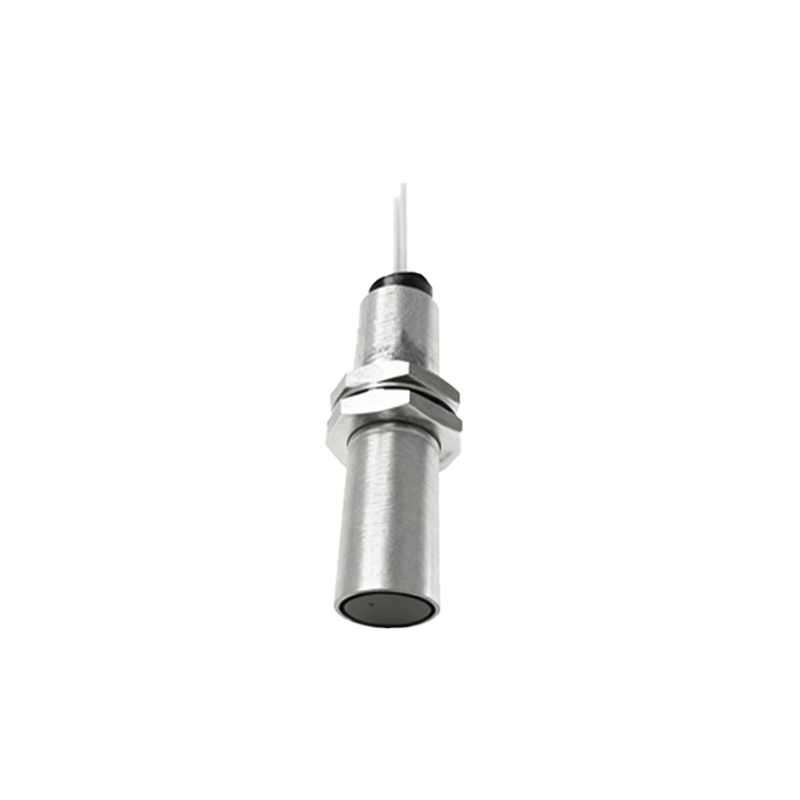
Material selection extends beyond the coil. The housing must be robust, often constructed from stainless steel, brass, or PBT plastic, to withstand harsh industrial environments involving dust, moisture, oils, and mechanical impacts. The choice of ferrite core material is equally critical; manganese-zinc or nickel-zinc ferrites are common, selected for their permeability and temperature stability. Shielding is another vital aspect. Shielded sensors have a metal ring around the coil, containing the magnetic field axially to prevent side detection, making them suitable for flush mounting in metal. Unshielded sensors offer a longer range but require non-metallic surroundings.
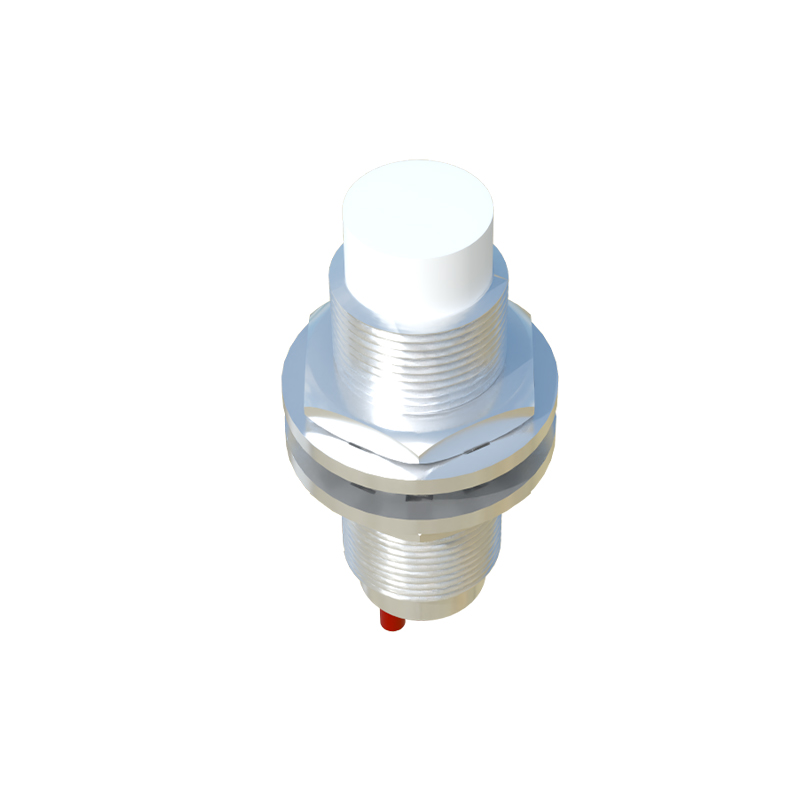
The electronic circuitry, though passive in not requiring separate power, involves an oscillator, demodulator, and output stage. The oscillator generates the high-frequency field (typically 100 kHz to 1 MHz). Designers must ensure stable oscillation across temperature variations (-25°C to 85°C is standard). The demodulator filters and rectifies the signal to detect amplitude changes. Finally, the output—often a solid-state switch (like an NPN or PNP transistor)—must handle the required load current and voltage (e.g., 10-30V DC) with minimal leakage. Protection against short-circuits, reverse polarity, and electromagnetic interference (EMI) is integrated using diodes, resistors, and capacitors.
Calibration and testing are paramount. Each sensor is tested for its nominal sensing distance (Sn), which is the guaranteed operating distance under standardized conditions (usually with a mild steel target of specified dimensions). Hysteresis—the difference between the switch-on and switch-off points—is designed to prevent chatter during slow-moving targets. Engineers also verify repeatability, temperature drift, and response time (often under 1 ms). Applications dictate specific needs: in conveyor systems, fast response and high repeatability are key; in automotive assembly, resistance to coolants and vibrations is essential.
Future trends in passive proximity sensor design include miniaturization for compact machinery and integration with IoT capabilities. While remaining passive, some modern variants incorporate micro-power RFID-like elements for data transmission, blurring lines with active sensors. However, the fundamental appeal—simplicity, durability, and zero power consumption for the sensing element—ensures their enduring role. By mastering electromagnetic theory, material science, and circuit design, engineers can tailor these sensors to diverse industrial landscapes, from food processing to heavy machinery, ensuring efficient, maintenance-free operation.
In summary, designing a passive proximity sensor is an interdisciplinary endeavor. It demands a deep understanding of electromagnetic properties, careful component selection, and rigorous validation to meet industrial standards like IEC 60947-5-2. The result is a device that operates silently and reliably, forming the unseen backbone of automated systems worldwide.