In the demanding environment of modern mining, ensuring the integrity and efficient operation of pipeline systems is paramount. These pipelines transport critical resources such as slurry, water, compressed air, and tailings. Any failure, leak, or blockage can lead to catastrophic safety incidents, significant production downtime, and severe environmental impact. This is where advanced Mine Pipeline Laser Sensors have emerged as a transformative technology, offering unparalleled precision, reliability, and real-time monitoring capabilities.
Traditional methods for pipeline monitoring in mines often relied on mechanical flow meters, pressure transducers, or manual inspections. These methods, while functional, have inherent limitations. They can be prone to drift, require frequent calibration, struggle with abrasive or corrosive media, and often fail to provide the granular, continuous data needed for predictive maintenance. Laser sensor technology overcomes these challenges by employing non-contact measurement principles. Typically, these sensors use laser diffraction, time-of-flight, or laser-induced fluorescence techniques to analyze the contents and condition within a pipeline.
The core operational principle of many pipeline laser sensors is based on laser diffraction or attenuation. A laser beam is projected across the pipe's interior. As particles or bubbles in the flowing medium pass through the beam, they scatter or absorb the light. A high-speed photodetector on the opposite side measures the intensity variation of the transmitted or scattered light. Sophisticated algorithms then analyze these patterns to determine key parameters such as particle size distribution, concentration, flow velocity, and even the presence of unexpected phases like air bubbles in a liquid stream or sediment buildup. This data is processed in real-time and communicated to a central control system via industrial protocols like 4-20mA, HART, or digital fieldbus networks.

The benefits of integrating laser sensors into mining pipeline networks are substantial. First and foremost is enhanced safety. Continuous monitoring allows for the immediate detection of leaks, which is crucial for preventing the spillage of hazardous materials. Early identification of blockages or abnormal flow conditions can avert pipeline ruptures or pump failures. Furthermore, by accurately measuring slurry density and solid content, these sensors help optimize the flotation and separation processes, reducing the risk of overloading or underloading critical equipment.
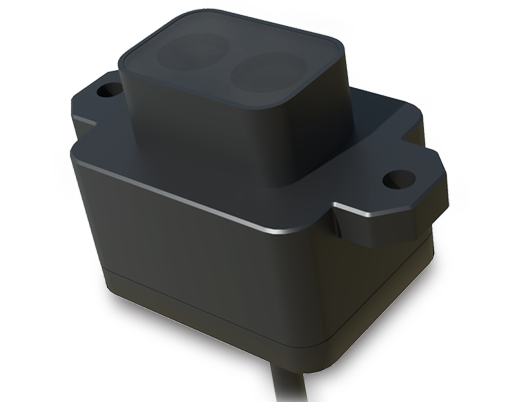
Operational efficiency sees a dramatic improvement. Precise control over slurry consistency enables optimal chemical reagent dosing, directly improving mineral recovery rates and reducing reagent costs. Real-time flow data allows for better pump control, leading to significant energy savings. Predictive maintenance becomes a reality; by tracking gradual changes in particle size or buildup, maintenance can be scheduled proactively during planned shutdowns, rather than reactively after a failure. This minimizes unplanned downtime, a major cost driver in mining.
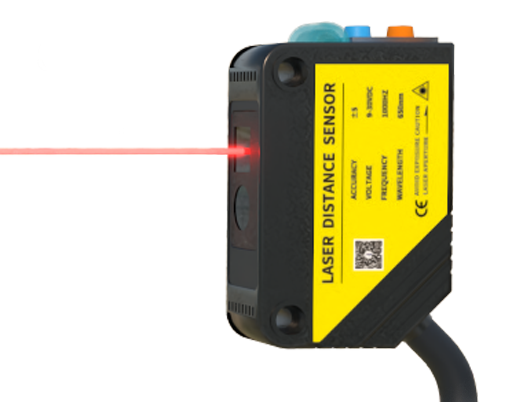
Durability is a non-negotiable requirement for any equipment in a mining setting. Modern mine pipeline laser sensors are engineered to withstand extreme conditions. They are housed in rugged, explosion-proof (often ATEX or IECEx certified) enclosures resistant to dust, water, and mechanical shock. The sensing windows are made from hardened sapphire or specialized ceramics to endure the abrasive wear from high-velocity slurries. Their non-contact nature means there are no moving parts inside the pipe to clog, wear out, or affect flow, resulting in very low maintenance requirements and a long service life.
A practical application can be seen in a tailings management system. Here, laser sensors continuously monitor the density and flow rate of the tailings slurry being pumped to the disposal area. Consistent, optimal density is critical for the structural stability of tailings dams. If the sensor detects a density drop (indicating too much water), the control system can automatically adjust valves or pump speeds to correct it, ensuring safer and more stable deposition. Similarly, in a concentrate pipeline, monitoring for sudden changes in particle size can alert operators to potential issues upstream in the grinding circuit.
The future of mine pipeline laser sensors is intertwined with the Industry 4.0 revolution. The next generation of sensors will feature enhanced connectivity, integrating directly with cloud-based platforms and mine-wide digital twins. Advanced data analytics and machine learning algorithms will not only detect anomalies but also predict them with greater accuracy, moving from condition monitoring to prescriptive analytics. Furthermore, the development of multi-parameter laser sensors capable of simultaneously analyzing chemical composition alongside physical properties is on the horizon, offering even deeper process insights.
In conclusion, the adoption of advanced laser sensor technology for pipeline monitoring represents a significant leap forward for the mining industry. By providing accurate, real-time, and non-intrusive measurement of critical pipeline parameters, these systems are indispensable tools for enhancing safety protocols, boosting operational efficiency, ensuring regulatory compliance, and driving down total operational costs. As mining operations continue to pursue greater automation and data-driven decision-making, the role of the robust and intelligent mine pipeline laser sensor will only become more central to sustainable and productive mining.