In the rapidly evolving textile industry, automation and precision are paramount. Black fabric laser sensors have emerged as a critical technology, addressing a long-standing challenge in material handling and quality control: the reliable detection of dark-colored textiles. Traditional optical sensors often struggle with black fabrics due to low light reflectivity. These materials absorb most of the incident light, making them nearly invisible to standard photoelectric sensors. This limitation can cause production line errors, misalignments, and quality issues in automated processes like cutting, sewing, and sorting.
Laser sensors designed specifically for black fabric overcome this hurdle through advanced technological principles. Unlike conventional diffuse reflective sensors that rely on the reflection of emitted light, these specialized laser sensors typically utilize the principle of laser triangulation or time-of-flight measurement with high-intensity, focused laser beams. The key lies in the sensor's sensitivity and its ability to detect even the minimal amount of light reflected from a low-reflectivity surface. Modern black fabric laser sensors operate with finely tuned wavelengths, often in the visible red or infrared spectrum, and incorporate sophisticated algorithms to distinguish the signal from ambient noise. They are calibrated to recognize the specific light absorption profile of black textiles, ensuring a stable and reliable detection signal regardless of fabric texture—be it matte, glossy, woven, or knitted.
The applications within textile manufacturing are extensive and transformative. In automated cutting machines, these sensors provide precise edge detection, ensuring accurate pattern alignment on dark materials, which minimizes waste and improves yield. In sewing and embroidery automation, they guide fabric panels with micron-level accuracy, preventing stitching errors. On conveyor sorting systems, they reliably detect and count black garments or fabric rolls, maintaining inventory accuracy and logistics flow. Furthermore, in quality inspection stations, laser sensors can identify defects like holes, stains, or inconsistent thickness in black fabrics that might be missed by human inspectors or conventional vision systems.
Selecting the right black fabric laser sensor requires careful consideration of several technical parameters. The sensing range, or the distance over which the sensor can reliably detect the material, is crucial for integration into existing machinery. Response time must be fast enough to keep pace with high-speed production lines. Environmental robustness is another vital factor; sensors must be resistant to dust, lint, and vibrations common in textile mills. Many industrial-grade models feature IP67 ratings for protection against particulate and moisture. Additionally, the spot size of the laser beam is important—a smaller, more focused spot allows for higher precision in detecting fine edges or small features on the fabric.
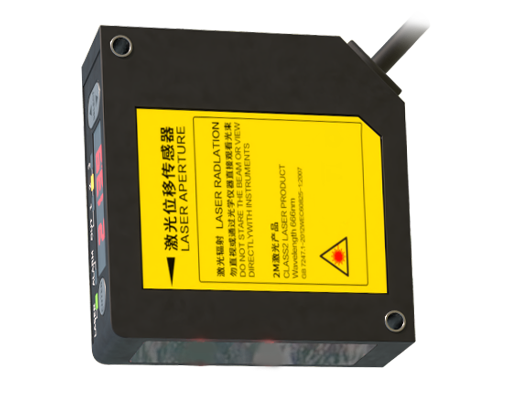
Integration into a smart factory ecosystem is the next frontier. Contemporary black fabric laser sensors are increasingly equipped with IO-Link or Ethernet connectivity, enabling real-time data transmission to PLCs (Programmable Logic Controllers) and SCADA (Supervisory Control and Data Acquisition) systems. This connectivity allows for predictive maintenance, as the sensor can report its own health status, and facilitates adaptive process control. For instance, if a sensor detects a variation in fabric reflectivity, the system can automatically adjust parameters downstream, ensuring consistent quality without manual intervention.
The benefits of deploying these specialized sensors are quantifiable. They significantly reduce material waste by improving cutting accuracy, enhance overall equipment effectiveness (OEE) by minimizing downtime caused by false triggers or missed detections, and elevate final product quality. By solving the detection problem for black fabrics, they enable full automation of production lines handling diverse material colors, increasing flexibility and throughput.

In conclusion, black fabric laser sensors represent a niche yet indispensable innovation in textile automation. They transform a significant technical obstacle into a controlled variable, enabling seamless, efficient, and precise handling of one of the most challenging materials in the industry. As textile manufacturing continues its march toward Industry 4.0, the role of such intelligent, application-specific sensors will only grow in importance, driving further gains in productivity, sustainability, and quality.