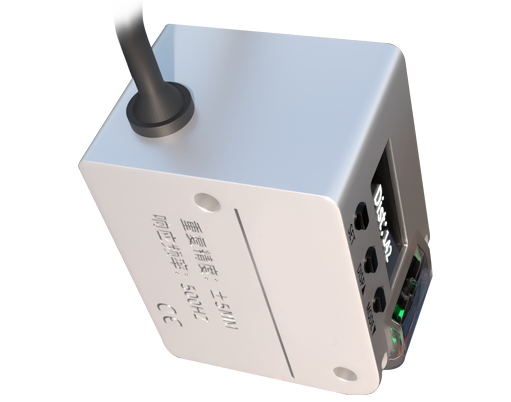
In the realm of industrial automation and precision engineering, small distance laser sensors have emerged as indispensable tools for accurate, non-contact measurement. These sensors utilize laser triangulation or time-of-flight principles to measure minute distances, typically ranging from a few millimeters to several centimeters, with micron-level resolution. Their compact design and high-speed response make them ideal for applications where space is constrained and precision is paramount.
The core technology behind these sensors involves emitting a focused laser beam onto a target surface. The reflected light is captured by a sensitive detector, such as a CCD or CMOS array. By analyzing the position or phase shift of the reflected beam, the sensor calculates the exact distance to the target. This method ensures minimal interference from environmental factors like ambient light or electromagnetic noise, thanks to advanced filtering algorithms and robust housing designs.
Key industries benefiting from small distance laser sensors include semiconductor manufacturing, where they monitor wafer thickness and alignment; automotive assembly, for gap and flush measurement between body panels; and electronics production, inspecting component placement on PCBs. In robotics, these sensors enable precise object detection and positioning, enhancing the accuracy of pick-and-place operations. Additionally, they play a critical role in quality control systems, detecting surface defects or dimensional variances in real-time, thereby reducing waste and improving product consistency.
When selecting a small distance laser sensor, engineers must consider several parameters. Measurement range and resolution are primary factors, but response time, linearity, and environmental resistance (e.g., to dust, moisture, or temperature fluctuations) are equally crucial. Modern sensors often feature integrated interfaces like analog outputs, Ethernet, or IO-Link for seamless integration into industrial networks. Some models also offer programmable logic for edge computing, allowing on-device data processing to reduce latency.
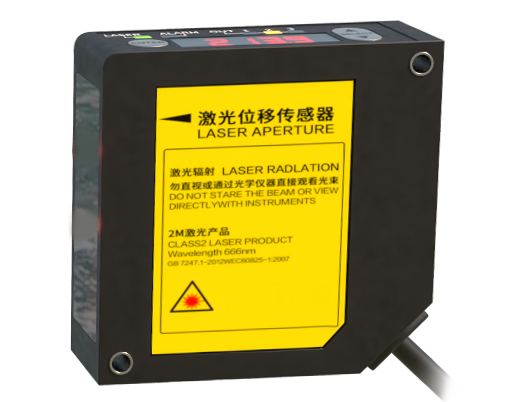
Despite their advantages, challenges exist. Highly reflective or transparent surfaces can distort measurements, requiring sensor calibration or specialized models with adaptive optics. Regular maintenance, such as lens cleaning, is necessary to sustain accuracy in harsh environments. However, ongoing advancements in laser diode efficiency and signal processing algorithms continue to enhance performance, making these sensors more reliable and cost-effective.
In conclusion, small distance laser sensors represent a convergence of optical innovation and industrial practicality. Their ability to deliver high-precision data in real-time supports the growing demand for automation and quality assurance across sectors. As Industry 4.0 evolves, these sensors will likely become even more integral to smart factories, driving efficiency and enabling new levels of operational precision. For engineers and technicians, understanding their capabilities and limitations is key to leveraging their full potential in modern measurement systems.