In the rapidly evolving landscape of industrial automation and quality control, multi-beam laser sensors have emerged as a cornerstone technology, driving unprecedented levels of accuracy, speed, and reliability. Unlike traditional single-beam sensors, these advanced devices utilize multiple laser beams—often arranged in precise arrays or patterns—to capture comprehensive dimensional data of an object or surface. This fundamental shift in sensing methodology is transforming applications ranging from automotive assembly and electronics manufacturing to logistics and robotics.
The core principle of a multi-beam laser sensor lies in its ability to perform simultaneous measurements across multiple points. A typical system projects several parallel laser lines or a grid pattern onto a target. A high-resolution CMOS or CCD camera then captures the deformation or displacement of these lines. Sophisticated triangulation algorithms process this visual data in real-time to generate detailed 3D profiles, height maps, or precise edge-detection results. This parallel data acquisition drastically reduces inspection cycle times compared to single-point scanning methods, making it ideal for high-speed production lines.
One of the most significant advantages is the enhancement of measurement reliability. By analyzing data from multiple beams, the sensor can effectively compensate for surface irregularities, color variations, or minor vibrations that would typically skew a single-beam reading. This redundancy ensures robust performance even in challenging industrial environments with dust, changing ambient light, or reflective surfaces. For instance, in automotive body-in-white inspection, multi-beam sensors can simultaneously verify gap dimensions, flushness, and surface contours of multiple panels in a single pass, ensuring perfect alignment.

The applications are vast and impactful. In electronics, these sensors are indispensable for verifying solder paste volume on PCBs, inspecting micro-component placement, and measuring connector pin heights. In logistics and warehousing, they enable rapid parcel dimensioning (DIM weighing) and automated package sorting with volumetric accuracy. Robotics integration is another frontier; equipped with multi-beam laser profiles, robotic arms gain precise "vision" for bin-picking, precise part insertion, and adaptive path planning.
When selecting a multi-beam laser sensor, engineers must consider key specifications such as the number of beams, beam spacing, measurement range, resolution, and scanning frequency. The choice of laser wavelength (typically red or blue) is also critical, as blue lasers offer superior performance on shiny or organic materials due to reduced speckle noise. Furthermore, the integration of these sensors into larger Industry 4.0 ecosystems is seamless. They provide rich, digital data streams that feed into PLCs, SCADA systems, and manufacturing execution systems (MES), enabling real-time process control, predictive maintenance, and comprehensive data analytics.
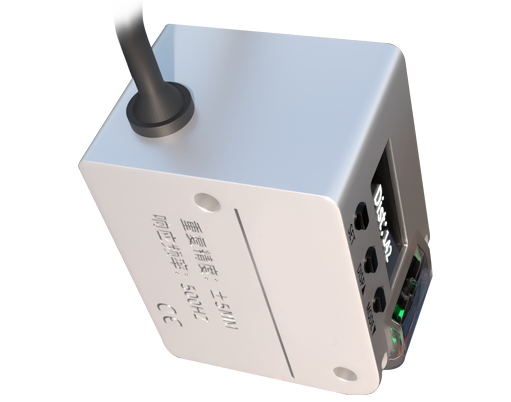
Despite their higher initial cost compared to single-beam alternatives, the return on investment is compelling. The dramatic increase in inspection throughput, the drastic reduction in false rejects and escapes, and the ability to perform complex inspections with a single sensor head lead to significant long-term savings and quality improvements. Manufacturers are increasingly adopting these sensors not just as measurement tools, but as critical enablers of zero-defect manufacturing strategies.

Looking ahead, the convergence of multi-beam laser sensing with artificial intelligence and machine learning promises even greater capabilities. AI algorithms can learn from the vast datasets generated, identifying subtle defect patterns or predicting process deviations before they occur. As industrial demands for micron-level precision and 100% inspection continue to grow, multi-beam laser sensors will undoubtedly remain at the forefront, illuminating the path toward smarter, more efficient, and more reliable manufacturing processes worldwide.