In the realm of industrial automation and machine safety, the reliability and precision of sensing technology are paramount. The GV018 proximity sensor stands as a prominent example of inductive sensing solutions designed for demanding environments. This article delves into the technical specifications, operational principles, and key application scenarios of the GV018, providing a detailed overview for engineers and procurement specialists.
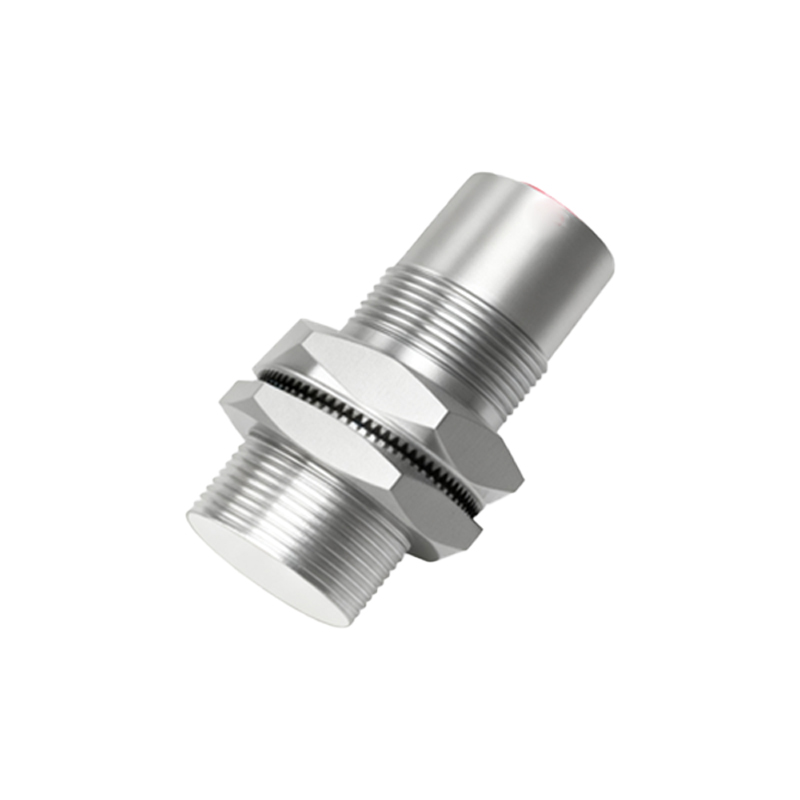
The GV018 is a cylindrical, shielded inductive proximity sensor. Its core function is to detect the presence of metallic objects—typically ferrous metals like steel and iron—without physical contact. This non-contact operation eliminates mechanical wear and tear, ensuring a long operational life and consistent performance. The sensor operates on the principle of electromagnetic induction. Inside its housing, a high-frequency oscillator generates an alternating electromagnetic field at the active face. When a metallic target enters this field, eddy currents are induced on the target's surface. This causes a change in the oscillation amplitude within the sensor's coil, which is detected by a threshold circuit. This detection triggers a solid-state switching output, signaling the presence of the object.
Key technical parameters define the GV018's capabilities. Its sensing range is a critical specification, typically ranging from a few millimeters to several centimeters, depending on the specific model variant. It is crucial to note that the rated operating distance (Sn) is standardized for a defined target material, usually mild steel. For other metals like aluminum or copper, a reduction factor must be applied, as these materials induce weaker eddy currents. The GV018 commonly features a DC three-wire configuration (PNP or NPN output) with complementary NO (Normally Open) or NC (Normally Closed) logic, providing flexibility for integration into various control systems, including PLCs (Programmable Logic Controllers). Standard output types include discrete switching signals, though some models may offer analog current (4-20mA) or voltage (0-10V) outputs for distance-proportional measurement.
Environmental robustness is a hallmark of the GV018 design. Most models boast an IP67 or higher ingress protection rating, making them resistant to dust and temporary immersion in water. This makes them suitable for washdown areas in food processing or challenging conditions in metalworking. The housing is typically constructed from nickel-plated brass or stainless steel, offering excellent resistance to corrosion, mechanical impacts, and cutting fluids. Operating temperature ranges are generally wide, from -25°C to +70°C, ensuring functionality in both cold storage and hot factory settings.
Application areas for the GV018 proximity sensor are vast across industrial sectors. In automotive manufacturing, they are indispensable for part presence verification on assembly lines, such as confirming a cylinder head is in place before a machining operation. In material handling, they serve as position sensors for detecting the end-of-travel of a pneumatic cylinder or the presence of a pallet on a conveyor. Within packaging machinery, GV018 sensors count metallic items, control filling levels by detecting a metal actuator, or ensure safety guards are correctly closed. Their fast response time and high switching frequency make them ideal for high-speed counting and positioning tasks.
When selecting and installing a GV018 sensor, several best practices must be observed. First, ensure the target material and size meet the sensor's specifications; a target should be at least as large as the sensor's face for reliable detection. Proper mounting is essential: shielded (flush-mountable) sensors can be installed flush with a metal bracket without affecting their sensing field, while unshielded models require a clear space around them. Electrical wiring must follow the manufacturer's datasheet, paying close attention to polarity, load current, and the use of surge protection devices in circuits with inductive loads like relays or solenoids to prevent voltage spikes. Regular maintenance, though minimal, should include cleaning the sensing face of debris and checking for physical damage to the cable or housing.
In conclusion, the GV018 proximity sensor represents a robust, versatile, and highly reliable component in the industrial sensor portfolio. Its non-contact detection principle, coupled with durable construction and precise electronic design, provides a critical link for automation, safety, and process control. Understanding its operating parameters, environmental limits, and correct installation procedures is key to leveraging its full potential, ensuring seamless integration and long-term, trouble-free operation in complex automated systems. For any application requiring dependable metal detection, the GV018 remains a trusted and widely adopted solution.