In the realm of industrial automation and control systems, proximity sensors play a pivotal role in enabling non-contact detection of objects. These devices are essential for ensuring precision, reliability, and efficiency in various applications, from manufacturing assembly lines to automotive systems. As a seasoned electrical engineer, I will delve into the primary types of proximity sensors, their operating principles, and typical use cases, providing a detailed overview for professionals in the field.
Proximity sensors are broadly categorized based on their sensing technology. The most common types include inductive, capacitive, ultrasonic, magnetic, and optical proximity sensors. Each type has distinct characteristics that make it suitable for specific environments and materials.
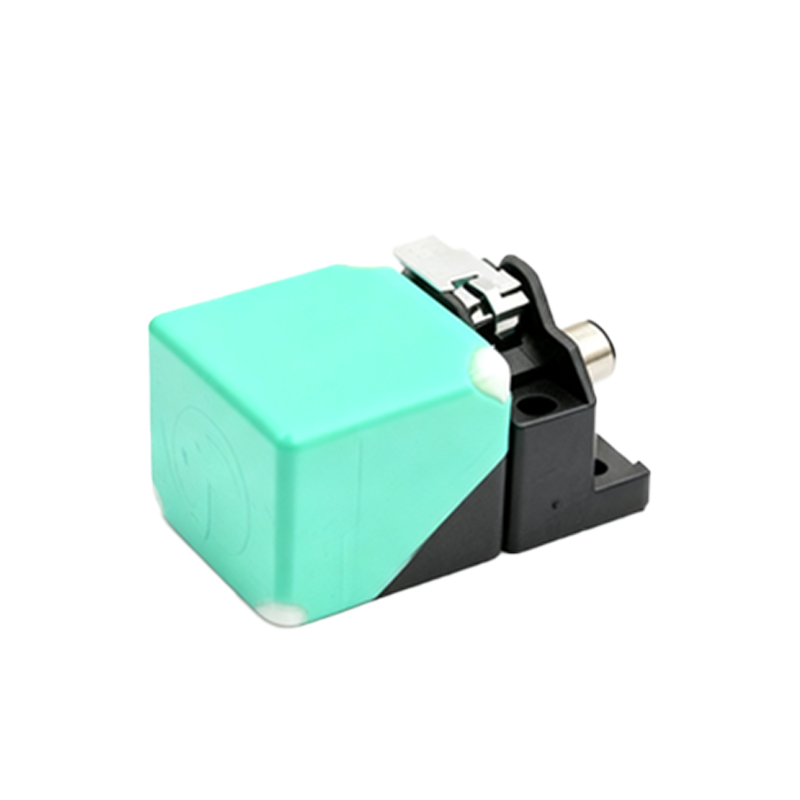
Inductive proximity sensors are widely used in industrial settings for detecting metallic objects. They operate on the principle of electromagnetic induction. The sensor generates an oscillating electromagnetic field from its coil. When a metallic object enters this field, it induces eddy currents, causing a change in the oscillation amplitude. This change is detected by the sensor's circuitry, triggering an output signal. Inductive sensors are highly reliable for short-range detection, typically up to 60 mm, and are immune to non-metallic materials like dust or liquids. Common applications include position sensing of metal parts, conveyor belt monitoring, and machine tool safety.
Capacitive proximity sensors can detect both metallic and non-metallic objects, including liquids, plastics, and wood. They function by measuring changes in capacitance. The sensor forms one plate of a capacitor, with the target object acting as the other plate. As the object approaches, the capacitance increases, and once it reaches a threshold, the sensor activates. These sensors are ideal for detecting materials through non-metallic barriers, such as glass or plastic containers. They are commonly used in level detection for liquids or granular materials, packaging systems, and touch-sensitive controls.
Ultrasonic proximity sensors utilize sound waves beyond the human hearing range (typically 20 kHz to 200 kHz) to detect objects. They emit ultrasonic pulses and measure the time taken for the echo to return after hitting an object. By calculating the time-of-flight, the sensor determines the distance to the target. These sensors are versatile and can detect a wide variety of materials, regardless of color or transparency. They are effective in challenging environments with dust, smoke, or moisture. Applications include distance measurement, object counting, and liquid level sensing in tanks.
Magnetic proximity sensors, often referred to as reed switches or Hall effect sensors, detect the presence of magnetic fields. Reed switches consist of two ferromagnetic reeds sealed in a glass tube; when a magnet approaches, the reeds attract and close the circuit. Hall effect sensors generate a voltage proportional to the magnetic field strength. These sensors are compact, energy-efficient, and suitable for harsh conditions. They are frequently used in automotive systems (e.g., speed sensing), door position detection, and security systems.
Optical proximity sensors, including infrared (IR) and laser types, use light beams to detect objects. They consist of an emitter (light source) and a receiver. When an object interrupts or reflects the light beam, the receiver detects the change, triggering an output. IR sensors are common for short-range detection, while laser sensors offer high precision for longer distances. Optical sensors are sensitive to environmental factors like ambient light or dirt, so they often require protective housings. Typical uses include object alignment, robotics, and automated sorting systems.
In addition to these primary types, there are specialized variants such as cylindrical, rectangular, or modular designs to fit specific installation requirements. Factors like sensing range, response time, output type (e.g., NPN/PNP, analog/digital), and environmental ratings (IP codes) must be considered when selecting a sensor. For instance, in explosive atmospheres, intrinsically safe sensors are mandated, while high-temperature applications may require sensors with robust thermal tolerance.
Maintenance and calibration are crucial for optimal performance. Regular checks for contamination, alignment, and electrical connections can prevent downtime. Advances in technology, such as IO-Link communication, enable smart sensors with diagnostic capabilities, enhancing predictive maintenance and system integration.
In summary, proximity sensors are indispensable tools in modern engineering, each type offering unique advantages. Inductive sensors excel with metals, capacitive sensors handle diverse materials, ultrasonic sensors provide long-range detection, magnetic sensors offer durability, and optical sensors deliver precision. By understanding these differences, engineers can select the appropriate sensor to enhance automation, safety, and efficiency in their projects.