In the demanding environment of underground mining and industrial material handling, ropeway passenger conveyors, commonly known as "man-riders" or "monorail systems," are critical for personnel transport. Ensuring the absolute safety of these systems is paramount, and proximity sensors have emerged as a cornerstone technology within their comprehensive protection schemes. Unlike mechanical limit switches, these non-contact electronic devices provide unparalleled reliability, durability, and precision in monitoring the conveyor's operational status and protecting both personnel and equipment.
The core function of a proximity sensor in a man-rider protection system is to detect the presence or absence of a target—such as a chair, cabin, or a specific component on the moving drive mechanism—without any physical contact. This is typically achieved through inductive, capacitive, or ultrasonic sensing principles. Inductive sensors are predominantly used for detecting metallic targets like gear teeth, coupling flags, or specially mounted metal plates. They generate an electromagnetic field; when a metallic object enters this field, it causes a change in oscillation amplitude, which the sensor's circuitry detects and converts into a switching signal. This signal is then fed into the conveyor's Programmable Logic Controller (PLC) or dedicated safety relay.
Key protection applications include overspeed and underspeed monitoring. Sensors are strategically positioned to monitor the rotational speed of the drive sheave or a dedicated measuring wheel. By counting pulses per unit of time, the control system can precisely calculate the conveyor's speed. If the speed exceeds a safe upper limit (overspeed) or falls below a minimum threshold, indicating potential slippage or brake engagement failure, the sensor's signal triggers an immediate emergency stop. Another critical application is anti-slip protection. Sensors monitor the relative movement between the traction rope and the drive sheave. Discrepancy beyond a set tolerance indicates rope slippage, a hazardous condition that can lead to uncontrolled movement. The proximity sensor provides the primary data to initiate corrective action.
Furthermore, these sensors are integral to zone occupancy monitoring and sequential chair spacing. In automated systems, sensors at loading and unloading stations confirm a chair has properly arrived or departed before allowing the next cycle to proceed, preventing collisions. They also monitor the position of swing gates at stations and the correct alignment of detachable grips, ensuring passengers board and alight only when the system is stationary and secured.
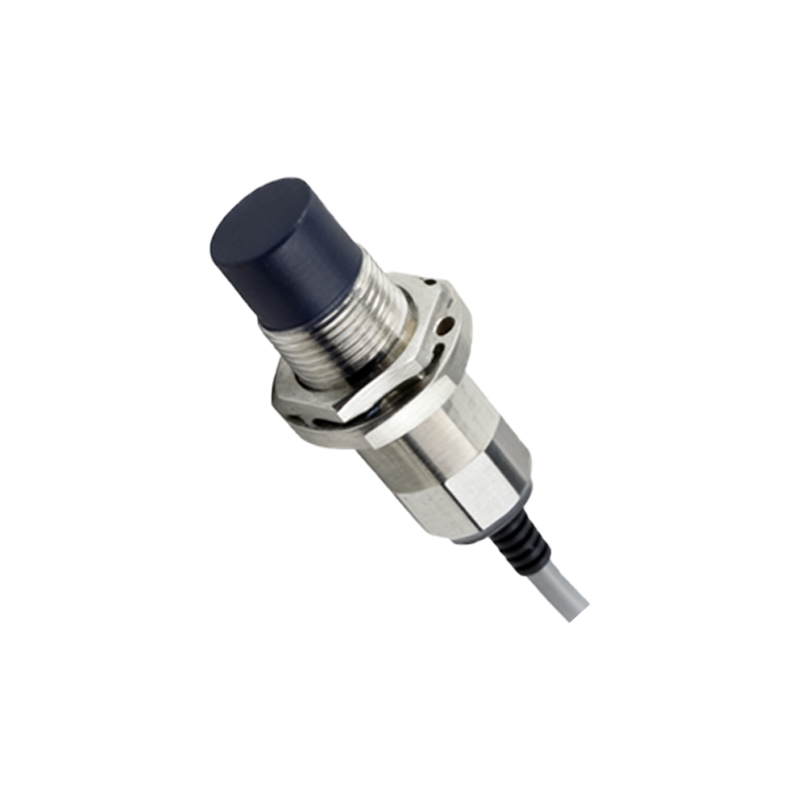
The selection criteria for proximity sensors in these harsh applications are rigorous. They must possess high ingress protection ratings, typically IP67 or higher, to resist dust and water immersion. Robust housing, often made of stainless steel or nickel-plated brass, is required to withstand mechanical impact, vibration, and corrosive atmospheres. Operating temperature ranges must accommodate both freezing pit entries and hot machinery rooms. Electrical characteristics like NAMUR outputs or PNP/NPN transistor switching are chosen based on the control system's architecture, with many modern sensors offering diagnostic capabilities for predictive maintenance.
Installation and alignment are critical for optimal performance. The sensor must be mounted securely to prevent vibration-induced misalignment. The sensing distance, target material, size, and approach direction must all conform to the sensor's specifications. Regular maintenance, though minimal, involves checking for physical damage, buildup of debris on the sensing face, and verifying the signal integrity. A failed or drifting sensor can lead to nuisance trips or, worse, a failure to detect a dangerous condition.
In conclusion, proximity sensors are not merely components but vital sentinels in the safety ecosystem of a ropeway passenger conveyor. Their non-contact operation, resilience in hostile environments, and precise detection capabilities form the first line of defense against operational anomalies. Integrating high-quality proximity sensors with a fail-safe control logic is a non-negotiable engineering practice, ensuring that these personnel transport systems adhere to the highest international safety standards like ISO 19436 and provide dependable, worry-free service in some of the world's most challenging industrial settings. The ongoing evolution towards IIoT-enabled sensors promises even greater diagnostic insight and system integration, further elevating safety and operational efficiency.