In the intricate world of industrial automation and smart systems, proximity sensors operate as critical, yet often overlooked, components. These devices, designed to detect the presence or absence of an object within a specific range without physical contact, are fundamental to enhancing efficiency, safety, and reliability across countless applications. Their principle of operation is elegantly simple: they emit an electromagnetic field or a beam of radiation and look for changes in the field or return signal. The object being sensed is often referred to as the proximity sensor's target.
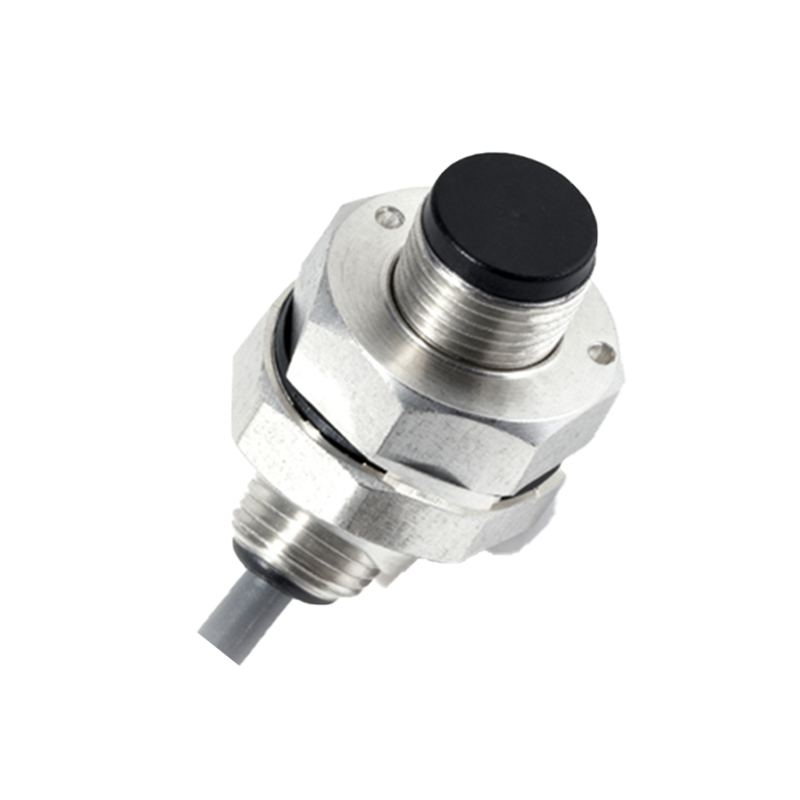
The technology behind proximity sensors is diverse, primarily categorized by their detection method. Inductive proximity sensors are the stalwarts in metal detection. They generate an oscillating electromagnetic field from a coil. When a metallic target enters this field, it induces eddy currents, causing a change in oscillation amplitude. This change is detected by the sensor's circuitry, triggering an output signal. These sensors are exceptionally robust, resistant to environmental factors like dust, oil, and moisture, making them ideal for harsh industrial environments such as machining centers, automotive assembly lines, and material handling systems.
Capacitive proximity sensors, on the other hand, can detect both metallic and non-metallic materials—liquids, plastics, wood, and granular substances. They function by generating an electrostatic field. Any object that enters this field alters its capacitance, which the sensor detects. This versatility makes them perfect for applications like level detection in silos, presence detection of glass or plastic bottles on conveyor belts, and touch-sensitive interfaces.
For longer-range detection and precise positioning, photoelectric sensors are employed. These use a light emitter (usually LED or laser) and a receiver. When the light beam is interrupted or reflected by a target, the receiver detects the change. They are subdivided into through-beam, retro-reflective, and diffuse reflective types, each suited for different range and environmental conditions. Ultrasonic sensors operate on a similar principle but use sound waves, excelling in challenging environments with dust, smoke, or varying colors and surface finishes that can fool optical systems.
The selection of a proximity sensor is a nuanced engineering decision. Key parameters include sensing distance, repeat accuracy, response frequency, output type (PNP/NPN, analog, IO-Link), and environmental ratings (IP, NEMA). For instance, a high-speed packaging line requires a sensor with a very fast response time and high switching frequency, while a wastewater treatment plant demands a sensor with a high IP rating for corrosion and water resistance.
The integration of Industry 4.0 and the Industrial Internet of Things (IIoT) is pushing proximity sensors into a new era of intelligence. Modern sensors are no longer simple binary switches. Smart sensors with IO-Link communication provide detailed diagnostic data—such as operating temperature, signal strength, and device health—enabling predictive maintenance. This data transparency allows engineers to anticipate failures before they cause downtime, transforming maintenance strategies from reactive to proactive.
From ensuring robotic arms pick components accurately to verifying the closure of elevator doors for passenger safety, from counting items on high-speed production lines to controlling the precise fill level in tanks, proximity sensors are indispensable. Their silent, reliable operation forms the sensory backbone of automated systems, translating physical presence into actionable electronic data. As automation grows more complex and interconnected, the evolution of these sensors towards greater intelligence, miniaturization, and resilience will continue to be a driving force in industrial innovation, solidifying their role as the true unsung heroes of the modern technological landscape.