In the intricate world of industrial automation and machine control, proximity sensor probes stand as fundamental, yet often understated, components. Their primary function is to detect the presence or absence of a target object within a specified range without any physical contact. This non-contact detection capability is the cornerstone of their widespread utility, enabling reliable operation in harsh, demanding environments where mechanical switches would fail prematurely.
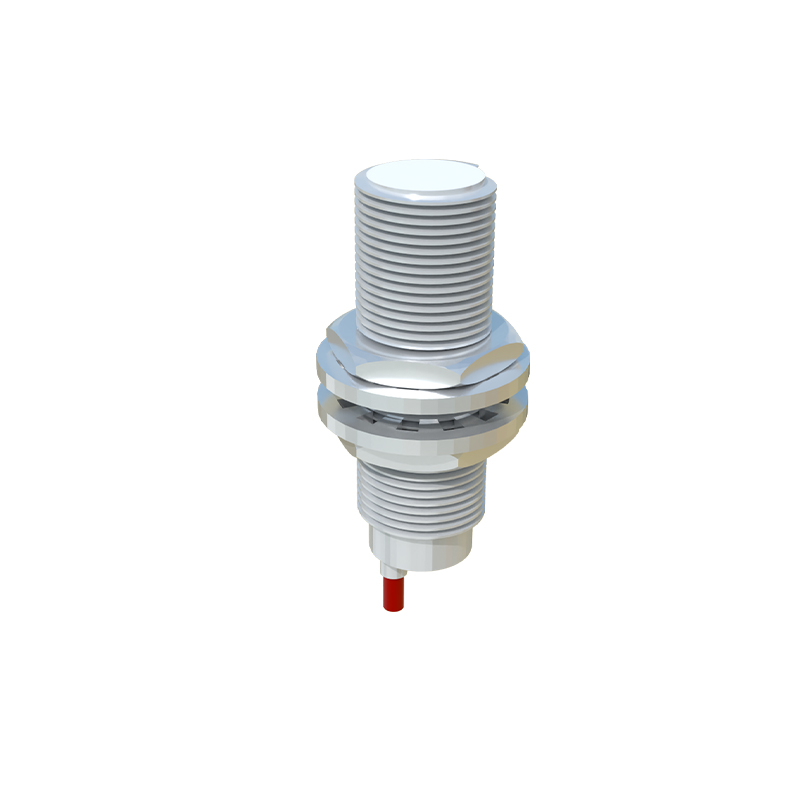
The core principle behind most industrial proximity sensors, particularly inductive and capacitive types, revolves around the probe or sensing face. This is the active part of the sensor that generates an electromagnetic or electrostatic field. When a metallic object (for inductive sensors) or any material (for capacitive sensors) enters this field, it causes a detectable change in the oscillator circuit's amplitude or frequency within the sensor. The probe is meticulously designed to shape and project this field optimally. Its geometry, material composition, and construction directly influence the sensor's nominal sensing distance, switching frequency, and immunity to environmental interference like temperature fluctuations, coolant, or dust.
The role of the proximity probe extends far beyond simple object detection. In precision manufacturing, for instance, these probes are integral to position verification. They confirm if a robotic gripper has successfully picked up a component, if a machining tool is in its home position, or if a safety guard is correctly closed. This real-time feedback is critical for process integrity and safety interlocking. Furthermore, in high-speed counting applications, such as on bottling or packaging lines, the rapid response time and high switching frequency of a well-chosen probe ensure accurate tallying without missed counts, which is vital for inventory and production control.
Another crucial application is in monitoring rotational speed and direction. By positioning a proximity probe near a gear tooth or a keyway on a rotating shaft, each passing feature generates a pulse. The frequency of these pulses directly corresponds to the rotational speed. This data is essential for condition monitoring, preventing overspeed conditions in turbines, or synchronizing multiple drives in a conveyor system. The probe's ability to perform this duty reliably, often in the presence of oil, vibration, and metallic debris, underscores its robustness.
The selection of the appropriate probe is a critical engineering decision. Factors such as the target material (steel, aluminum, brass, plastic, liquid), the required sensing distance, the installation environment (submersible, high-temperature), and the electrical output type (PNP/NPN, analog, IO-Link) must all be considered. A cylindrical threaded probe might be ideal for mounting in a machine tool's spindle housing, while a flat, rectangular probe could be better suited for detecting thin materials on a conveyor. Specialized variants, like analog measuring probes, provide not just a binary on/off signal but a continuous voltage or current output proportional to the distance to the target, enabling precise gap control in applications like valve positioning or roll gap measurement in steel mills.
In essence, the proximity sensor probe acts as the sensory organ of a machine. It translates physical presence into a clean, actionable electrical signal for the Programmable Logic Controller (PLC). This enables automated systems to "see" and "feel" their operational state, making intelligent decisions without human intervention. The reliability, longevity, and precision of the entire sensing loop hinge on the correct application and installation of the probe. As industries advance towards smarter, more connected systems (Industry 4.0), the humble proximity probe continues to evolve, integrating diagnostics and communication protocols, ensuring its indispensable role in the automated factories of today and tomorrow.