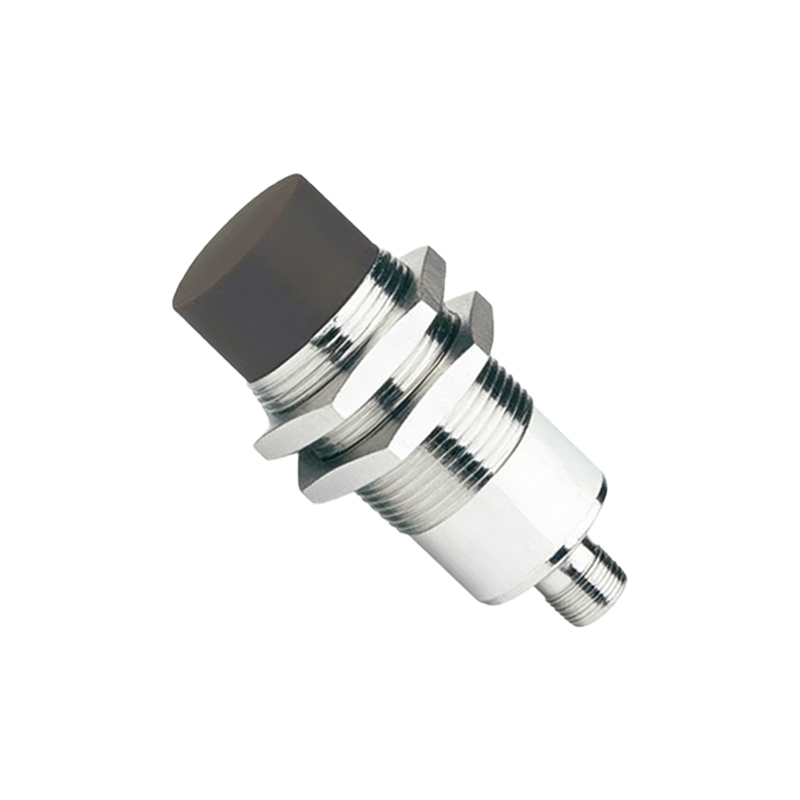
This report details the comprehensive design process of a photoelectric proximity sensor, a critical component in modern industrial automation. The primary objective is to develop a reliable, cost-effective sensor capable of detecting the presence or absence of an object within a specified range without physical contact, utilizing modulated light beams to ensure immunity to ambient light interference.
The core operational principle is based on the triangulation method for diffuse reflection sensing. The design incorporates a pulsed infrared Light Emitting Diode (LED) with a wavelength of 880nm as the light source. This wavelength offers an optimal balance between component availability, power efficiency, and minimal interference from common ambient light sources. The emitted light is focused into a narrow beam via a precision lens. When this beam strikes a target object within the detection field, a fraction of the light diffusely reflects back towards the sensor. A position-sensitive detector (PSD) or a dedicated photodiode array, paired with a receiving lens, captures this reflected signal. The use of a modulated (pulsed) light source, synchronized with the receiver's demodulation circuit, is paramount. This synchronous detection technique allows the sensor to distinguish the weak reflected signal from the target against strong, constant ambient light, significantly enhancing signal-to-noise ratio and operational stability in harsh industrial environments.

The electronic architecture is divided into distinct modules. The transmitter module features a constant current driver circuit for the IR LED, controlled by an oscillator generating a high-frequency square wave (typically in the range of 10-50 kHz). This ensures the LED operates in pulsed mode, reducing average power consumption and heat generation. The receiver module begins with a high-sensitivity silicon photodiode. The faint current signal from the photodiode is first passed through a transimpedance amplifier (TIA) to convert it into a usable voltage. This signal then enters a band-pass filter centered on the modulation frequency, effectively filtering out DC components from ambient light and high-frequency electrical noise. A subsequent demodulation stage, often a synchronous detector or a phase-sensitive rectifier, extracts the envelope of the modulated signal that corresponds to the presence of the target. Finally, a comparator circuit with an adjustable threshold converts this analog signal into a clean, digital ON/OFF output, compatible with Programmable Logic Controllers (PLCs) and other industrial control systems.
Mechanical and optical design considerations are equally critical. The housing is constructed from industrial-grade polyamide or metal, providing IP67-rated protection against dust and water ingress. The lenses are made of acrylic or polycarbonate, treated with anti-reflective coatings to maximize light transmission. Careful optical alignment during assembly ensures a precise and stable sensing beam. The sensing range, a key performance parameter, is determined by the optical geometry (angle between emitter and receiver axes), LED power, and receiver sensitivity. For this design, a standard sensing distance of 100mm was targeted, with a hysteresis of approximately 10% to prevent output chattering when an object is at the detection boundary.
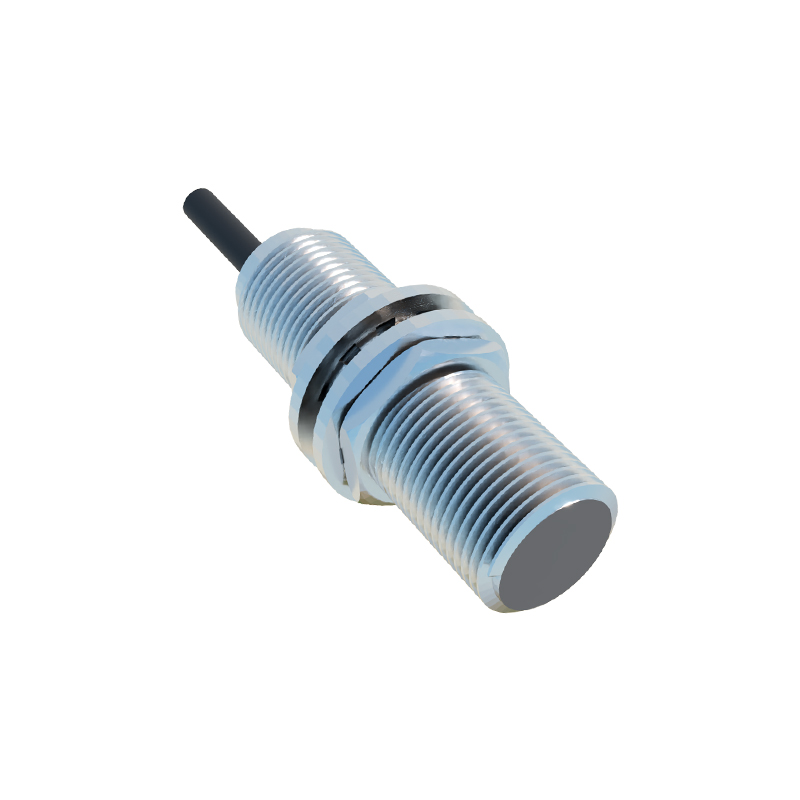
Performance validation involved rigorous testing under simulated industrial conditions. Key metrics evaluated included repeatability (consistency of detection point), response time (switching speed), temperature stability across an operating range of -25°C to 70°C, and resistance to optical interference from sources like welding arcs or fluorescent lighting. The final prototype demonstrated a repeatability of ±0.5mm, a response time of 1ms, and reliable operation under varying ambient light conditions up to 10,000 lux. The design successfully meets the requirements for applications in packaging machinery, material handling, assembly line object counting, and safety door monitoring.
Future design iterations could explore the integration of advanced functionalities such as analog output proportional to distance (for rudimentary distance measurement), IO-Link digital communication for parameter setting and diagnostics, and the use of laser diodes for more precise, long-range detection. The robustness, non-contact nature, and versatility of the photoelectric proximity sensor ensure its continued dominance in factory automation, with this design providing a solid foundation for reliable operation in demanding settings.