Proximity switch sensors are critical components in industrial automation, offering non-contact detection of metallic or non-metallic objects. Their mechanical structure is engineered to ensure reliability, durability, and precision in harsh environments. This article delves into the key mechanical aspects of proximity sensors, focusing on design principles, materials, and assembly techniques that define their performance.
The core mechanical design of a proximity sensor typically includes a housing, sensing face, internal electronics, and connection elements. The housing, often made from stainless steel, brass, or engineered plastics like PBT or PEEK, provides protection against external factors such as moisture, dust, chemicals, and mechanical impact. For instance, IP67 or IP68-rated housings are common in industrial settings, ensuring resistance to water ingress and particulate matter. The choice of material depends on the application: stainless steel is preferred for corrosive environments, while plastics offer cost-effectiveness and electrical insulation.
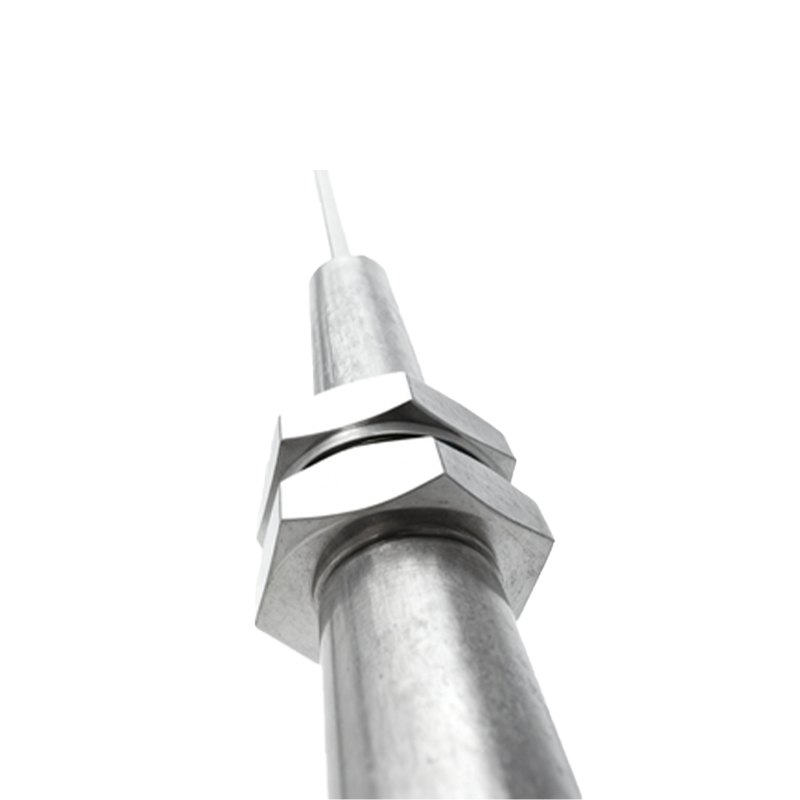
The sensing face, usually a flat or threaded surface, is designed to optimize the detection range and sensitivity. It houses the coil or oscillator that generates an electromagnetic field for inductive sensors, or an infrared LED and phototransistor for capacitive or optical variants. The mechanical alignment of this face is crucial; even minor misalignment can reduce sensing accuracy. Engineers often incorporate features like flush-mounting capabilities to minimize dead zones, allowing the sensor to be installed flush with metal surfaces without signal interference.
Internally, the mechanical structure supports the electronic components, including the oscillator, amplifier, and output circuit. These are mounted on a PCB that is securely fixed within the housing to prevent vibration-induced failures. Shock-absorbing materials or potting compounds, such as epoxy resins, are used to encapsulate the electronics, enhancing thermal stability and mechanical robustness. This potting process also protects against humidity and extends the sensor's lifespan in high-temperature operations, which can range from -25°C to 70°C or higher for specialized models.
Connection elements, like M8, M12, or M18 threaded connectors, are integral to the mechanical design, facilitating easy installation and wiring. These connectors are often made from nickel-plated brass or stainless steel to ensure corrosion resistance and reliable electrical contact. Cable glands or PUR/PVC cables are attached to withstand continuous flexing and tension, with strain relief mechanisms to prevent wire breakage. The mechanical integration of these parts requires precision molding or machining to maintain seal integrity, especially in sensors used in washdown or explosive atmospheres (ATEX-certified).
Assembly techniques play a vital role in the mechanical durability of proximity sensors. Automated processes, such as laser welding or ultrasonic sealing, are employed to join housing components without compromising the internal seals. This ensures a hermetic enclosure that can withstand pressures and vibrations common in machinery like conveyor systems, robotic arms, or CNC machines. Additionally, quality control measures, including leak testing and vibration testing, validate the mechanical integrity before deployment.
In summary, the mechanical structure of proximity switch sensors is a blend of material science, precision engineering, and environmental adaptation. By focusing on robust housing, accurate sensing face design, secure internal mounting, and reliable connections, manufacturers deliver sensors that meet industry standards for safety and efficiency. As automation evolves, innovations in miniaturization and smart materials continue to refine these mechanical aspects, pushing the boundaries of performance in sectors from automotive manufacturing to food processing.