Laser scanning sensors have become integral components across numerous industries, enabling precise non-contact measurement, detection, and data acquisition. Their operation is based on emitting laser beams and analyzing the reflected light to gather information about an object's distance, dimensions, profile, or surface characteristics. The classification of these sensors is primarily determined by their underlying measurement principle, which dictates their performance, suitable applications, and limitations. Understanding these categories is essential for selecting the right sensor for a specific task.
The most fundamental and widespread category is based on triangulation. A triangulation laser sensor projects a laser spot onto a target surface. The reflected light is focused onto a position-sensitive detector, such as a CCD or CMOS array. As the distance to the target changes, the position of the reflected spot on the detector shifts. Using simple geometric trigonometry, the sensor's electronics calculate the exact distance. These sensors are renowned for their high resolution and accuracy at short to medium ranges, typically from a few millimeters up to several meters. They are predominantly used for precision height measurement, thickness gauging, and profile inspection in controlled environments. However, their performance can be affected by the target's surface color, reflectivity, and ambient light.
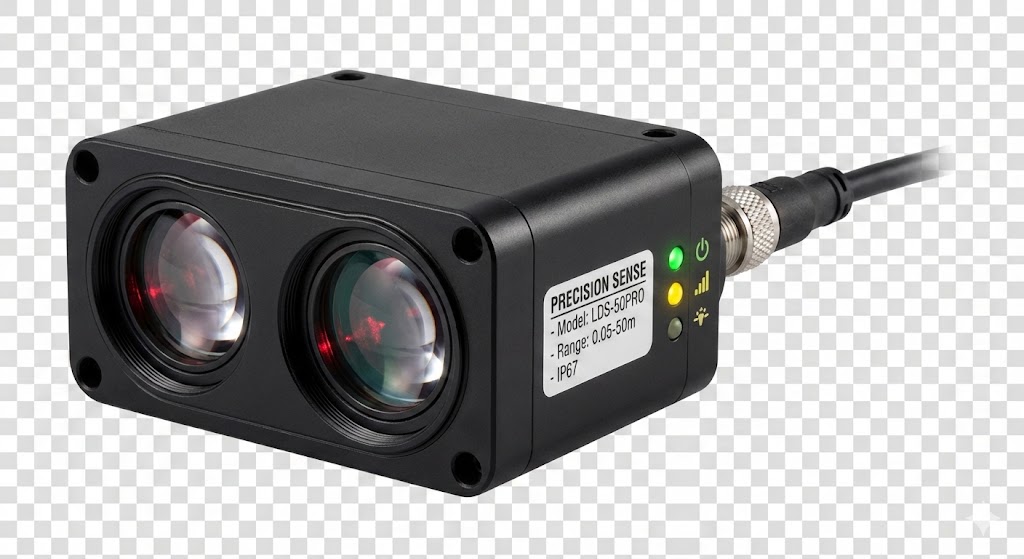
A second major category utilizes the time-of-flight (ToF) principle. This method measures the time it takes for a laser pulse to travel to the target and back to the receiver. Since the speed of light is constant, the distance is calculated as D = (c * t) / 2, where c is the speed of light and t is the measured time. ToF sensors are capable of measuring over very long distances, from several meters to kilometers, making them ideal for applications like airborne LiDAR (Light Detection and Ranging) for topographic mapping, vehicle speed enforcement, and large-scale industrial automation. While generally offering lower resolution than triangulation sensors at close range, modern ToF sensors provide excellent performance for area scanning and 3D imaging at high speeds.
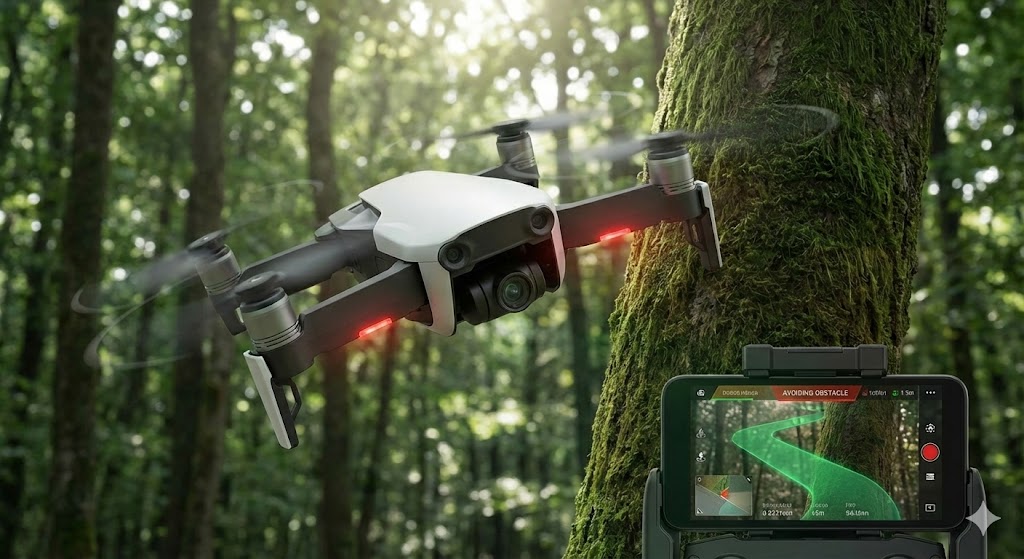
Phase-shift measurement is a more refined variant often used in conjunction with ToF for medium to high-accuracy applications over intermediate distances. Instead of timing a single pulse, these sensors modulate the amplitude of a continuous-wave laser beam. The distance is determined by measuring the phase difference between the emitted and received modulated signal. This technique allows for higher accuracy than simple pulse ToF at the expense of more complex electronics. It is commonly found in terrestrial LiDAR scanners for surveying, archaeology, and construction site monitoring.
Another critical classification is based on the scanning mechanism: point scanners, line scanners, and area scanners. A point scanner, as the name implies, measures a single point at a time. To build a profile or 3D image, either the sensor or the target must be moved. A line scanner, or profile scanner, projects a laser line rather than a single spot. A camera captures the deformation of this line, instantly generating a 2D cross-sectional profile of the object. This is the workhorse of inline inspection on production lines for verifying dimensions, detecting defects, or guiding robots. Area scanners, often using ToF or structured light principles, capture an entire field of view in one shot, generating a dense point cloud for full 3D modeling. These are used in reverse engineering, quality control of complex assemblies, and biometrics.
Further classification considers the type of laser source (e.g., visible red, infrared, blue laser) and its safety class, which influences its use in environments with human operators. The environmental rating (IP rating) is crucial for determining suitability in harsh conditions like washdown areas in food processing or outdoor settings.
In application terms, the choice is clear-cut. For ultra-precise, close-range measurement of small parts, a triangulation-based point or line sensor is optimal. For measuring the fill level in a large silo or mapping a forest, a long-range ToF sensor is necessary. For capturing the complete 3D shape of an object on a conveyor belt, a high-speed area scanner is required. Each class of laser scanning sensor fills a distinct niche, driven by its core measurement principle. As technology advances, the boundaries between these categories are blurring, with hybrid systems emerging to offer a broader range of capabilities. However, the fundamental principles of triangulation, time-of-flight, and phase-shift remain the cornerstone for understanding and leveraging the power of laser scanning technology in automation, metrology, and beyond.