In the realm of precision measurement and automation, the G10 laser sensor stands as a pivotal technology. This device operates on the principle of laser triangulation or time-of-flight measurement, emitting a focused beam of light toward a target. The reflected light is captured by a receiver, and sophisticated internal processors calculate distance, displacement, or presence with exceptional accuracy. The "G10" designation often refers to a specific series or model known for its robust housing, compact design, and reliable performance in industrial environments.
A key advantage of the G10 laser sensor is its non-contact nature. This allows for the inspection of delicate, hot, or moving objects without causing any wear or damage. Typical measurement ranges vary by model but often span from a few millimeters to several meters, with resolutions reaching into the micrometer range. This makes it indispensable for tasks requiring high repeatability and precision.
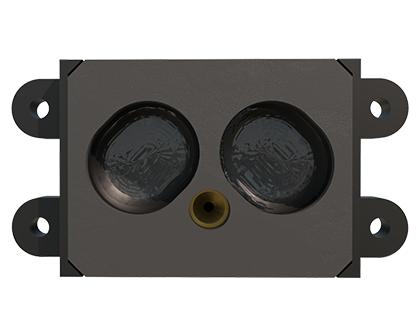
The applications for G10 laser sensors are vast and cross-industrial. In manufacturing, they are deployed for precise thickness gauging of materials like metal sheets, glass, or plastic films. On assembly lines, they perform critical roles in contour profiling, checking part dimensions, and ensuring components are correctly positioned. Robotics integrators rely on these sensors for accurate object detection and positioning, enabling complex pick-and-place operations. Furthermore, in logistics and warehousing, G10 sensors facilitate palletizing, level detection in silos, and package dimensioning systems.
Environmental robustness is a hallmark of the G10 series. Many models feature ingress protection ratings such as IP67, making them resistant to dust and temporary immersion. They are engineered to withstand common industrial challenges like vibration, electromagnetic interference, and ambient light noise. This durability ensures stable operation in settings ranging from clean rooms to harsh factory floors.
When selecting a G10 laser sensor, engineers must consider several parameters. The required measurement range, resolution, and response time are primary factors. The type of output—analog (e.g., 4-20 mA, 0-10 V), digital (e.g., NPN/PNP), or serial communication (e.g., RS-232, IO-Link)—must align with the control system. The material and surface properties of the target object also significantly influence performance; dark, matte, or transparent surfaces may require sensors with specialized algorithms or higher laser power.
Installation and alignment are straightforward but crucial for optimal performance. The sensor should be mounted securely to minimize mechanical drift. Proper alignment ensures the laser beam strikes the target perpendicularly, reducing measurement error. Many modern G10 sensors come with intuitive setup aids like built-in displays or remote configuration software, simplifying calibration and parameter adjustment.
Looking forward, the integration of G10 laser sensors with Industry 4.0 frameworks is accelerating. Smart sensors with embedded diagnostics and predictive maintenance capabilities are becoming standard. They can communicate real-time data to central control systems, enabling adaptive process control and deeper analytics. This connectivity transforms the sensor from a simple measurement point into a node in a vast, intelligent network.
In conclusion, the G10 laser sensor is a fundamental component in modern automation. Its ability to deliver precise, reliable, and non-contact measurements underpins quality control, efficiency, and innovation across diverse sectors. From ensuring the perfect gap in a smartphone assembly to monitoring the fill level of a food container, this technology quietly enables the precision that defines advanced manufacturing and beyond. As systems grow smarter and more interconnected, the role of such precise sensing technology will only become more central.