In the realm of industrial automation, precision and reliability are paramount. Laser calibration sensors have emerged as critical components, enabling high-accuracy measurement, alignment, and quality control across various applications. These sensors utilize laser technology to detect, measure, and calibrate positions, distances, or dimensions with exceptional precision, often at micron-level resolutions. Unlike traditional mechanical or optical sensors, laser calibration sensors offer non-contact operation, reducing wear and tear and minimizing interference with production processes.
The fundamental principle behind laser calibration sensors involves emitting a focused laser beam toward a target surface. The reflected light is then captured and analyzed by a receiver within the sensor. Based on the time-of-flight, triangulation, or interferometry methods, the sensor calculates precise measurements such as distance, displacement, or profile. This data is crucial for tasks like robotic guidance, assembly line monitoring, and dimensional inspection in industries ranging from automotive manufacturing to electronics and aerospace.
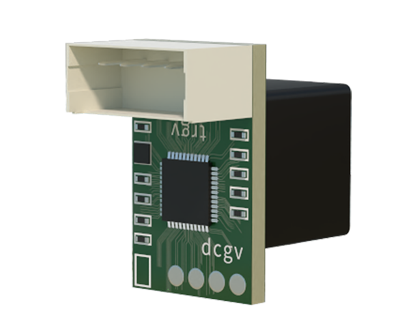
Key advantages of laser calibration sensors include their high speed and accuracy. They can perform rapid, repeatable measurements even in challenging environments with vibrations, dust, or varying temperatures, thanks to robust designs and advanced signal processing algorithms. Additionally, their ability to integrate seamlessly with programmable logic controllers (PLCs) and industrial networks facilitates real-time data acquisition and automated adjustments, enhancing overall system efficiency.
When selecting a laser calibration sensor, engineers must consider factors such as measurement range, resolution, response time, and environmental compatibility. For instance, in semiconductor fabrication, sensors with sub-micron accuracy are essential, while in logistics automation, longer-range sensors might be prioritized. Regular calibration and maintenance are also vital to ensure sustained performance, as factors like lens contamination or thermal drift can affect readings.
Looking ahead, advancements in laser technology and artificial intelligence are driving innovations in sensor capabilities. Smart sensors with embedded diagnostics and adaptive algorithms are becoming more prevalent, offering predictive maintenance features and improved adaptability to dynamic production lines. As Industry 4.0 evolves, laser calibration sensors will continue to play a pivotal role in enabling smarter, more flexible manufacturing ecosystems, ultimately contributing to higher productivity and reduced operational costs.
In summary, laser calibration sensors represent a sophisticated solution for precision measurement needs in modern industry. Their non-contact nature, combined with high accuracy and integration potential, makes them indispensable tools for achieving quality assurance and operational excellence. By leveraging these sensors, businesses can optimize processes, minimize errors, and stay competitive in an increasingly automated world.