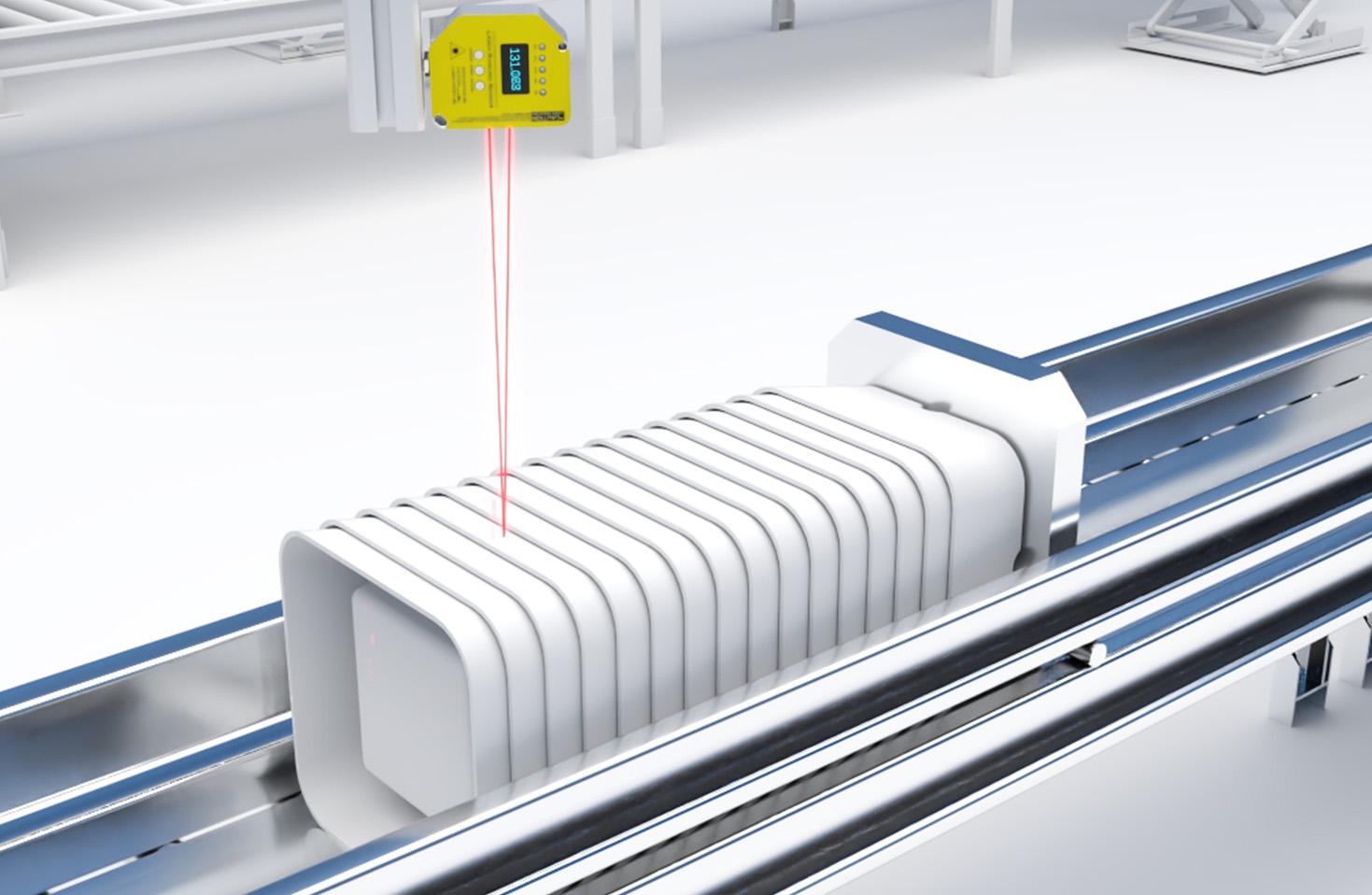
In the rapidly evolving landscape of industrial automation and precision measurement, laser distance sensors have emerged as a cornerstone technology. Their ability to deliver non-contact, high-accuracy, and high-speed measurements has revolutionized processes across a multitude of sectors. This discussion delves into the core principles, recent technological advancements, and the diverse applications that make these sensors indispensable in today's competitive industrial environment.
At its heart, a laser distance sensor operates on the principle of time-of-flight (ToF) or phase-shift measurement. In the ToF method, the sensor emits a short pulse of laser light towards a target. A high-speed receiver then detects the reflected light. By precisely calculating the time difference between the emission and reception of the pulse, and knowing the constant speed of light, the sensor computes the distance with remarkable accuracy. Phase-shift sensors, on the other hand, modulate the amplitude of the laser beam. The distance is determined by measuring the phase difference between the emitted and reflected modulated signal. This method often provides even higher resolution for shorter distances. Modern sensors incorporate sophisticated algorithms and signal processing to filter out ambient light noise and handle varying surface properties, ensuring reliable data in challenging conditions.
Recent years have witnessed significant advancements in laser sensor technology. Miniaturization is a key trend, with sensors now available in incredibly compact housings, enabling integration into space-constrained machinery and robotic end-effectors. The improvement in measurement range and speed is another leap forward. We now have sensors capable of measuring from a few millimeters up to several hundred meters, with update rates in the kilohertz range, allowing for real-time monitoring of fast-moving objects on production lines. Furthermore, the integration of smart features through embedded processors and industrial communication protocols like IO-Link, PROFINET, and EtherCAT has been transformative. These "smart sensors" can perform self-diagnostics, output processed data directly, and simplify integration into Industry 4.0 and IoT frameworks, facilitating predictive maintenance and data-driven optimization.
The application spectrum of laser distance sensors is vast and continually expanding. In manufacturing and robotics, they are pivotal for precise positioning, contour profiling, and height detection. For instance, in automotive assembly, they ensure consistent gap and flush measurements between body panels. In robotics, they provide critical feedback for bin-picking, palletizing, and collaborative robot safety by mapping the environment. The logistics and warehousing sector relies heavily on these sensors for dimensioning packages, controlling conveyor belt heights, and guiding automated guided vehicles (AGVs). In the construction and civil engineering fields, they are used for alignment, monitoring structural deformations, and volume calculation in excavation work. Even in agriculture, laser sensors assist in guiding autonomous tractors and monitoring crop growth.

Selecting the appropriate laser distance sensor requires careful consideration of several parameters. The required measurement range and resolution are primary drivers. The type of target surface—whether it's highly reflective, dark, transparent, or textured—can significantly impact performance and may necessitate sensors with specialized laser types or receiver sensitivity adjustments. Environmental factors such as dust, fog, temperature fluctuations, and ambient light must be accounted for, often leading to the choice of sensors with higher IP ratings and robust housing. Finally, the output interface must be compatible with the existing control system, whether it's analog voltage/current, discrete switching signals, or digital fieldbus communication.

Looking ahead, the future of laser distance sensing is intertwined with the progression of industrial digitization. We anticipate further integration with artificial intelligence and machine vision systems, where laser measurement data will be one stream in a multi-sensor fusion approach for complex quality inspection and adaptive control. The development of more cost-effective models will also open doors for broader adoption in small and medium-sized enterprises. As industries strive for greater efficiency, flexibility, and quality, the role of the laser distance sensor as a precise and reliable data acquisition tool will only become more central. Their continued evolution will be a key enabler in building smarter, more responsive, and autonomous industrial systems.