In the realm of industrial automation and metal fabrication, stamping presses are indispensable for high-volume production. However, they present significant safety hazards due to their powerful, rapid, and repetitive motions. Integrating advanced safety technologies is not just a regulatory compliance issue but a fundamental ethical responsibility. Among these technologies, laser protection sensors, specifically laser scanner safety systems, have emerged as a critical component for safeguarding personnel around stamping equipment. This article delves into the principles, applications, and benefits of these sophisticated sensing systems.
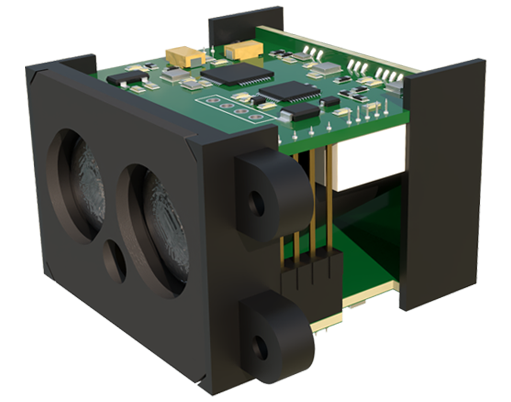
A laser protection sensor for stamping applications is fundamentally a non-contact, active optoelectronic safety device. Its core function is to create one or more invisible protective fields or light curtains around hazardous zones of a stamping press. The system typically consists of a transmitter, a receiver, and a dedicated safety controller. The transmitter emits a fan-shaped array of pulsed infrared laser beams, which are precisely captured by the receiver. The controller continuously monitors the integrity of this light curtain. If an object—such as a worker's hand or arm—intrudes into the defined protective field and interrupts the beam, the sensor sends an immediate stop signal to the press's control system. This triggers a safety-rated stop, halting the machine's dangerous motion before an injury can occur.
The application of these sensors in stamping environments is multifaceted. The most common setup is perimeter guarding, where laser scanners create a two-dimensional protective field around the entire press or its specific dangerous areas, like the point of operation or the die space. Unlike traditional physical guards, these light curtains allow for greater visibility and easier material feeding while maintaining a high level of safety. Another critical application is access monitoring. Here, the sensor is configured to protect only the access points to the hazardous zone. It allows for safe loading and unloading of parts by requiring the operator to clear the field before the press cycle can initiate or resume, following a "presence sensing" principle.
The advantages of employing laser protection sensors over conventional mechanical guards or pressure mats are substantial. First and foremost is enhanced safety performance. They provide a fast response time, often in milliseconds, which is crucial given the high speed of stamping presses. They offer flexibility; the protective field's shape, size, and resolution can be easily programmed and reconfigured via software to suit different dies or production setups, minimizing downtime during changeovers. This programmability allows for the creation of warning fields (yellow zones) that alert personnel of their proximity to danger, and protective fields (red zones) that mandate an immediate machine stop.

Furthermore, these systems contribute to improved productivity. By enabling non-intrusive protection, they facilitate smoother workflow and can support more efficient operating modes. For instance, in a mode where the operator's hands are safely outside the light curtain, the press can operate continuously, boosting output. They also reduce wear and tear associated with physical barriers and switches. From a maintenance perspective, laser sensors are generally robust, with self-monitoring and diagnostic capabilities that alert technicians to issues like misalignment, contamination, or component failure, ensuring the system's reliability.
When selecting and implementing a laser protection sensor system for a stamping press, several technical considerations are paramount. The system must comply with stringent international safety standards such as IEC 61496 (for electro-sensitive protective equipment) and IEC 62061 or ISO 13849-1 (for safety-related control systems). The required Safety Integrity Level (SIL) or Performance Level (PL) must be determined based on a thorough risk assessment of the specific application. The protective field's resolution, or the minimum object size it can detect, is critical. For finger and hand protection, a fine resolution (e.g., 14mm or 30mm) is necessary. The system's range and scanning angle must adequately cover the hazard zone, and its response time must be fast enough to stop the machine within the safety distance calculated as per standards like ISO 13855.
Installation and integration require careful planning. The sensors must be positioned to prevent bypassing and to avoid dead zones. They must be immune to ambient light interference and vibrations common in stamping shops. Regular validation testing, as mandated by safety regulations, is essential to ensure ongoing functional integrity. It is highly recommended that integration and validation be performed by qualified safety engineers.
In conclusion, laser protection sensors represent a paradigm shift in stamping press safety. They move beyond passive guarding to active, intelligent, and adaptable protection. By creating an invisible yet impenetrable shield of light, they effectively separate personnel from the inherent dangers of stamping operations. Their adoption leads to a safer work environment, regulatory compliance, and can simultaneously enhance operational efficiency. For any facility operating stamping presses, investing in a modern laser-based safety system is an investment in human well-being and sustainable productivity. As technology advances, we can expect even more integrated and intelligent systems, potentially incorporating 3D sensing and connectivity with broader Industrial Internet of Things (IIoT) platforms for predictive safety analytics.