In modern industrial and urban environments, water accumulation poses significant risks to infrastructure, equipment, and public safety. Traditional detection methods, such as float switches or conductivity probes, often fall short in accuracy, reliability, and adaptability. Laser sensor technology has emerged as a superior solution for precise water detection, offering non-contact, high-resolution monitoring capabilities that are transforming flood prevention and water management systems.
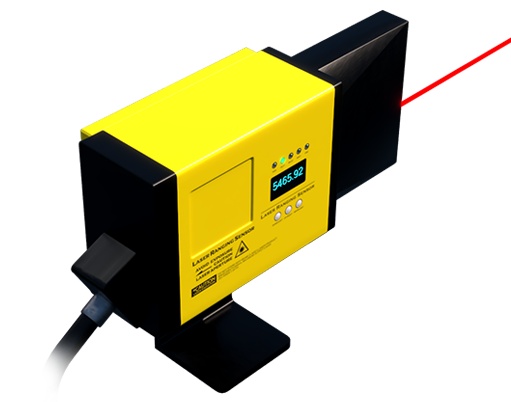
Laser sensors operate on the principle of time-of-flight (ToF) or triangulation measurement. In ToF-based sensors, a laser diode emits pulsed or continuous-wave light toward a target surface—such as a floor or ground area where water may accumulate. The sensor measures the time taken for the light to reflect back to a detector. Since the speed of light is constant, the distance to the surface can be calculated with millimeter-level accuracy. When water is present, the reflection characteristics change, allowing the sensor to detect even thin layers of water. Triangulation sensors use a different approach, where a laser beam is projected onto the surface, and a receiver lens captures the reflected light at an angle. By analyzing the position of the reflected spot, the sensor determines the distance and can identify deviations caused by water presence.
One of the key advantages of laser sensors is their non-contact nature. Unlike mechanical sensors that require physical interaction with water, laser sensors avoid issues like corrosion, fouling, or mechanical failure. This makes them ideal for harsh environments, including chemical plants, wastewater treatment facilities, and outdoor installations exposed to weather extremes. Additionally, laser sensors provide rapid response times, often in the millisecond range, enabling real-time monitoring and early warning systems. This is critical for applications such as data centers, where even minor water leaks can lead to catastrophic equipment damage, or in smart city infrastructure, where timely flood detection can prevent urban flooding disasters.
The integration of laser sensors with IoT (Internet of Things) platforms has further enhanced their utility. Modern laser water detection systems can transmit data wirelessly to central control units or cloud-based analytics platforms. Using algorithms and machine learning, these systems can distinguish between water, dust, oil, or other liquids based on reflectivity patterns, reducing false alarms. For instance, in automotive manufacturing plants, laser sensors monitor floor areas for coolant or oil leaks, triggering alerts only for specific fluid types. In agricultural settings, they help manage irrigation by detecting soil moisture levels or water pooling in fields, optimizing water usage and preventing crop damage.

Installation and calibration are straightforward with laser sensors. They can be mounted overhead or at an angle, covering large areas without direct contact with the surface. Regular maintenance is minimal, primarily involving lens cleaning to ensure optimal performance. However, environmental factors like heavy fog, steam, or highly reflective surfaces may interfere with readings. Advanced models incorporate environmental compensation features, such as adjustable sensitivity or multi-echo processing, to mitigate these challenges.
In conclusion, laser sensor technology represents a leap forward in water detection and flood prevention. Its precision, durability, and compatibility with digital systems make it an invaluable tool across industries—from manufacturing and energy to urban planning and agriculture. As climate change increases the frequency of extreme weather events, adopting advanced laser-based monitoring solutions will be essential for building resilient, safe, and efficient environments.
