In the realm of industrial automation, machine safety, and smart devices, the ability to detect objects without physical contact is paramount. Among the various non-contact sensing technologies, high-sensitivity reflective proximity sensors stand out for their precision, reliability, and versatility. This article delves into the operational principles, key performance metrics, diverse applications, and critical factors for selecting the right sensor for your needs.
At its core, a reflective proximity sensor, often called a diffuse sensor, integrates a light emitter and a receiver within a single housing. The emitter, typically an infrared LED or a laser diode, projects a light beam towards a target. When this beam strikes an object within its detection range, a portion of the light is reflected back towards the sensor. The integrated receiver, usually a phototransistor or a photodiode, detects this reflected light. The sensor's internal electronics then process this signal, triggering an output switch when the reflected intensity exceeds a predefined threshold. The "high-sensitivity" designation refers to sensors engineered to detect extremely weak reflected signals, enabling them to sense small, low-reflectivity, or distant objects that standard models would miss.
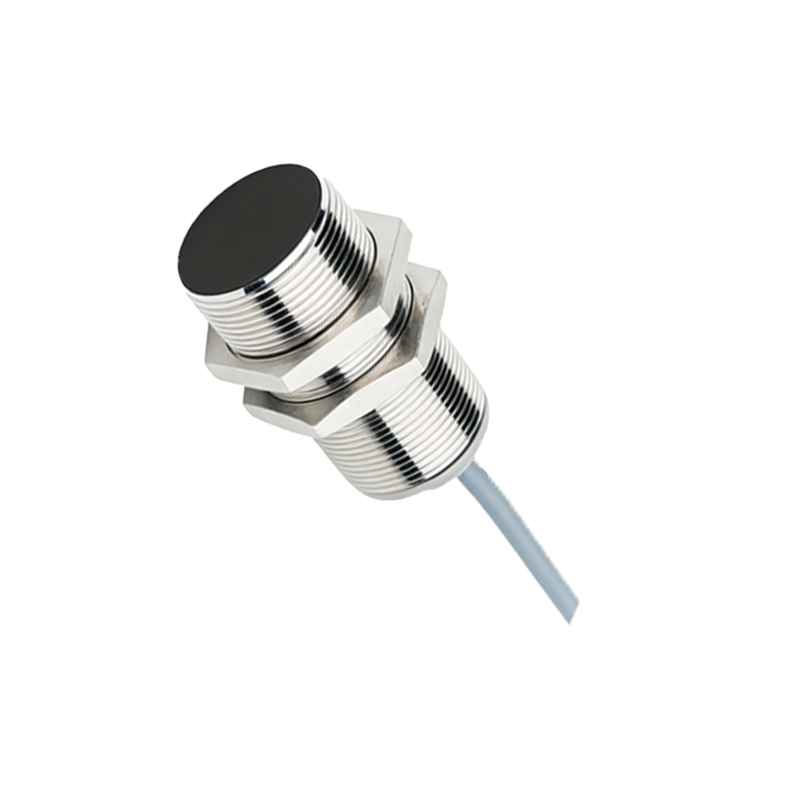
Several key parameters define the performance of a high-sensitivity reflective sensor. The sensing distance is crucial and is highly dependent on the target's size, color, and material. A white, matte surface reflects more light than a black, shiny one, affecting the effective range. Repeatability indicates the sensor's consistency in detecting the same target at the same distance. Response time is the speed at which the sensor reacts to a target's appearance or disappearance, critical for high-speed production lines. Background suppression is an advanced feature where the sensor uses triangulation or time-of-flight principles to ignore objects beyond a set focal point, preventing false triggers from walls or machinery behind the intended target. Finally, environmental robustness—resistance to ambient light interference, dust, moisture, and temperature fluctuations—is essential for harsh industrial settings.
The applications for these sensors are vast and growing. In electronics manufacturing, they detect the presence of tiny components on circuit boards or verify the insertion of micro-connectors. Packaging machinery relies on them to count transparent bottles, detect labels on glossy surfaces, or monitor fill levels through clear glass. Within automated guided vehicles (AGVs), they serve as non-contact bump sensors for obstacle detection. Robotic arms use them for precise positioning and pick-and-place operations involving delicate or varied objects. In consumer electronics, they enable features like screen blanking when a phone is held to the ear. The medical device industry utilizes them for detecting fluid levels in IV bags or the presence of diagnostic strips.
Selecting the appropriate high-sensitivity reflective sensor requires a careful analysis of the application. First, clearly define the target characteristics: What is its size, color, and material? A small, dark target necessitates a sensor with a focused beam and high gain. Second, consider the required sensing distance and the installation environment. Is there space constraint? Will the sensor be exposed to washdowns, oils, or intense ambient light? IP ratings and specialized housings (e.g., stainless steel) address these concerns. Third, evaluate the needed output type (PNP/NPN digital, analog, or IO-Link for smart diagnostics) and connection method (pre-wired cable or quick-disconnect). Lastly, do not overlook practical aspects like adjustable sensitivity potentiometers for fine-tuning, built-in indicators for status monitoring, and the availability of various housing shapes (cylindrical, rectangular) to fit the mounting location.
In conclusion, high-sensitivity reflective proximity sensors are indispensable tools in modern automation. Their enhanced ability to detect challenging targets unlocks new levels of efficiency, quality control, and machine safety. By understanding their technology and carefully matching sensor specifications to application demands, engineers and system integrators can implement robust and reliable sensing solutions that drive innovation and productivity across countless industries. As technology advances, we can expect these sensors to become even more intelligent, compact, and integrated with industrial IoT networks, further expanding their transformative potential.