In the rapidly evolving landscape of industrial automation, the integration of laser sensors with advanced imaging technology has emerged as a cornerstone for precision, efficiency, and innovation. This synergy, often referred to as laser sensor imaging or laser-based vision systems, is fundamentally transforming how machines perceive and interact with their environment, enabling unprecedented levels of quality control, measurement, and robotic guidance.
At its core, a laser sensor operates by emitting a focused beam of light—typically from a laser diode—towards a target object. The sensor then detects the reflected or scattered light. When this principle is combined with imaging components, such as high-resolution cameras or specialized photodetector arrays, the system can capture detailed two-dimensional or even three-dimensional representations of the target. This process is far more than simple "photography"; it is a sophisticated data acquisition method where light becomes a precise metrological tool.
The applications are vast and critical across numerous sectors. In automotive manufacturing, for instance, laser profile sensors perform real-time 3D scans of weld seams or body panels, detecting sub-millimeter defects that are invisible to the human eye or traditional 2D cameras. The semiconductor industry relies on these systems for wafer inspection and chip alignment, where nanometer-level accuracy is non-negotiable. In logistics, laser scanners coupled with vision systems read complex barcodes on packages moving at high speeds on conveyor belts, ensuring flawless sorting and tracking.
The technical advantages are manifold. First is precision and resolution. Laser triangulation, a common method, allows for exact distance and contour measurements. By knowing the angle of the emitted laser and the position where its reflection hits a sensor array, the system can calculate depth information with extreme accuracy, creating a detailed point cloud of an object's surface.
Second is speed and real-time processing. Modern laser vision systems capture and process thousands of profiles per second. This high-speed capability is essential for in-line inspection in fast-paced production environments, where every microsecond counts, and decisions to accept or reject a part must be made instantaneously.
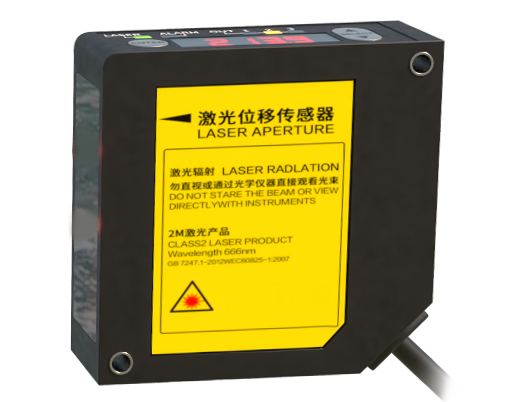
Third is robustness in challenging environments. Unlike standard optical cameras that can struggle with variable lighting, low contrast, or reflective surfaces, laser-based systems actively illuminate the scene with their own controlled light source. This makes them highly reliable in poorly lit factories or when inspecting shiny, metallic objects, as the laser line provides consistent contrast for the camera to capture.
However, implementing these systems requires careful engineering consideration. Factors such as the object's surface properties (color, reflectivity, texture), ambient light interference, required measurement range, and data processing throughput must all be evaluated. The choice between a line laser for profile scanning or a structured light pattern for full-field 3D imaging depends on the specific application's needs.
Looking ahead, the convergence of laser sensing with artificial intelligence and machine learning is the next frontier. AI algorithms can be trained on the vast datasets generated by laser scanners to not only detect anomalies but also predict equipment failures or optimize process parameters autonomously. Furthermore, advancements in miniaturization and cost reduction are making these powerful tools accessible to smaller-scale operations, democratizing high-precision automation.

In conclusion, laser sensor imaging represents a paradigm shift in industrial metrology and machine vision. By providing fast, accurate, and reliable dimensional data, it forms the sensory backbone of smart factories and Industry 4.0 initiatives. As technology continues to advance, these systems will become even more intelligent and integral, driving further gains in productivity, quality, and operational intelligence across the global manufacturing landscape.