Proximity sensors are indispensable components in modern industrial automation, serving as the electronic eyes of machinery by detecting the presence or absence of objects without physical contact. Their core function is to emit an electromagnetic field or a beam of electromagnetic radiation and look for changes in the field or return signal. The object being detected is often referred to as the sensor's target. The primary advantage of non-contact detection is the absence of mechanical wear and tear, leading to higher reliability, longer operational life, and the ability to detect fragile or small objects that might be damaged by physical switches.
The classification of proximity sensors is primarily based on their underlying detection principle. The most prevalent types include Inductive, Capacitive, Ultrasonic, and Photoelectric sensors. Each type is engineered for specific materials, environments, and applications, making the selection process critical for optimal system performance.
Inductive Proximity Sensors are the workhorses of metal detection. They generate an oscillating electromagnetic field from a coil at the sensing face. When a metallic target enters this field, it induces eddy currents within the metal, which dampens the oscillation amplitude of the sensor. This change is detected by the sensor's circuitry, triggering an output signal. Inductive sensors are exceptionally reliable for detecting ferrous metals like steel and iron, and many are also capable of sensing non-ferrous metals like aluminum, copper, and brass, albeit with a reduced sensing range. They are immune to environmental factors like dust, oil, and moisture, making them ideal for harsh manufacturing environments such as CNC machine tools, robotic arms, and metal stamping presses.
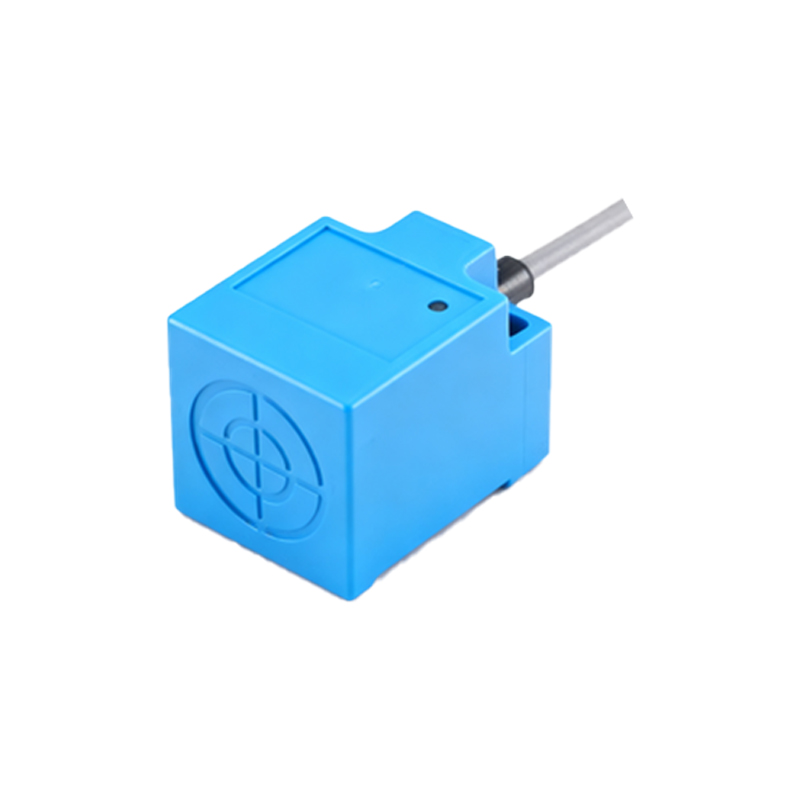
Capacitive Proximity Sensors, in contrast, can detect both metallic and non-metallic materials, including liquids, powders, plastics, and wood. They function by generating an electrostatic field. Any object that enters this field alters the capacitance of the sensor's circuit. This change in capacitance is measured, and when it surpasses a predetermined threshold, the sensor activates its output. This makes capacitive sensors versatile for applications like liquid level detection in tanks, monitoring the presence of plastic or glass bottles on a conveyor, or detecting granular materials in hoppers. However, they can be more susceptible to environmental factors like humidity.
Ultrasonic Proximity Sensors operate on a principle similar to sonar. They emit high-frequency sound waves (typically beyond human hearing) and evaluate the echo reflected back from a target. By measuring the time interval between sending the signal and receiving the echo, the sensor can calculate the distance to the object. This allows them not only to detect presence but also to provide precise distance measurement. They are effective for detecting objects of virtually any material, as long as the surface is capable of reflecting sound. Common applications include pallet detection in warehouses, loop control in winding machines, and distance measurement in automated guided vehicles (AGVs). Performance can be affected by temperature variations, air turbulence, and highly absorbent surfaces.
Photoelectric Sensors utilize light, typically from an LED, to detect objects. They consist of a transmitter (light source) and a receiver. There are three main operating modes: Through-beam, Retro-reflective, and Diffuse (proximity) mode. In Through-beam mode, the transmitter and receiver are separate units; an object is detected when it breaks the light beam. This mode offers the longest sensing range and high reliability. Retro-reflective mode uses a single unit with a built-in reflector; detection occurs when the beam to the reflector is interrupted. Diffuse mode, often used as a proximity sensor, relies on the reflection of light directly from the target object itself. Photoelectric sensors are excellent for long-range detection and can sense a wide variety of materials, but their performance can be compromised by environmental contaminants like dust, fog, or color variations of the target.
Beyond these primary types, specialized variants exist, such as Magnetic Proximity Sensors (Reed switches or Hall-effect sensors) that detect permanent magnets, commonly used for detecting cylinder piston position. The selection of the appropriate sensor hinges on several key parameters: the nature of the target material (metal, plastic, liquid), the required sensing distance (nominal range), the operating environment (temperature, presence of contaminants), the required output type (PNP/NPN, analog, IO-Link), and the electrical specifications (voltage, current).
In conclusion, proximity sensors form the foundational layer of data acquisition in automated systems. From ensuring a metal part is correctly positioned before a welding operation with an inductive sensor, to verifying the fill level of a detergent bottle with a capacitive sensor, their role is critical for safety, precision, and efficiency. A deep understanding of their operating principles, strengths, and limitations is essential for any engineer designing, maintaining, or optimizing industrial automation processes. The correct sensor choice directly impacts system uptime, product quality, and overall operational cost.