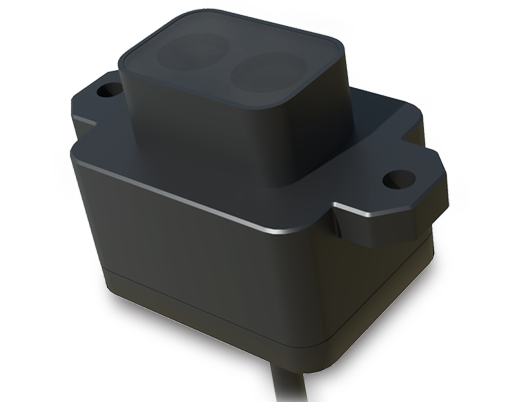
Laser methane sensors represent a significant advancement in gas detection technology, offering superior performance for monitoring methane concentrations in various industrial and environmental settings. Unlike traditional catalytic bead or electrochemical sensors, these devices utilize Tunable Diode Laser Absorption Spectroscopy (TDLAS) to provide highly selective and accurate measurements.
The core principle of TDLAS involves directing a laser beam at a specific wavelength that is strongly absorbed by methane molecules. As the laser light passes through the target gas, methane molecules absorb a portion of the light energy. The sensor's detector measures the attenuation of the laser beam, which is directly proportional to the methane concentration along the optical path. This method is exceptionally selective because methane has unique absorption lines in the near-infrared spectrum, typically around 1653 nm. The laser is precisely "tuned" to this wavelength, ensuring it interacts almost exclusively with methane, minimizing false readings from other gases like water vapor or carbon dioxide.
A typical laser methane sensor consists of several key components: a laser diode, optical components (lenses, beam splitters), a photodetector, and sophisticated signal processing electronics. The laser diode emits the tuned infrared light. This light is collimated into a beam and directed across an open path (in open-path sensors) or into a sample cell (in extractive sensors). The photodetector on the opposite side captures the transmitted light. The electronics then analyze the detected signal, applying algorithms to calculate the precise methane concentration, often reporting it in units of parts-per-million (ppm) or lower explosive limit percentage (%LEL).
The advantages of laser methane sensors are substantial. Their selectivity is unparalleled, virtually eliminating cross-sensitivity. They offer fast response times, often in the range of seconds, enabling real-time monitoring. They require minimal maintenance as they have no consumable parts and the optical components are not subject to poisoning or saturation like catalytic sensors. Their measurement is non-invasive and can be performed over long distances (up to hundreds of meters in open-path configurations), making them ideal for monitoring large areas like well pads, landfill perimeters, or compressor stations.
However, these sensors also have limitations. They are generally more expensive than conventional sensors. Performance can be affected by extreme environmental conditions such as heavy rain, fog, or dust, which can scatter or block the laser beam. Proper alignment of the optical path is critical, especially for open-path systems. They are primarily point detectors for specific gases; a single sensor cannot detect a broad range of hydrocarbons without multiple laser sources.
Applications for laser methane sensors are diverse and critical for safety and environmental compliance. In the oil and gas industry, they are deployed for fugitive emission monitoring at production sites, pipelines, and LNG terminals. They are used for personal safety in confined space entry and for area monitoring in processing plants. Utilities employ them for surveying natural gas distribution networks to pinpoint leaks. Environmental monitoring agencies use them to measure methane fluxes from landfills, agricultural operations, and wastewater treatment plants. Furthermore, they are integrated into continuous emission monitoring systems (CEMS) for regulatory reporting.

When selecting and installing a laser methane sensor, engineers must consider several factors. The choice between an extractive (in-situ) and an open-path sensor depends on the application—extractive for precise point measurement in ducts or process streams, and open-path for perimeter monitoring. The required measurement range (ppm-level for ambient monitoring vs. %LEL for safety) dictates sensor specifications. Environmental conditions like temperature, pressure, and potential for optical obstruction must be evaluated. Regular maintenance, though minimal, should include lens cleaning and verification of calibration through functional checks using certified test gases.
In conclusion, laser methane sensors are powerful tools that leverage advanced optical spectroscopy to deliver precise, selective, and reliable methane detection. Their adoption is growing as industries face stricter emissions regulations and prioritize worker safety and environmental stewardship. While the initial investment is higher, their long-term reliability, low maintenance, and superior performance often result in a lower total cost of ownership and enhanced operational safety, making them a cornerstone technology in modern gas detection systems.