In the world of automation and smart devices, proximity sensors are the silent, unseen guardians. They detect the presence or absence of an object within a specific range without any physical contact. This fundamental capability makes them indispensable in countless applications, from preventing smartphone screen damage to ensuring the safety of heavy industrial machinery. But how do these remarkable devices actually work? The principle of operation varies significantly depending on the underlying technology, each suited to different environments and materials.
The most common type is the inductive proximity sensor. Its core principle is based on electromagnetic induction. The sensor contains a coil wound around a ferrite core, which is part of an oscillator circuit. When an alternating current passes through this coil, it generates an oscillating electromagnetic field at the sensor's face. When a metallic object enters this field, eddy currents are induced on the surface of the metal. These eddy currents draw energy from the sensor's oscillator, causing a reduction in the amplitude of oscillation. A monitoring circuit detects this amplitude change and triggers a solid-state switch, signaling the presence of the object. A key characteristic is that inductive sensors primarily detect ferrous metals like steel and iron most effectively, though they can also sense non-ferrous metals like aluminum and copper, typically at a reduced sensing range.
For detecting non-metallic objects, capacitive proximity sensors are the tool of choice. Their operating principle resembles that of a simple capacitor. The sensor face acts as one plate of a capacitor, and the target object acts as the other plate, with the air gap serving as the dielectric. The sensor generates an electrostatic field. When any object with a dielectric constant different from air (which includes almost all materials—plastics, wood, liquids, powders, and even human skin) enters this field, it causes a change in the field's capacitance. This change alters the oscillation amplitude in the sensor's internal circuit, which is then evaluated to trigger an output switch. This makes capacitive sensors incredibly versatile, capable of detecting a vast array of materials through non-metallic barriers, such as detecting liquid levels inside a plastic tank.
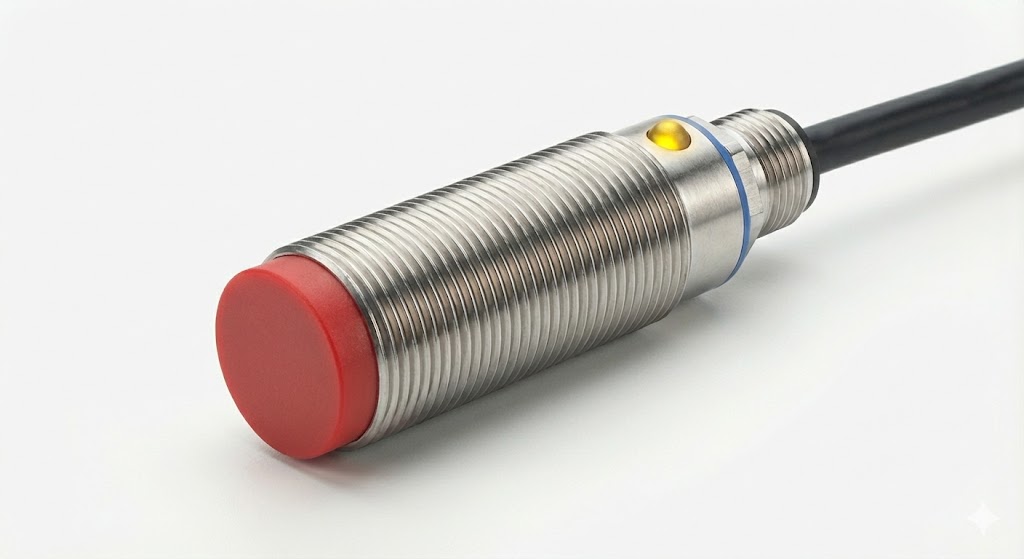
Another widely used category is the photoelectric proximity sensor. Its principle relies on light, typically infrared or laser. The sensor consists of an emitter (light source) and a receiver (phototransistor or photodiode). In the most common diffuse or reflective mode, the emitter sends a constant beam of light. When an object comes within range, it reflects this light back towards the receiver. The receiver detects the reflected light intensity, and once it surpasses a preset threshold, the output is activated. Other modes include through-beam, where the emitter and receiver are separate units, and the object is detected when it breaks the beam, and retro-reflective, which uses a reflector. Photoelectric sensors offer very long sensing ranges and can detect objects of almost any material, but they can be affected by environmental factors like dust, fog, or highly reflective backgrounds.
Ultrasonic proximity sensors operate on a principle similar to sonar. They emit high-frequency sound waves (typically beyond human hearing, around 200 kHz) from a piezoelectric transducer. These sound waves travel through the air and bounce off a target object. The sensor then measures the time delay between the emitted pulse and the received echo. By knowing the speed of sound in air, the sensor can calculate the distance to the object. This time-of-flight principle allows ultrasonic sensors to not only detect presence but also provide precise distance measurement. They are excellent for detecting sound-reflective objects regardless of color, transparency, or material, and perform well in challenging environments with dust or steam, though they can be confused by soft, sound-absorbing materials.
Each sensing technology has its optimal domain. Inductive sensors excel in harsh industrial environments with metal targets. Capacitive sensors handle diverse materials and are key for level detection. Photoelectric sensors provide speed and long range for packaging and logistics. Ultrasonic sensors are masters of distance measurement and difficult conditions. Understanding the core principle behind each—whether it's disturbing an electromagnetic field, changing capacitance, reflecting light, or echoing sound—is crucial for selecting the right sensor. This ensures reliability, safety, and efficiency in systems ranging from a consumer smartphone to a fully automated production line, enabling machines to perceive and interact with the physical world seamlessly.